
Description
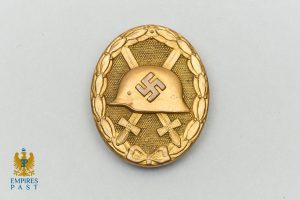
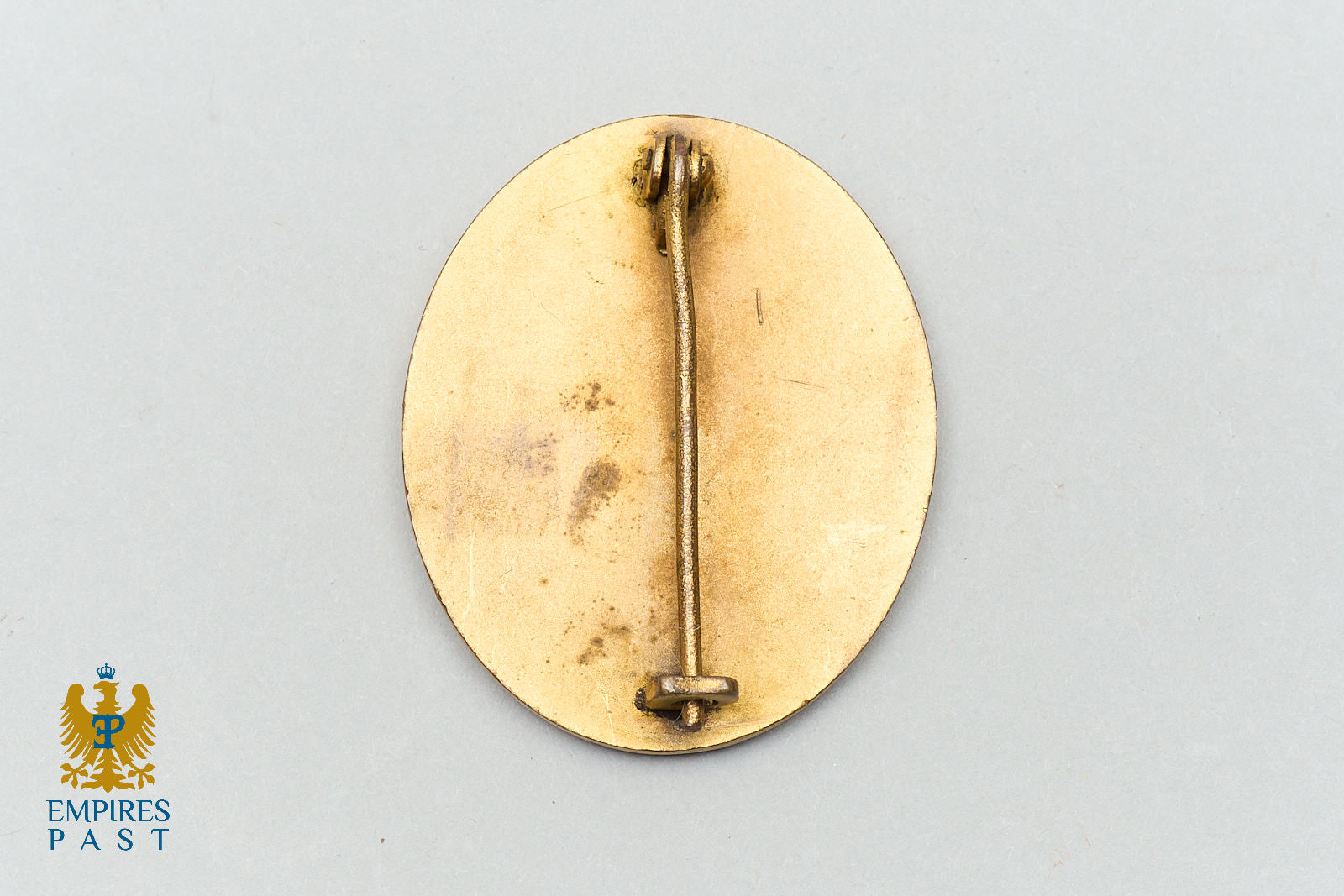
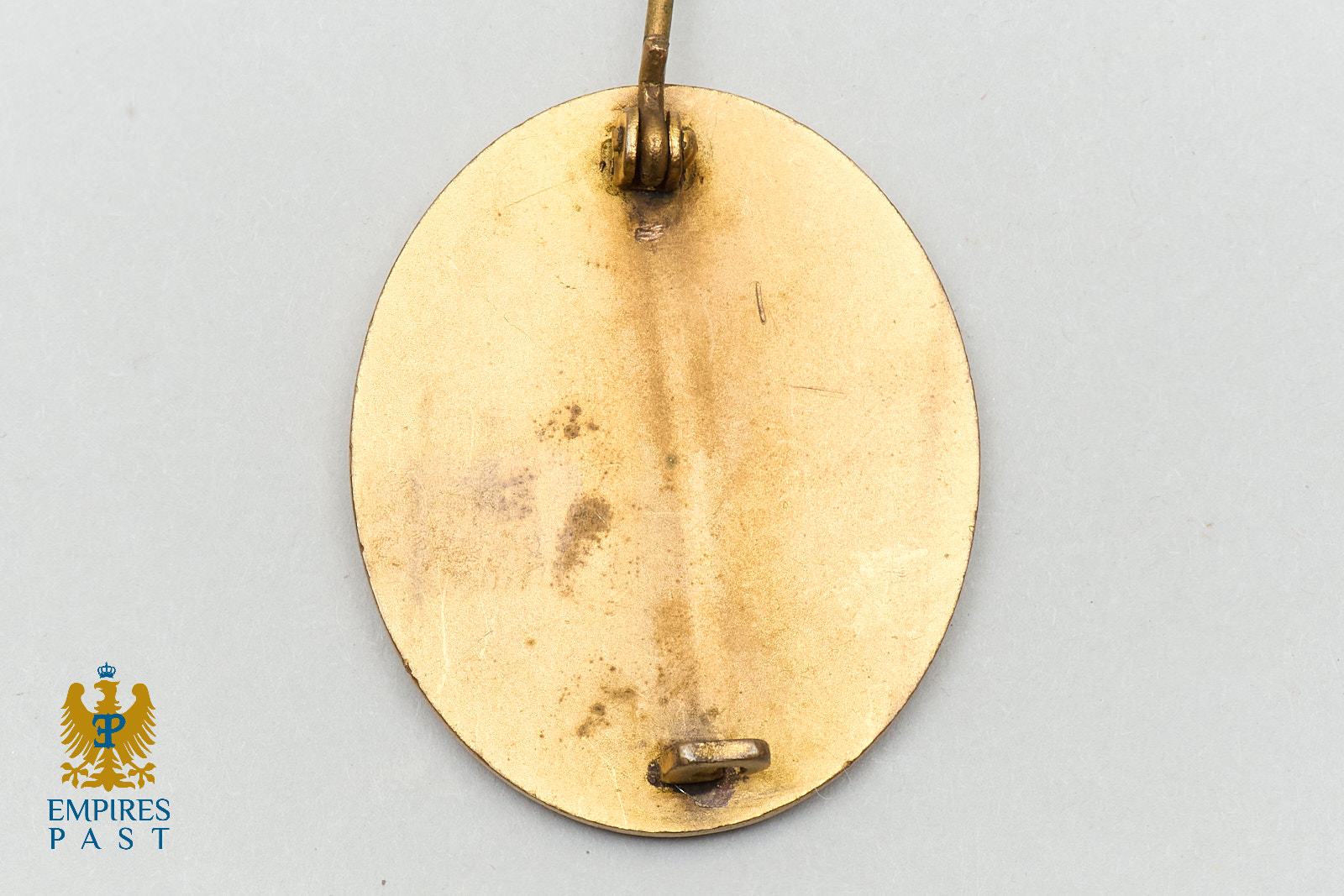
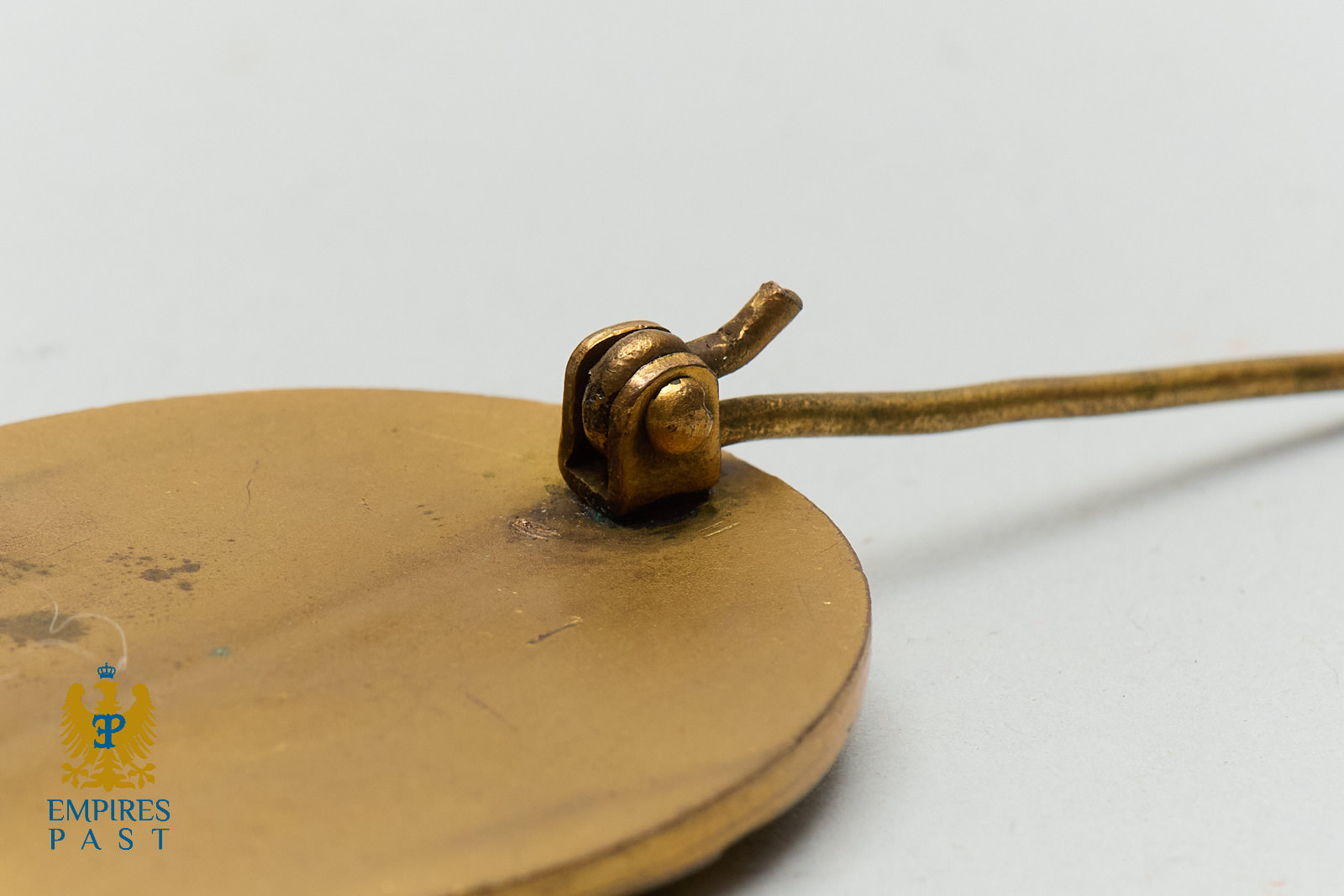
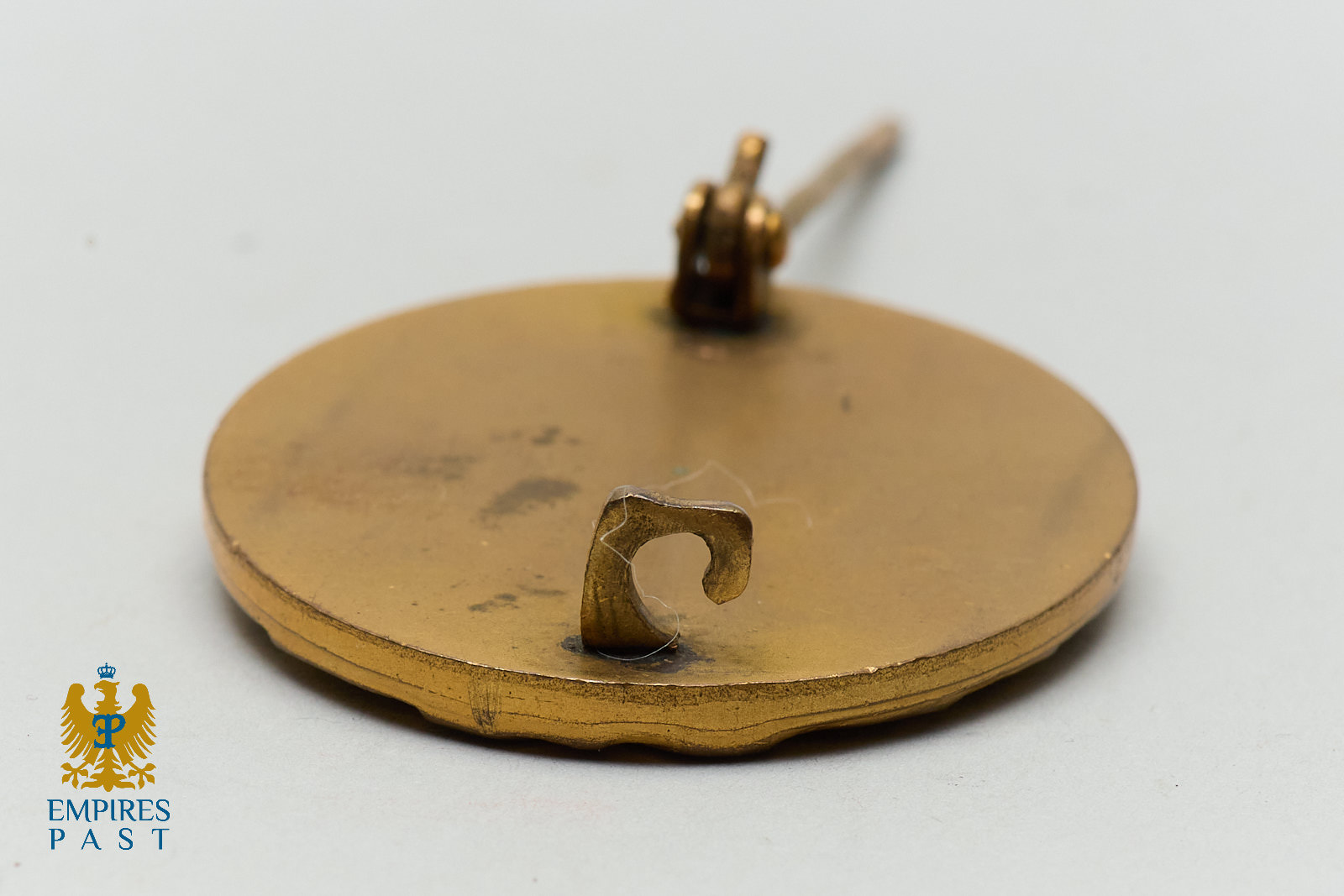
Product Description: This is a great example of a desirable early Gold Wound Badge. This fine award is made from a bass alloy, Tombak, a high quality metal that was used before wartime necessities required manufacturers to switch to inferior materials. The obverse of this badge is absolutely beautiful. Most of the original factory applied gilt finish is intact, with some light wear that exposes bare Tombak on the swastika emblem and the high points of the wreath. All of the original detail is intact. On the reverse, this Gold Wound Badge is flat and smooth. It’s unmarked, but this variant is known to have been made at Hauptmünzamt Wien (the Vienna Mint), the maker that used the PKZ code “30.” The textbook circular finishing marks associated with “30” made wound badges are evident. The attachment hardware on this badge features a sheet metal hinge and catch, and a round wire pin with a blunt tip. The hardware is functional and shows no damage or repairs. This is a top quality piece with a great look. The condition rates as excellent plus.
Historical Description: The German Wound Badge was instituted during the First World War to recognize those wounded in the conflict. It was designed using a World War One style Imperial German helmet as the main motif. The helmet was set on top two crossed swords against a pebbled background and surrounded by a laurel leaves wreath. During the Spanish Civil War, the Wound Badge was reinstated by the Third Reich for a short period to honor those who were wounded during the conflict from 1936 to 1939. These German units participating in the assistance of the Spanish Fascists were deemed the “Condor Legion”. The pattern of the World War One Wound Badge was again used, except this time with a raised swastika on the center of the World War One era helmet. At the outbreak of war in September 1939 with Poland, Adolf Hitler once again reinstated the Wound Badge Award. The pattern of the badge was like that of the earlier styles, except the new design was updated by using an M35 pattern German helmet and a slightly softer looking wreath. This pattern was used until the end of the war in 1945. It is impossible to know the exact numbers of wound badges awarded during the course of the Second World War due to the vast scale and countless individuals who were wounded or killed in the conflict. The Wound Badge Awards came in three different types of grades representing the amount, or severity, of wounds received. The first grade, the Black Wound Badge was awarded for 1 to 2 wounds received in combat. The Silver Grade was awarded for 3 to 4 wounds, and finally the Gold Grade for 5 or more wounds, total disability, or death.
With nearly 30 years of expertise handling, collecting, and studying some of the finest and scarcest military collectibles, Empires Past offers the best prices for your collectibles.
We purchase German, American, and Japanese Military Artifacts.
FROM SINGLE ITEMS TO ENTIRE COLLECTIONS…
WE ARE ALWAYS BUYING!!!