

Description
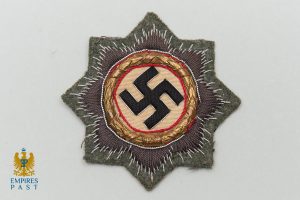
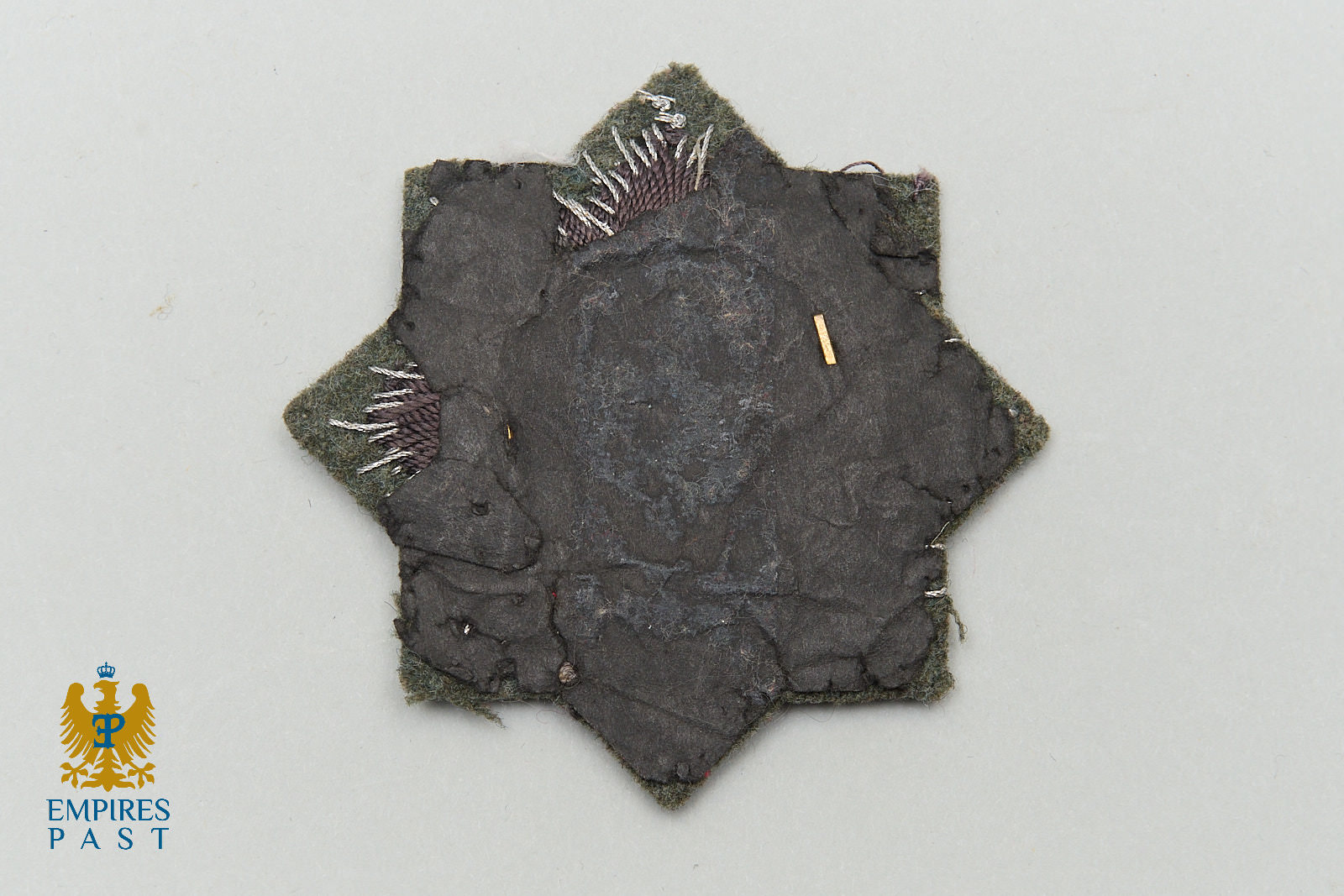
Product Description: A very nicely preserved Tunic Removed Heer German Cross. This Tunic Removed Heer German Cross in Gold is constructed on a feldgrau wool backing. The cross features nicely embroidered dark grey sunburst with tips of silver bullion wire, creating a 3D effect. The gold wreath is stamped from a tombak (brass) base metal. The date “1941” has the typical die-flaw in the “9”. The central black swastika is constructed of embroidered black wool thread and is outlined with silver bullion. The white disc area has developed a very even patina throughout. This example is a “Type 2” variant, going off the embroidery pattern used. The reverse of the cross retains most of its original black paper backing. As with most Cloth German Crosses, no maker marks can be seen. Consistent pin holes can be seen along the reverse edges of the cross, suggesting this example is likely tunic removed. Overall, this Tunic Removed Heer German Cross remains in excellent condition and one of the few which likely once served on a uniform.
Historical Description: The German Cross in Gold was instituted on September 28th, 1941, as the German High Command saw it necessary to create an award which would bridge the gap between the Iron Cross First Class and the Knights Cross of the Iron Cross. Upon institution, the German Cross became Germany’s second highest military decoration, second only to the Knights Cross and its subsequent grades. The German Cross was similar to the Knights Cross in regards that the award was not based off of any previous awards in German history. It was a unique creation which also ended with the war. There were approximately 26,000 recipients of the German Cross in Gold. This number, however, does not reflect the total amount of German Crosses produced.
The German Cross was actually not a cross at all. It took on the form of an eight-pointed star, resembling some of the former breast awards of the Imperial era. The award came in two forms, a metal version and a cloth version. The metal version, being the most complex of the two, consisted of five separate pieces being fitted and held together using between four to twelve rivets, depending on who the manufacturer was and the time-period of construction. The cloth version follows the exact same design as the metal produced version except the entire cross is cloth with the exception of the laurel wreath still being metal.
Known Manufacturers: Deschler & Sohn, Munchen,;C.E. Juncker, Berlin; C.F. Zimmermann, Pforzheim; Gebruder Godet, Berlin; Otto Klein, Hanau
With nearly 30 years of expertise handling, collecting, and studying some of the finest and scarcest military collectibles, Empires Past offers the best prices for your collectibles.
We purchase German, American, and Japanese Military Artifacts.
FROM SINGLE ITEMS TO ENTIRE COLLECTIONS…
WE ARE ALWAYS BUYING!!!