

Description
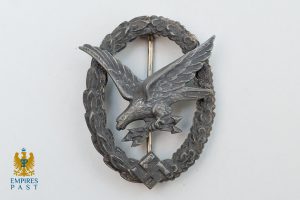
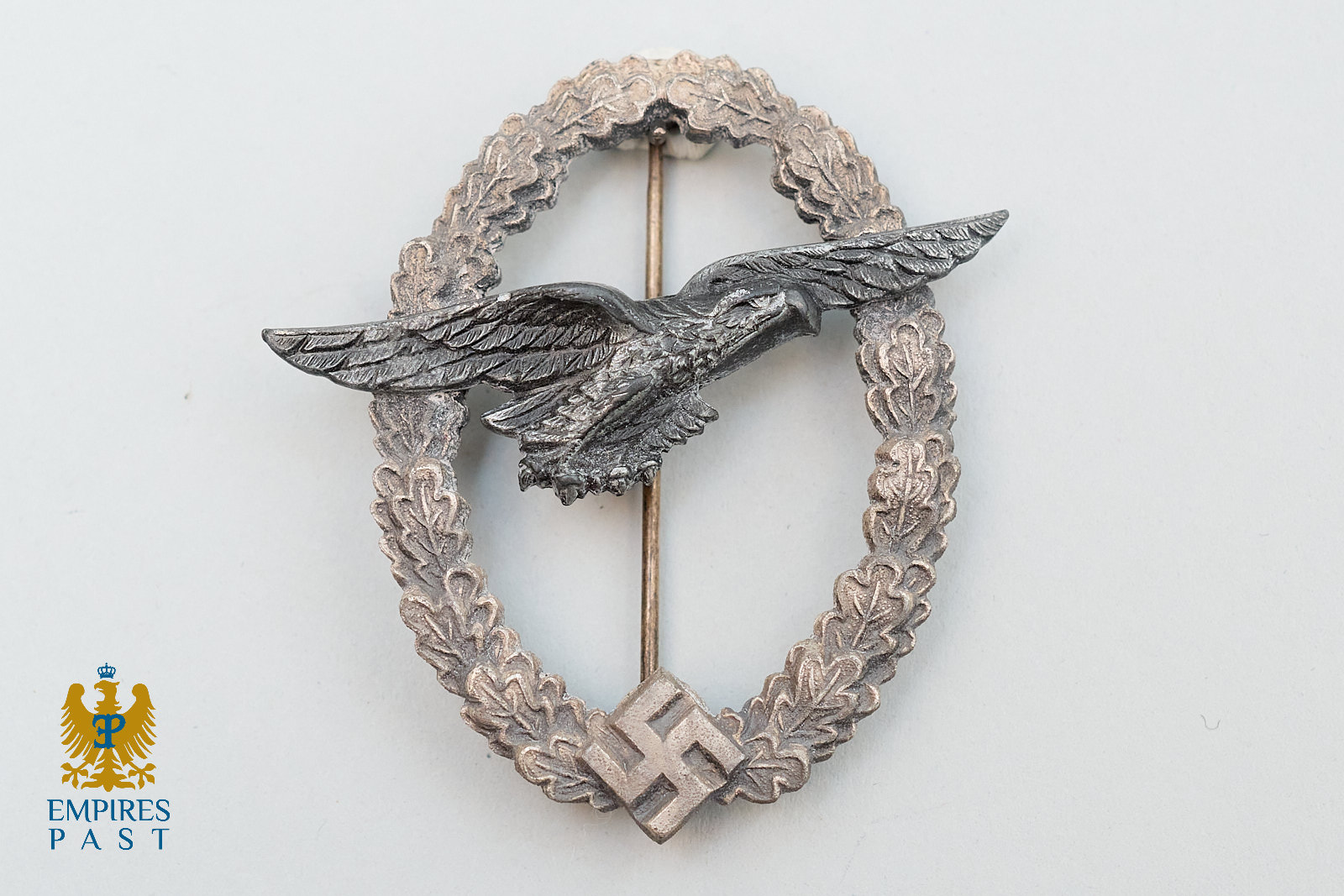
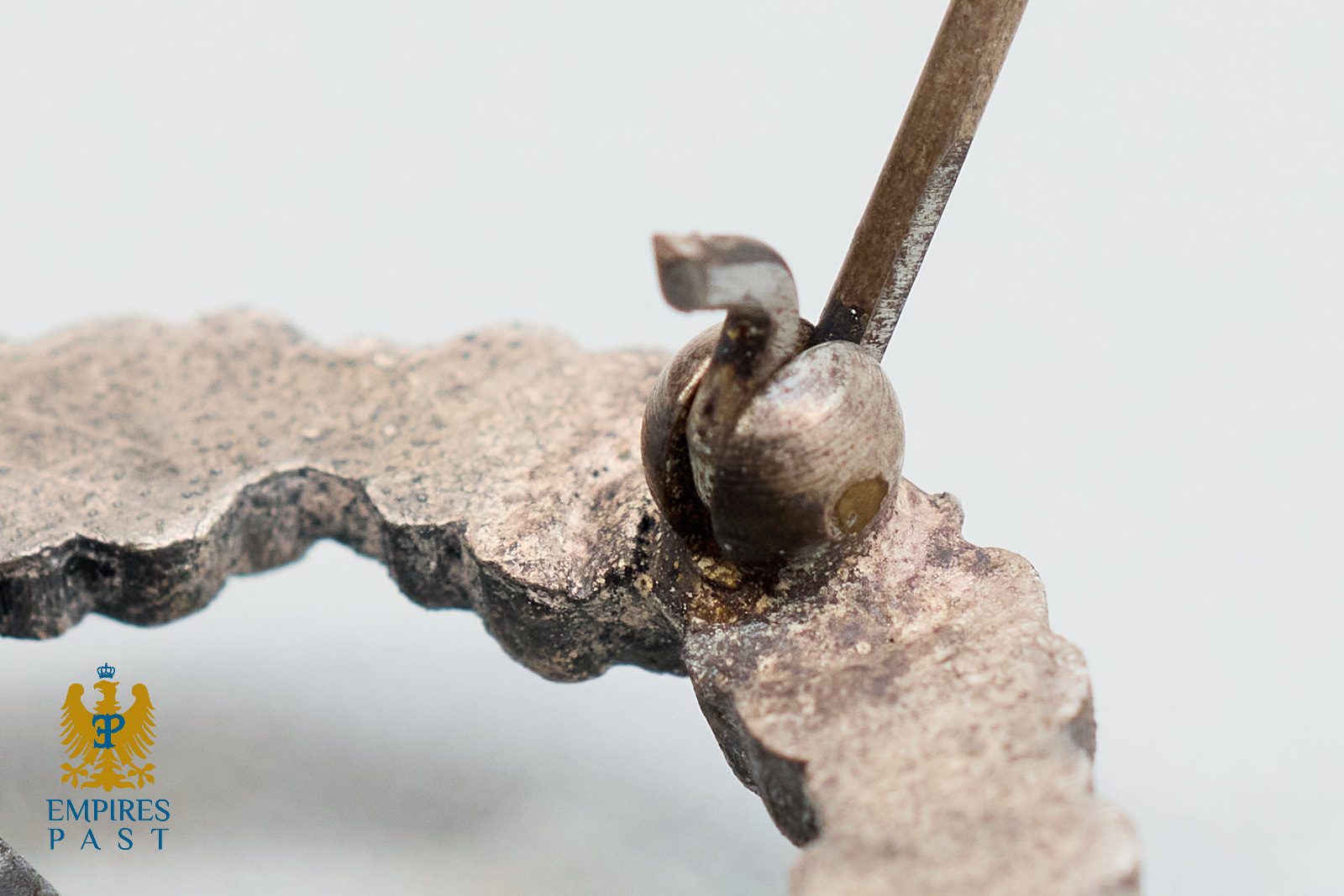
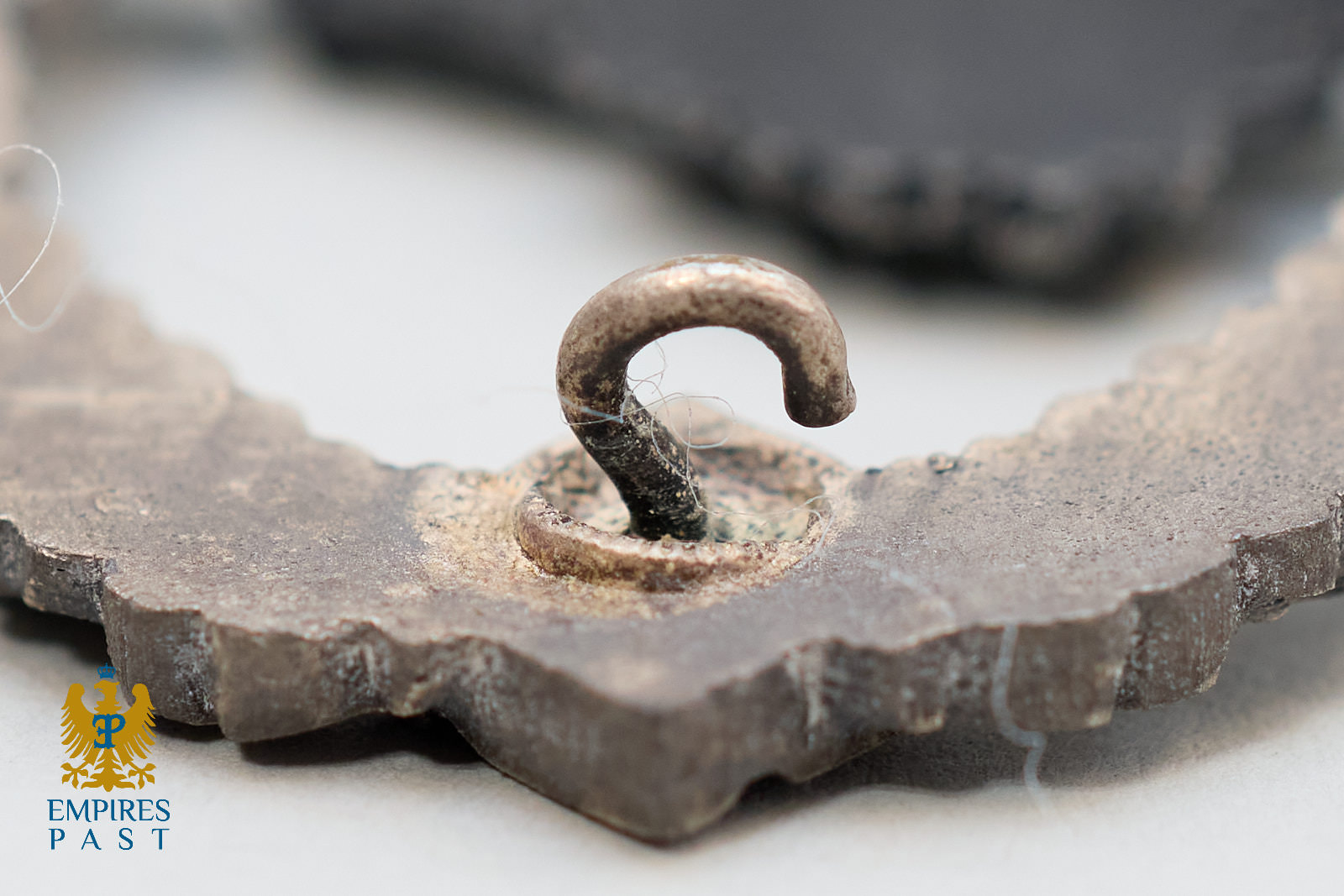
Product Description: An uncommon Luftwaffe Glider Pilot Badge in overall excellent condition. This Luftwaffe Glider Pilot Badge is made from two separate die stamped zinc planchets. The zinc outer wreath retains approximately 50% of its original silver wash, with some areas of light patina and zinc powder. The outer wreath design is consistent with other Luftwaffe Glider Pilot Badges produced by this unknown manufacturer. The central zinc gliding eagle retains most of its original dark finish, and, like the wreath, also has some areas of light wear and zinc powder. The reverse side of the badge features the typical ball-hinge hardware set-up. The ball hinge is made of tombak, and is firmly, and originally, crimped to the reverse of the badge. The catch is made of simple tombak round wire shaped into the form of a “?”. The catch is also crimped to the reverse of the badge. Two simple small flattened tombak rivets secure the eagle to the wreath. This is a nice example of a Luftwaffe Glider Pilot Badge that are becoming tough to find on the market.
Historical Description: The Luftwaffe Glider Pilot Badge was instituted by Reichsmarschall Hermann Goering on December 16, 1940. The badge took the form of a wreath of silver oak leaves, with a large gliding eagle. The badge designed is attributed Wilhelm Ernst Peekhaus. Production of the badge began at the firm of C. E. Juncker in the fall of 1940. The badge was awarded to airmen who had earned the Glider Pilots License; it was issued together with the license, upon conclusion of training. The badges can be found in Tombak (Brass), Nickel Silver, or Zinc. The metal version of the badge was originally issued in a blue presentation box with a hinged lid. There were also cloth versions of the badge produced, both machine-embroidered and hand-embroidered; production of these ceased in 1942. The badges were worn on the left breast pocket of both military and civil uniforms. The Glider Pilots were a small group of the Luftwaffe and generally flew very dangerous “one-way” missions. One example of such missions was the use of gliders to reinforce and resupply the surrounded German forces in the pocket of Cholm, Russia. The Cholm pocket was too small for normal aircraft to land and take off. These badges are extremely scarce today.
With nearly 30 years of expertise handling, collecting, and studying some of the finest and scarcest military collectibles, Empires Past offers the best prices for your collectibles.
We purchase German, American, and Japanese Military Artifacts.
FROM SINGLE ITEMS TO ENTIRE COLLECTIONS…
WE ARE ALWAYS BUYING!!!