

Description
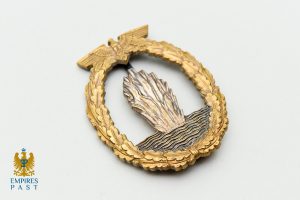
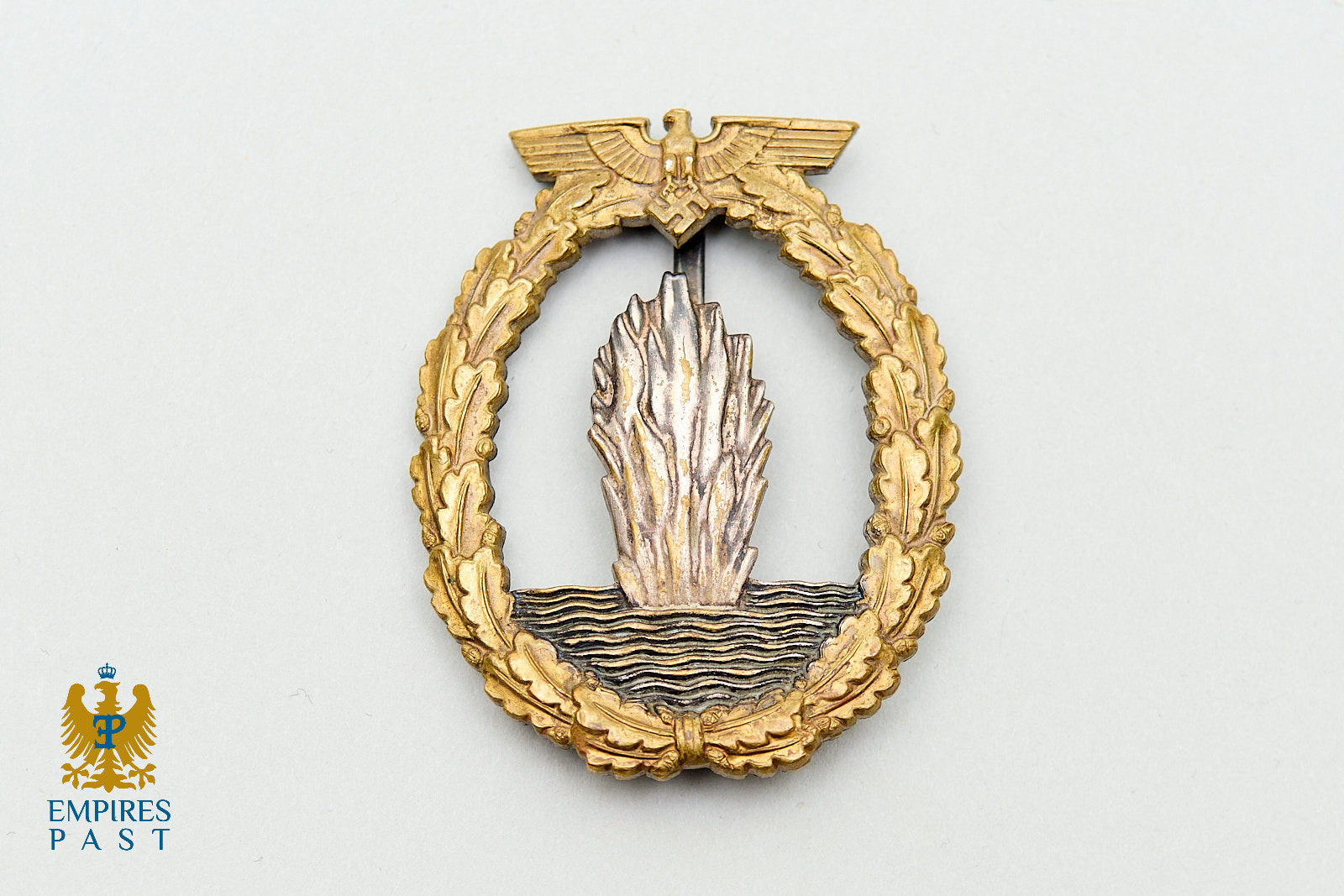
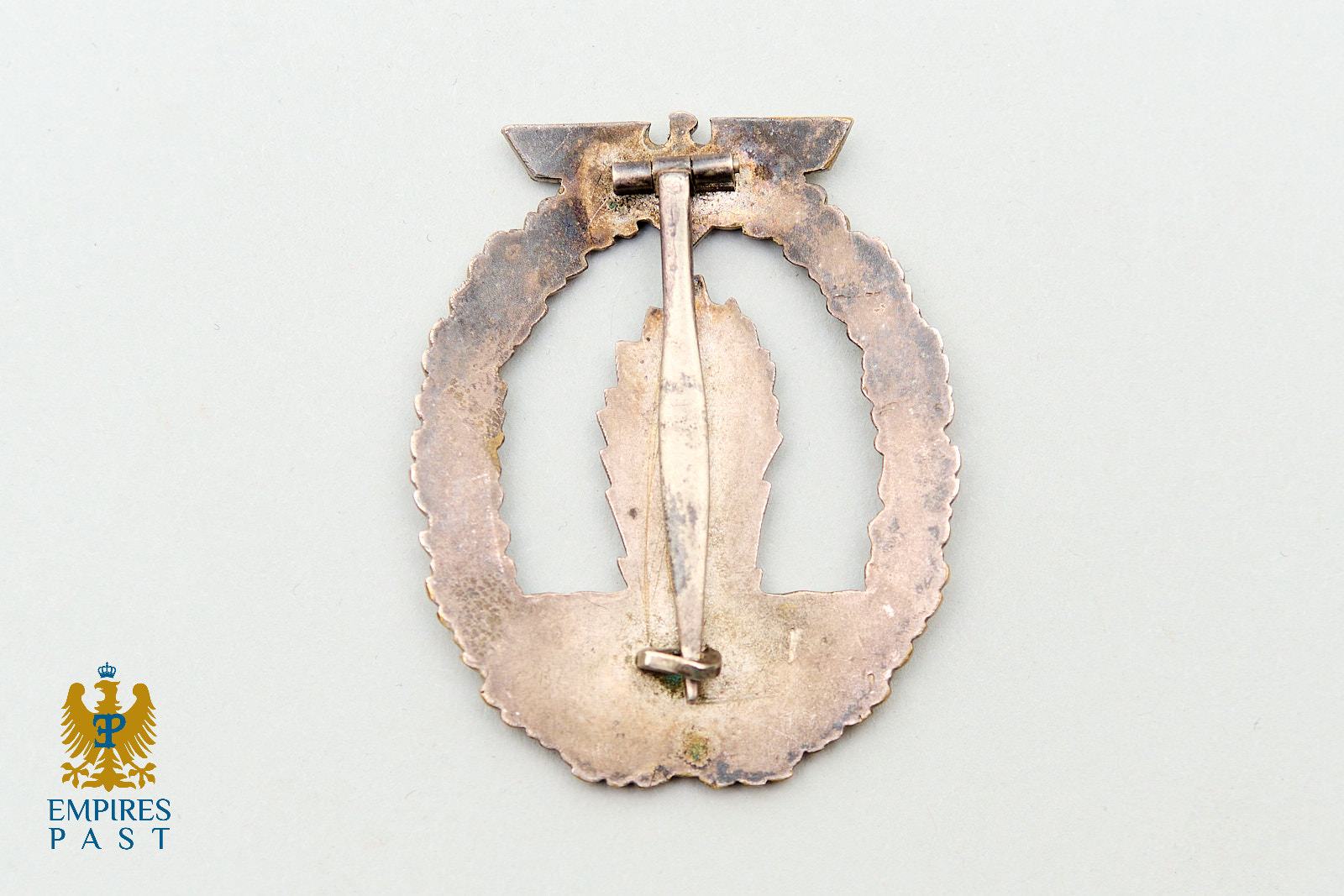
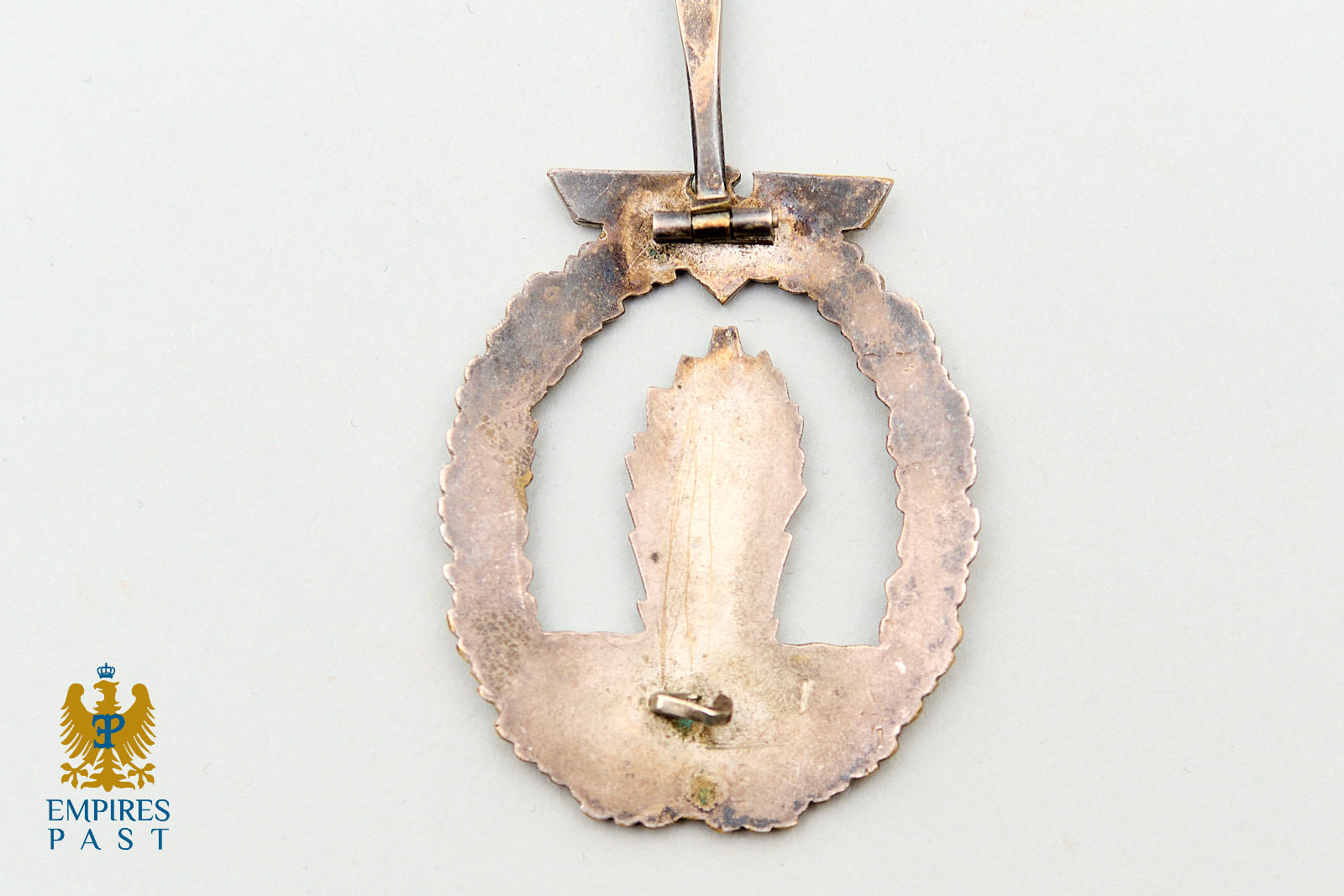
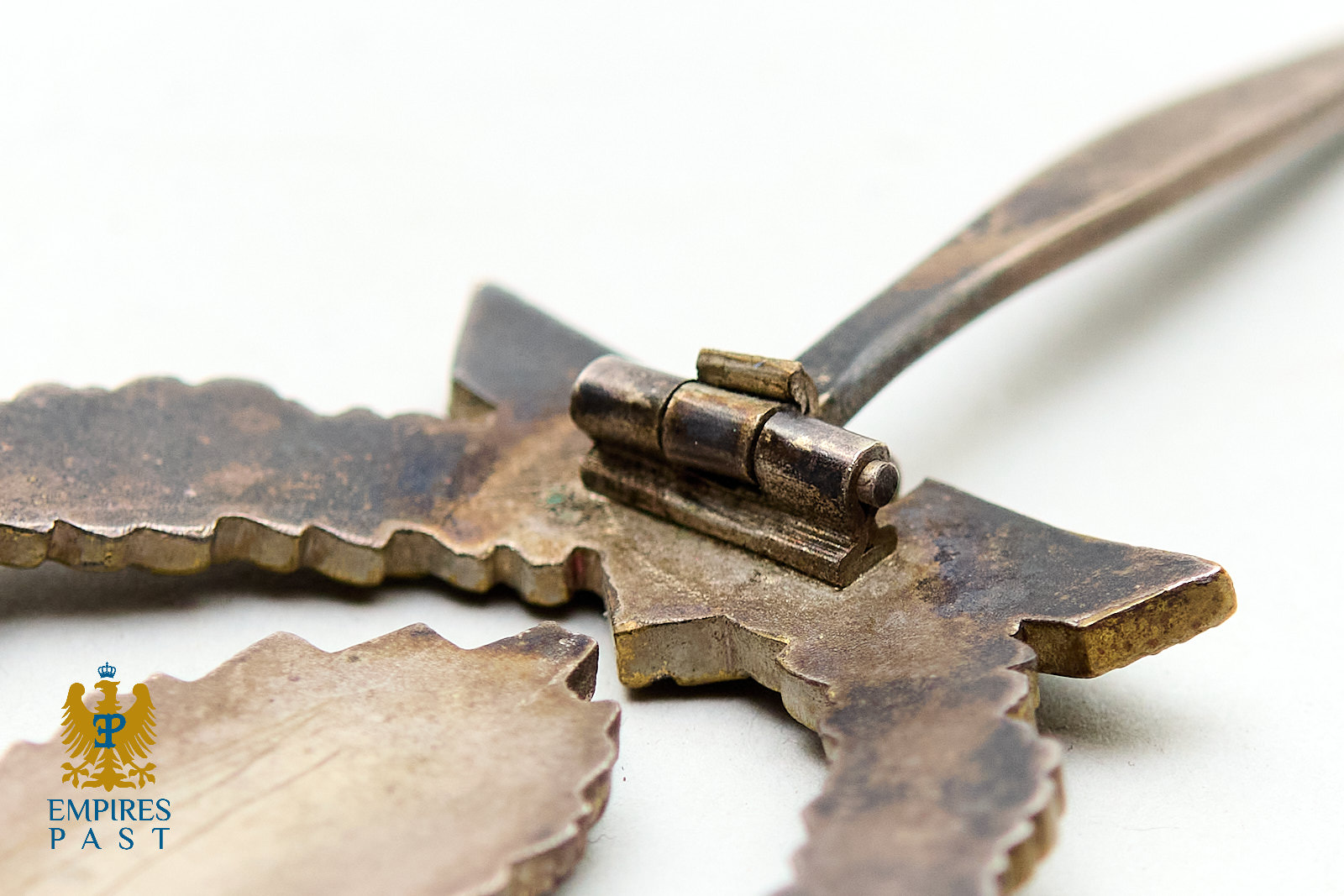
Product Description: This Kriegsmarine Minesweeper Badge is a choice and desirable example. It’s a high quality, likely early production piece, made of a brass alloy- Tombak. It shows light wear, and was obviously worn during the period, as it is neatly hand vaulted, a common feature on Kriegsmarine awards. On the obverse, the wreath and eagle retain nearly all of the beautiful original gilding. The gold still has nice shine. The water plume also still has most of the silvering, with some of the golden base metal peeking through at the highlights. There is a slight, even patina from age and wear. The reverse of this Kriegsmarine Minesweeper Badge has nearly full finish, with uncleaned old patina and toning. It is unmarked, but this variant is known to have been made by Schickle, with typical hardware for this maker. The banjo attachment pin is functional. The block hinge and sheet metal catch are affixed with the original solder. There is a slight bend to the catch, another clue that this piece was worn on a uniform. This is an all-original badge with no damage or repairs to note. It displays very well and remains in excellent condition.
Historical Description: On August 31, 1941, Kriegsmarine leader Grossadmiral Erich Raeder instituted the Minesweeper Badge (Kriegsabzeichen für Minensuchen) to recognize the achievement and experience of the sailors serving on the German Kriegsmarine minesweeper vessels. The conditions which these sailors endured is often overlooked by many collectors and historians. Many of these sailors faced exposure to the elements as well as constant danger from mines, submarines, and airplanes, especially as the war in the Atlantic had turned against the Kriegsmarine. The Minesweeper Badge consists of an exploding sea mine, surrounded by a golden oakleaf wreath with the German national eagle and swastika emblem at the top. As with many other Kriegsmarine awards, the design is attributed to Otto Placzek. The badge was produced from tombak (brass), zinc, or CupAl, with most late produced examples being of zinc construction. Qualification for the badge could consist of a sailor making three operational sorties, being wounded during a sortie, showing exemplary conduct over a six-month period, participating in an especially dangerous mission, serving on escort duty for 25 days or more, or being on a ship that was sunk by enemy action. The badge could also be awarded posthumously.
With nearly 30 years of expertise handling, collecting, and studying some of the finest and scarcest military collectibles, Empires Past offers the best prices for your collectibles.
We purchase German, American, and Japanese Military Artifacts.
FROM SINGLE ITEMS TO ENTIRE COLLECTIONS…
WE ARE ALWAYS BUYING!!!