


Description
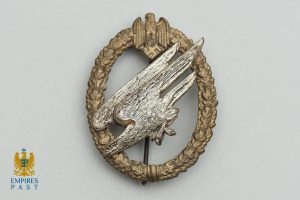
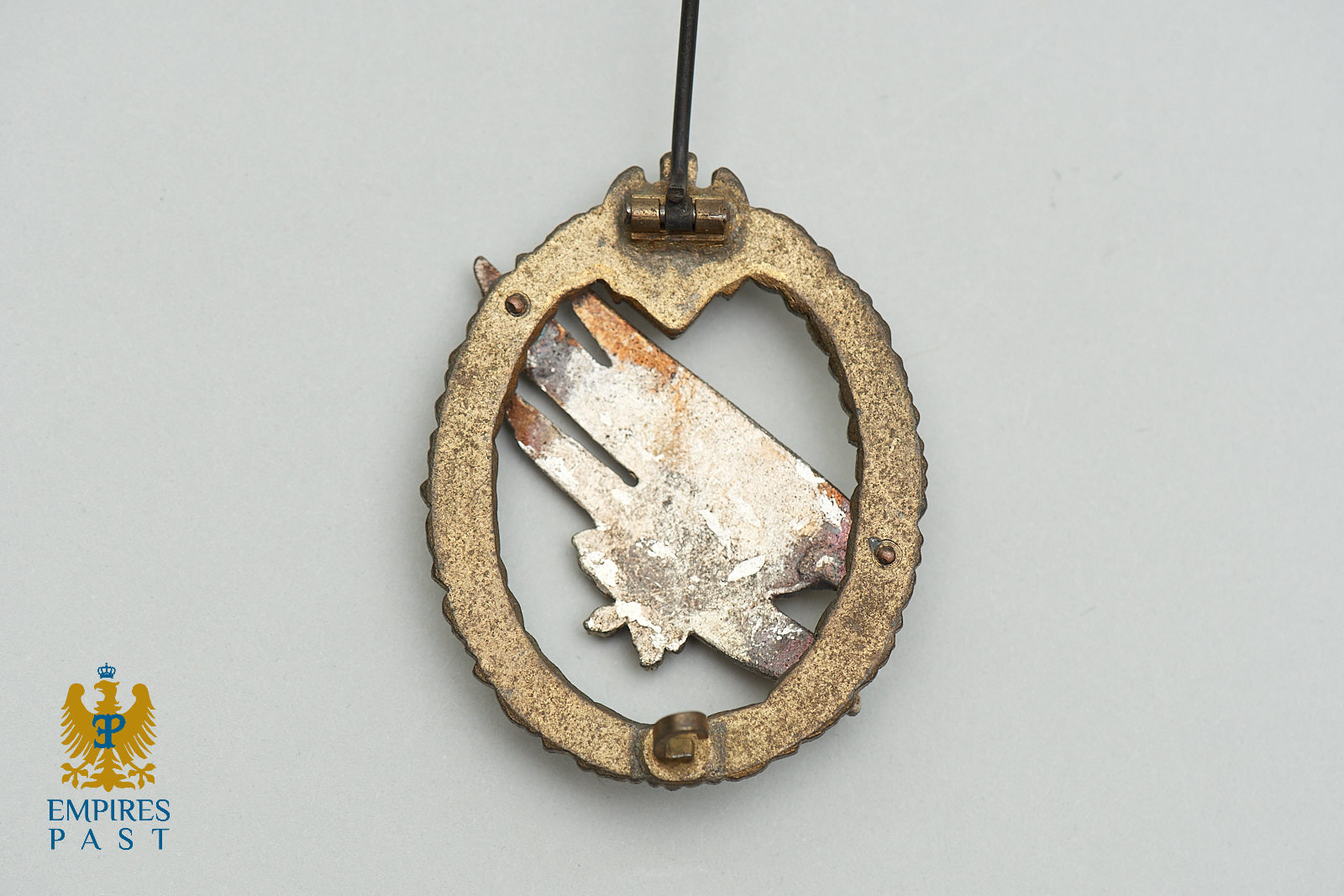
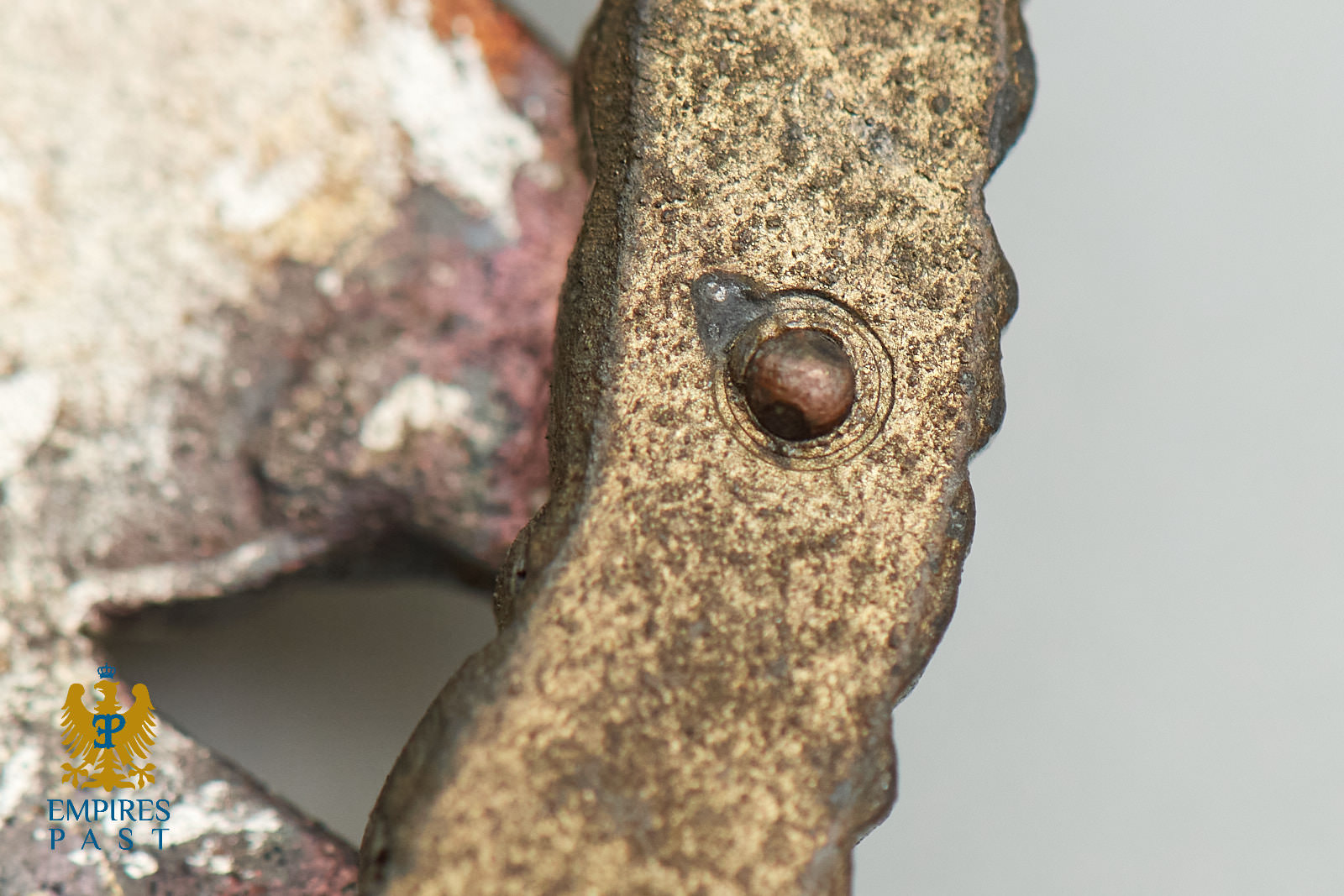
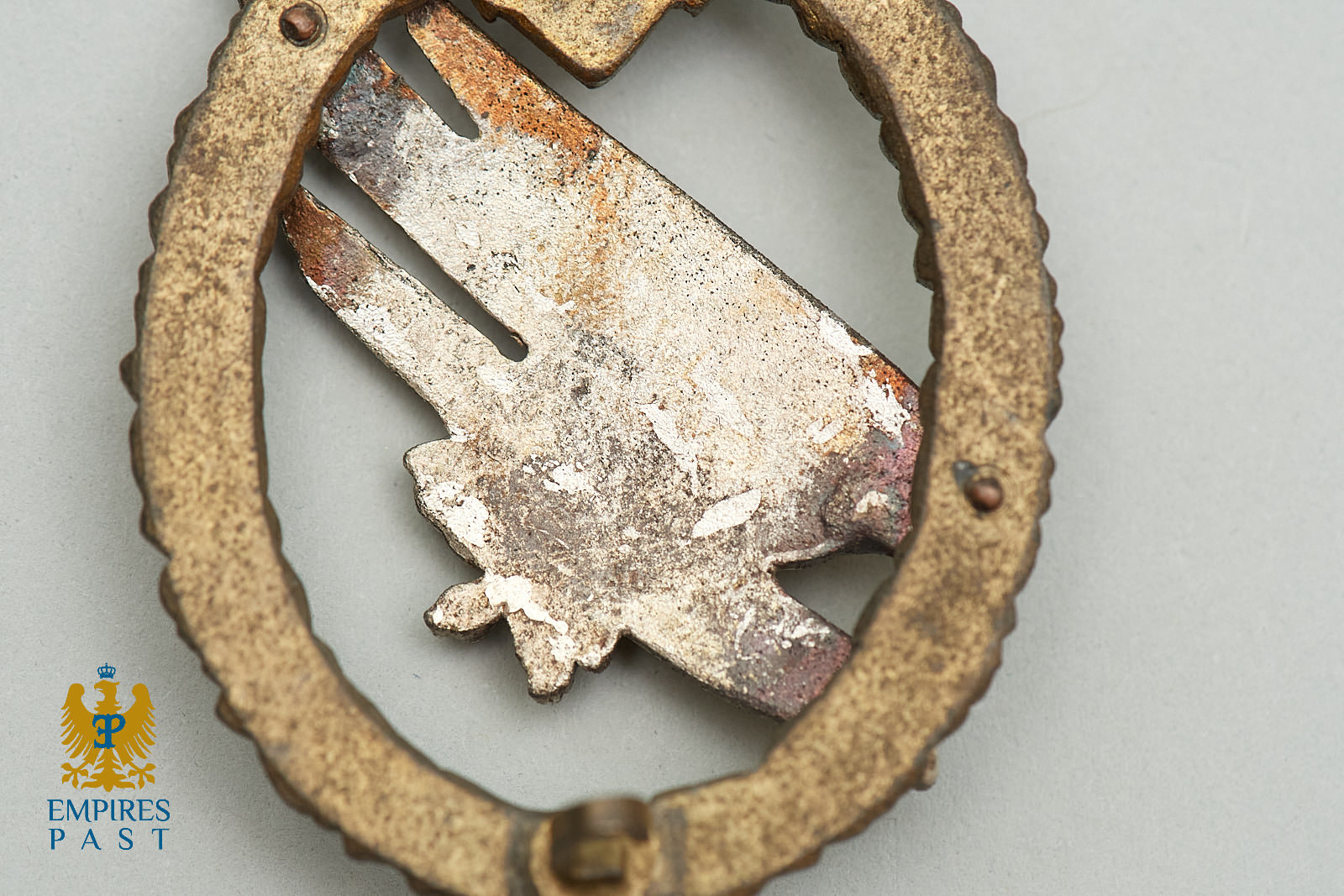
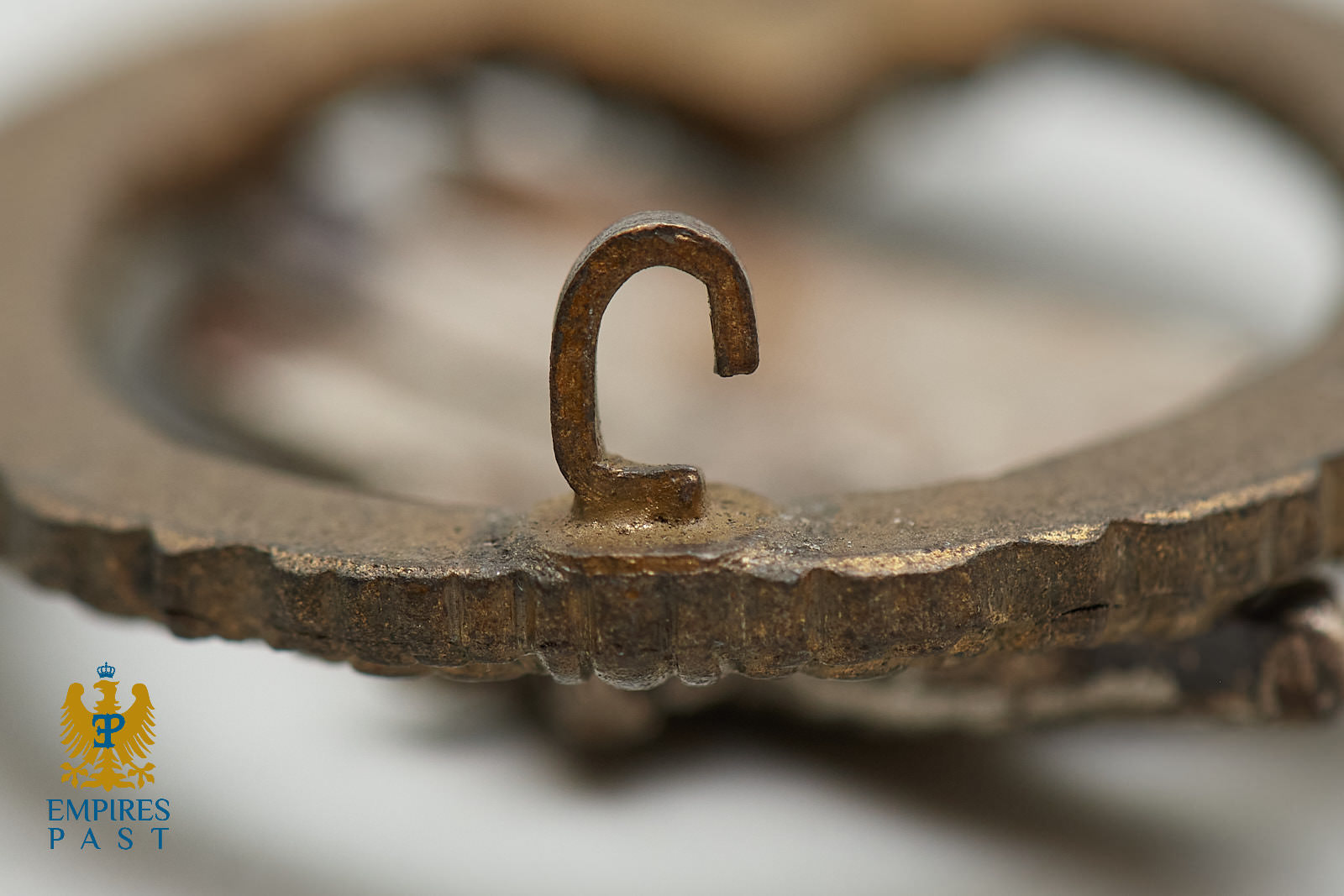
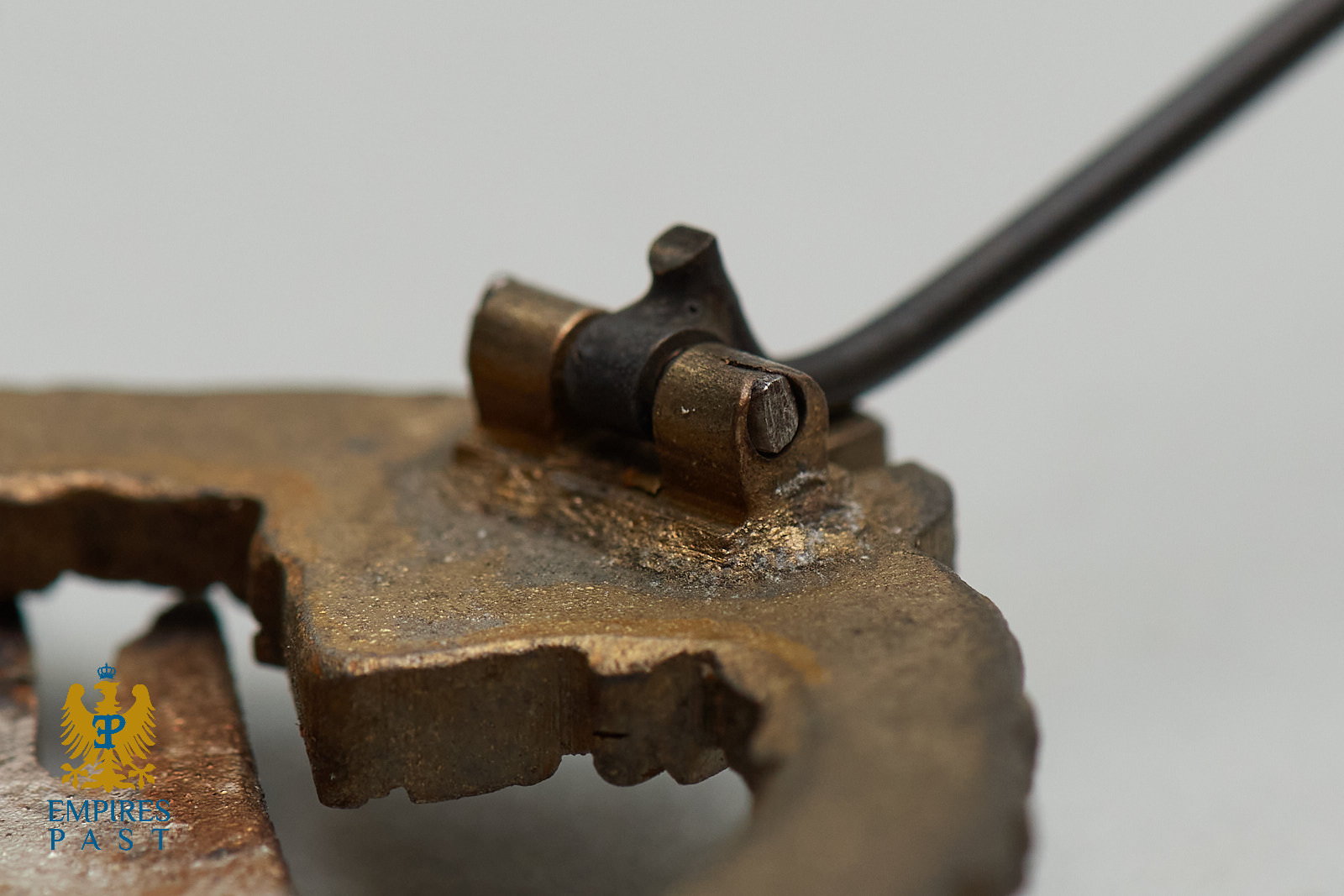
Product Description: This Juncker Heeres Fallschirmjäger Abzeichen is a great example of the scarce and extremely desirable badge issued to airborne troops of the German Army. This is a wartime example, made of two pieces of fine zinc. This badge has outstanding finish for a wartime zinc award, with a great look. The gilded wreath and eagle retain virtually all of the original gold. The central eagle emblem likewise shows nearly all of the original silvering. There is a light uncleaned patina, and all of the original detail is intact. The reverse of this eye-catching Heeres Fallschirmjäger Abzeichen also shows full original finish and a mild old patina. It is unmarked, but this badge is known to have been produced by the firm of C. E. Juncker in Berlin. The hardware setup features a block hinge and sheet metal catch with catch plate. Both are still held in place with the original solder. The classic Juncker blued metal pin is intact and functional. The rivets are tight and all original. This is a choice example of a badge that is becoming increasingly hard to find. The condition of this one rates as excellent.
Historical Description: Prior to September 1937, German Army personnel who had successfully qualified as paratroopers had been awarded the Luftwaffe version of this badge. The German Heer wanted a distinctive badge to recognize the achievement of its own paratroopers. On September 1, 1937, the Heer Paratrooper Badge was officially instituted. The Heer version was similar in design to that of the Luftwaffe badge; however the new Heer version would utilize a Heer Reichsadler at the top of the wreath and remove the large swastika clutched in the diving eagles talons. At the end of successful training, the badge was awarded. Due to the small numbers of Heer Paratroopers to qualify, these early badges are scarce. At the time of the badge’s first issue in 1937, just over 170 men were decorated with the award. The earliest Heer paratrooper badges were made of die struck aluminum, with a gold anodized wreath and silver anodized eagle. They were produced exclusively by C.E. Juncker in Berlin. A second aluminum version was also produced, using a slightly different die that added reinforcement to the fragile eagle talons and head of the eagle at the top of the wreath. A silver version, also produced by Juncker, could be privately purchased. The silver version was stamped .800 for silver content, and many had a custom engraving on the reverse that included the recipient’s name. In 1939, the Luftwaffe absorbed all Heer Paratroopers, and the badge was discontinued. In April 1943, a new German Army parachutist unit was organized, and on June 1, 1943, the Heer Paratrooper Badge was reinstated. The 1943 pattern badges were also manufactured by C. E. Juncker, using the same dies used for previous production, but like most wartime badges, these were now made from zinc. A second manufacturer, Friedrich Linden (FLL) also produced the badge in 1943. Because of the very small total number of German Army Paratroopers who became eligible for this badge from 1937-1945, it was produced in very limited numbers and is today considered a scarce award.
With nearly 30 years of expertise handling, collecting, and studying some of the finest and scarcest military collectibles, Empires Past offers the best prices for your collectibles.
We purchase German, American, and Japanese Military Artifacts.
FROM SINGLE ITEMS TO ENTIRE COLLECTIONS…
WE ARE ALWAYS BUYING!!!