Description
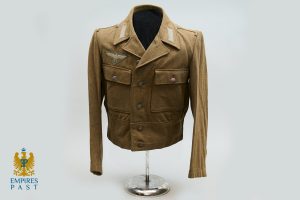
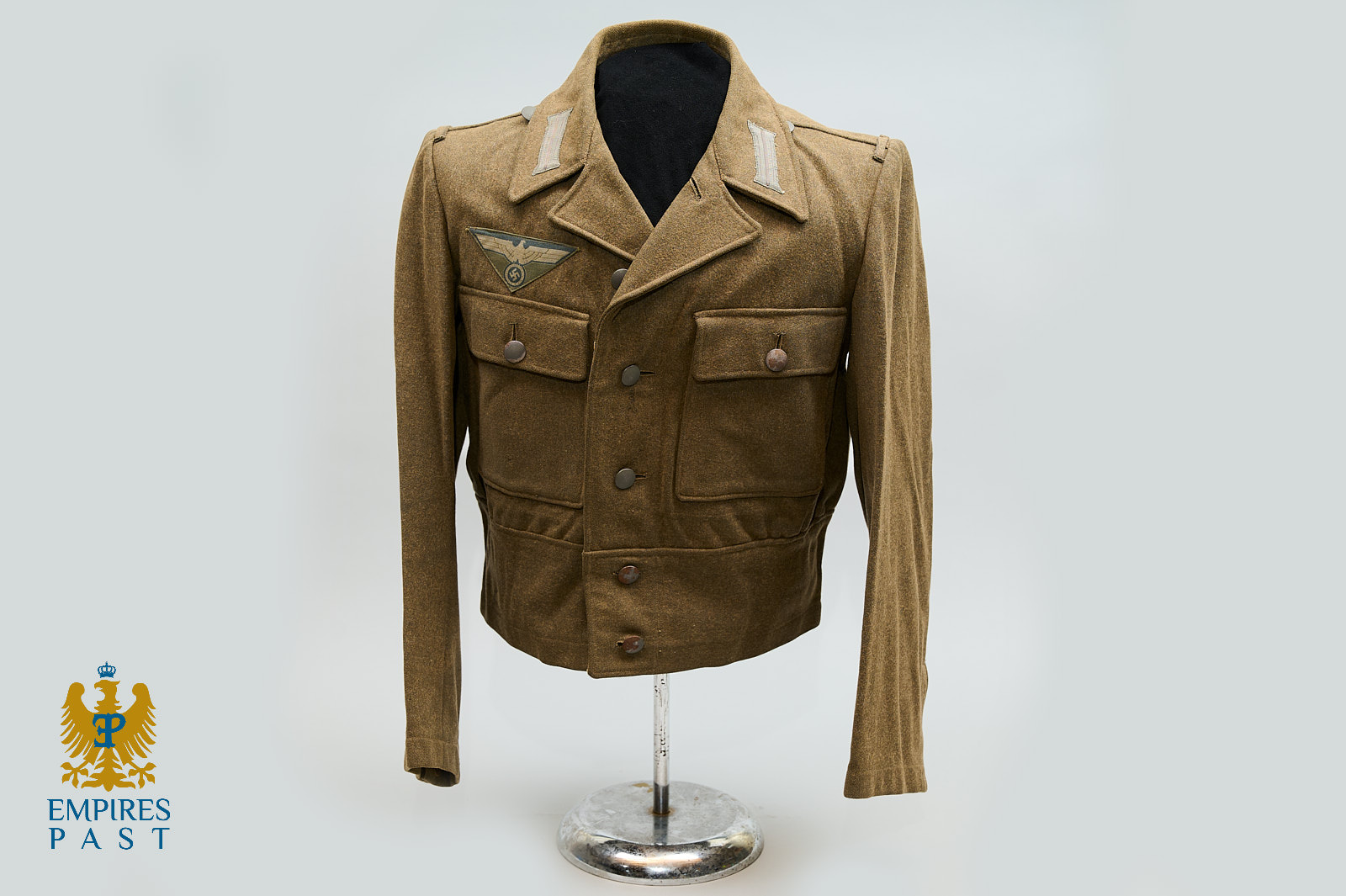
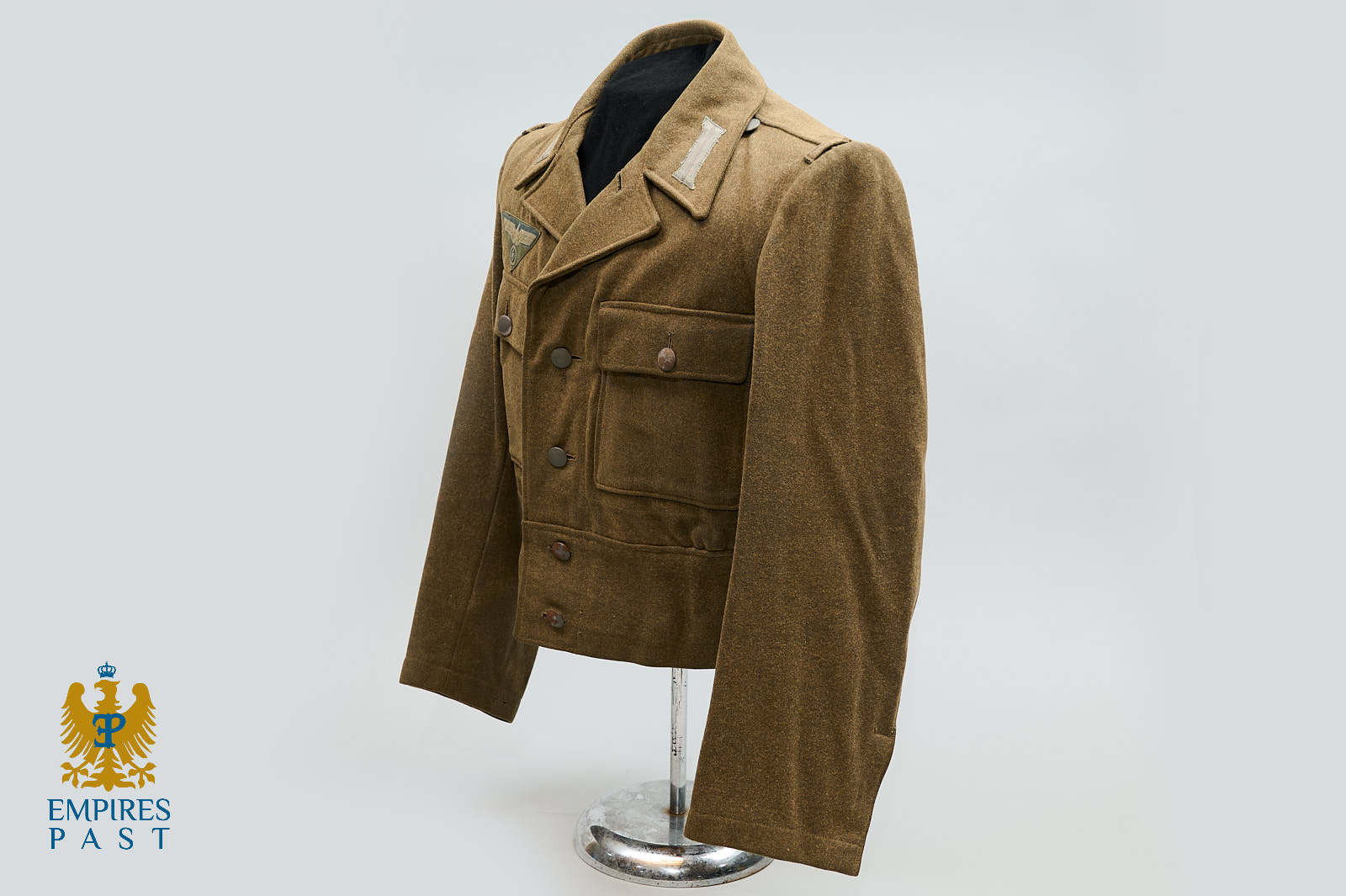
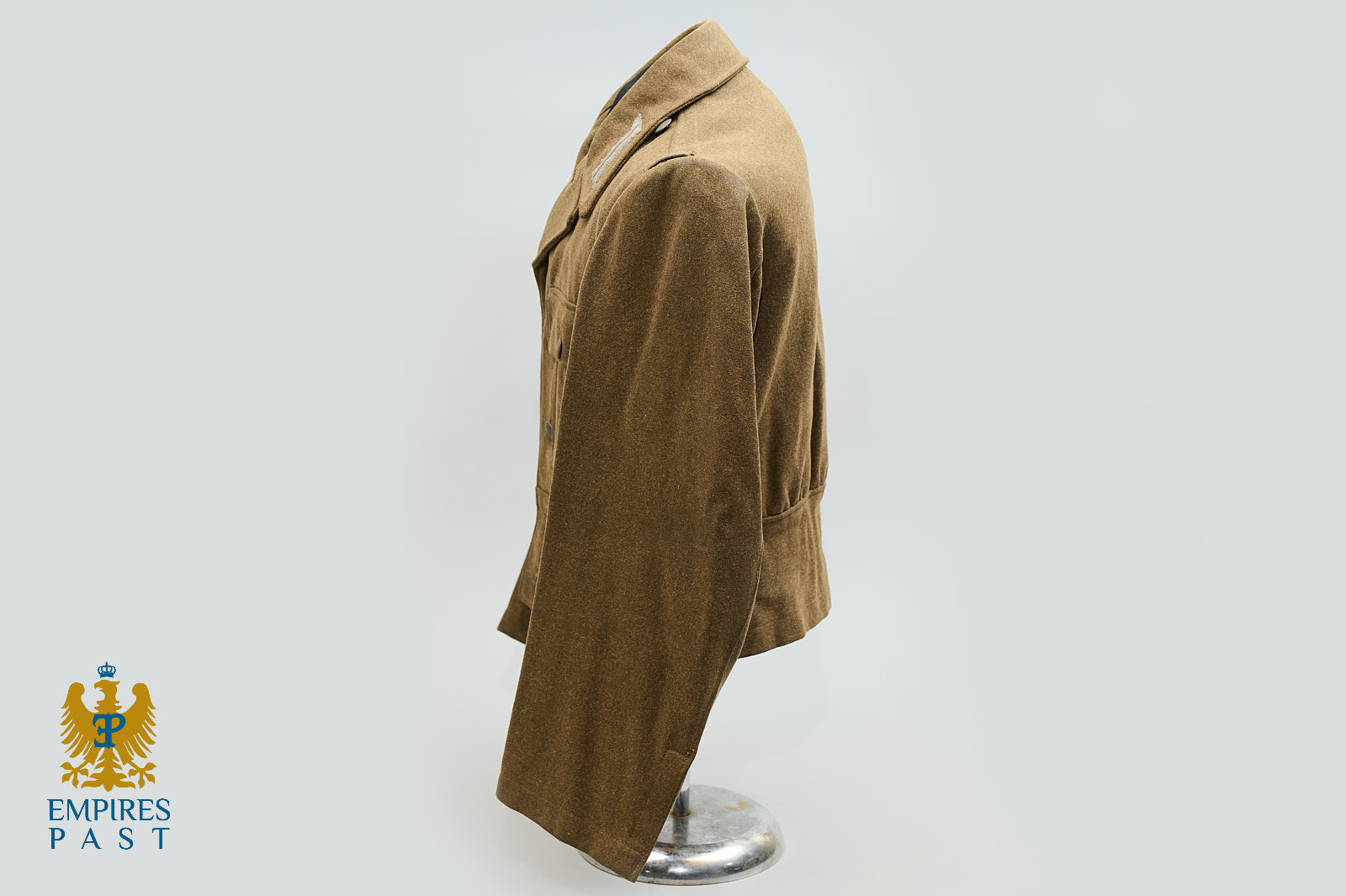
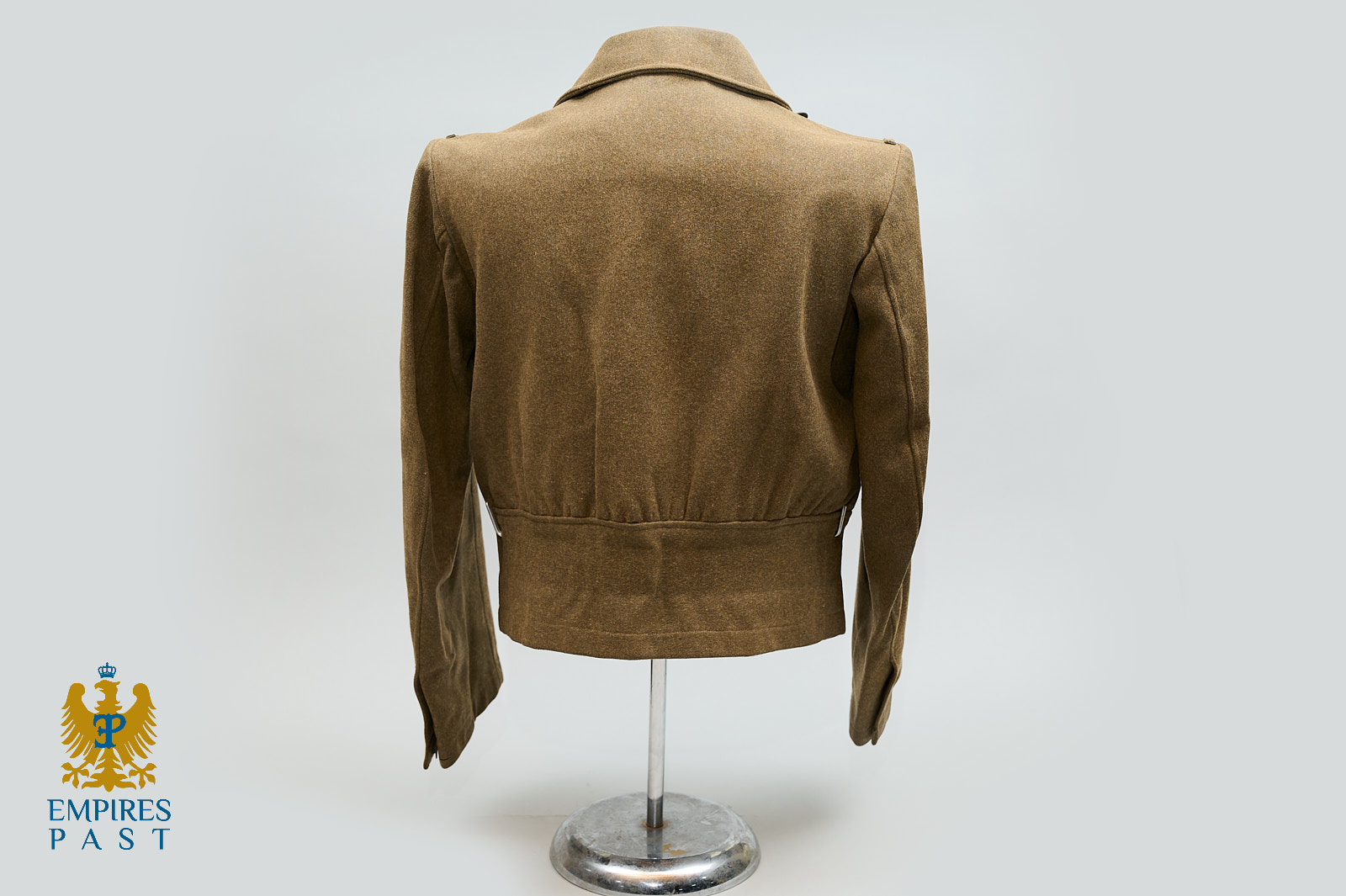
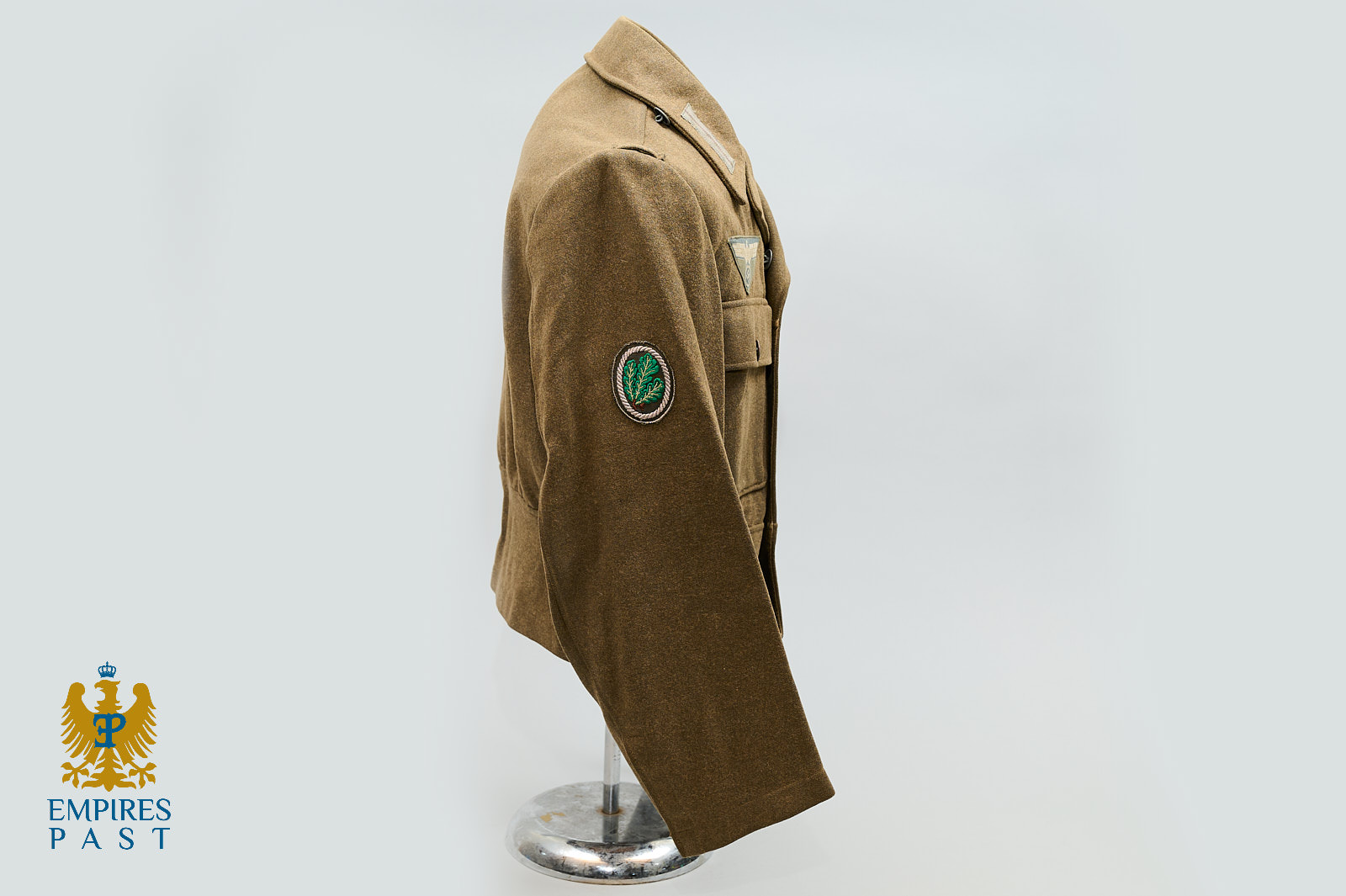
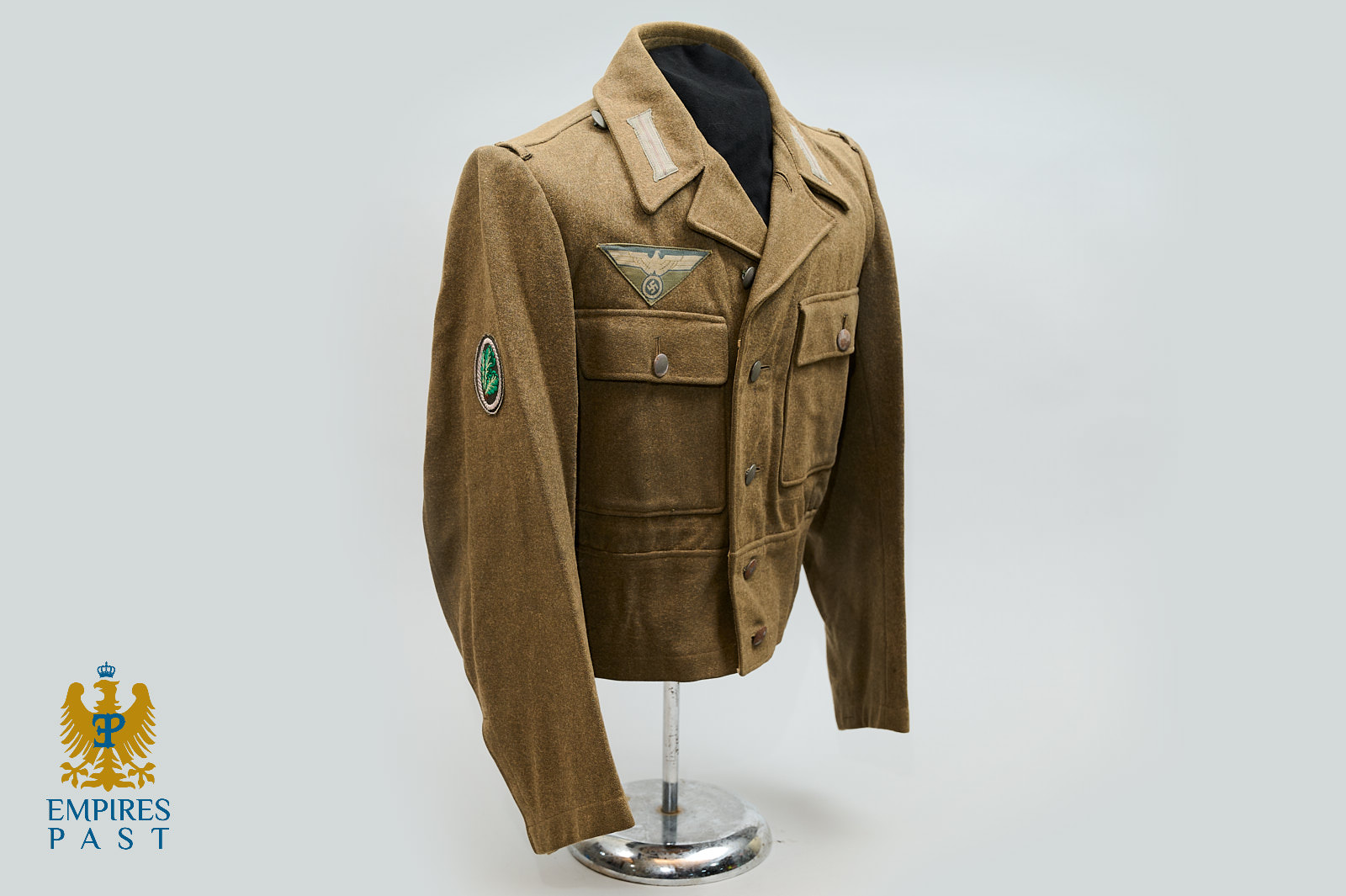
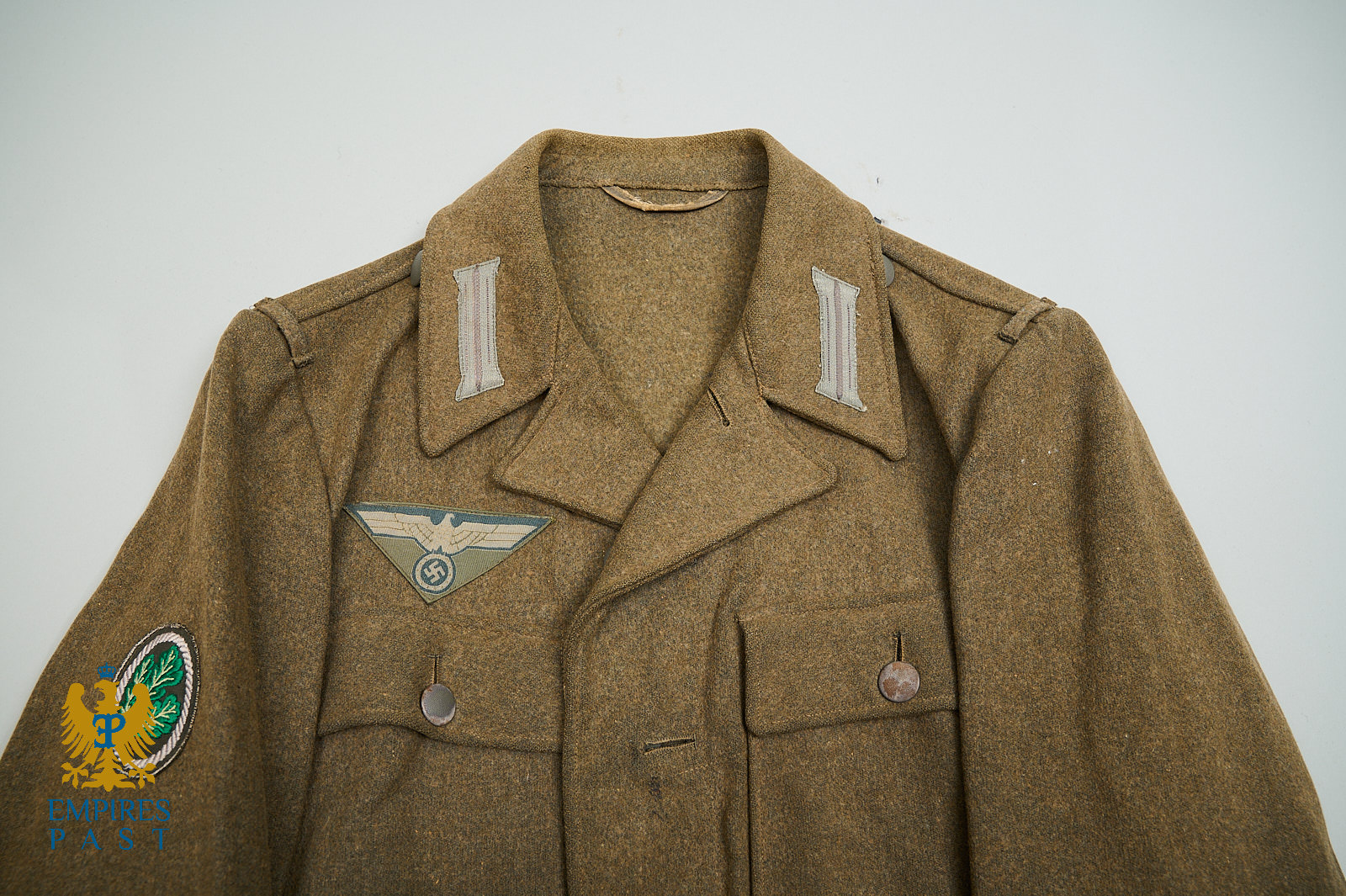
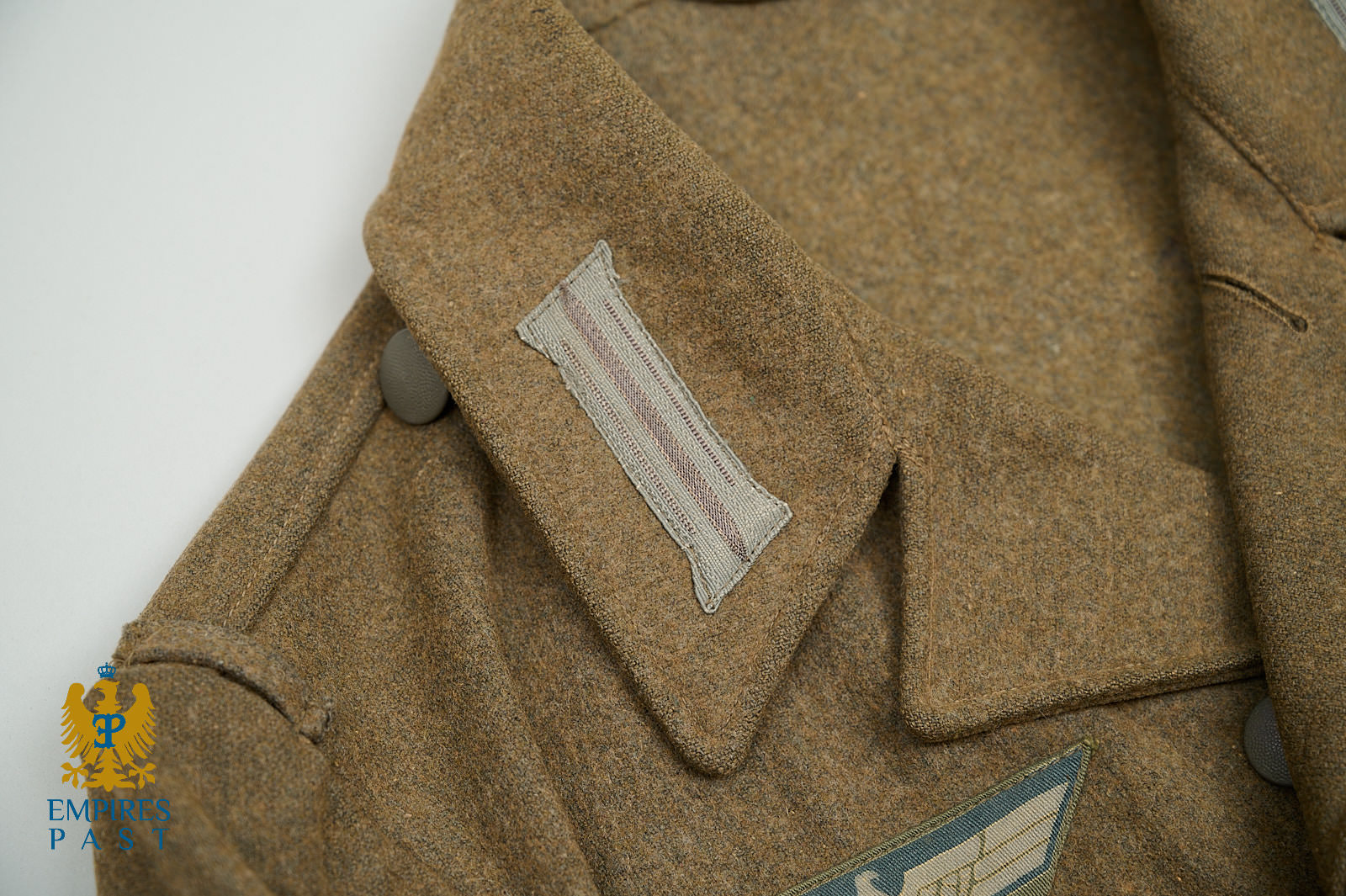
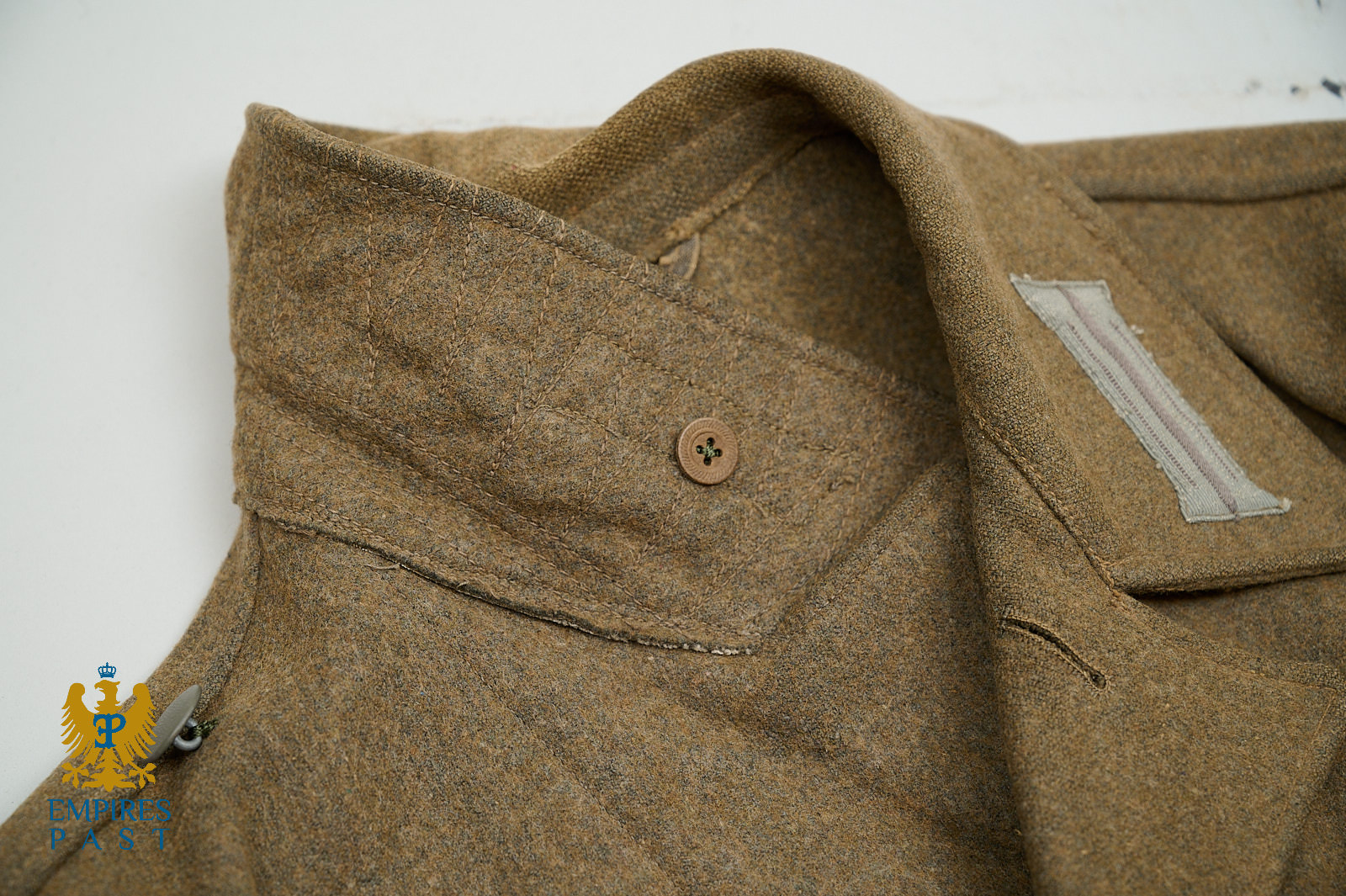
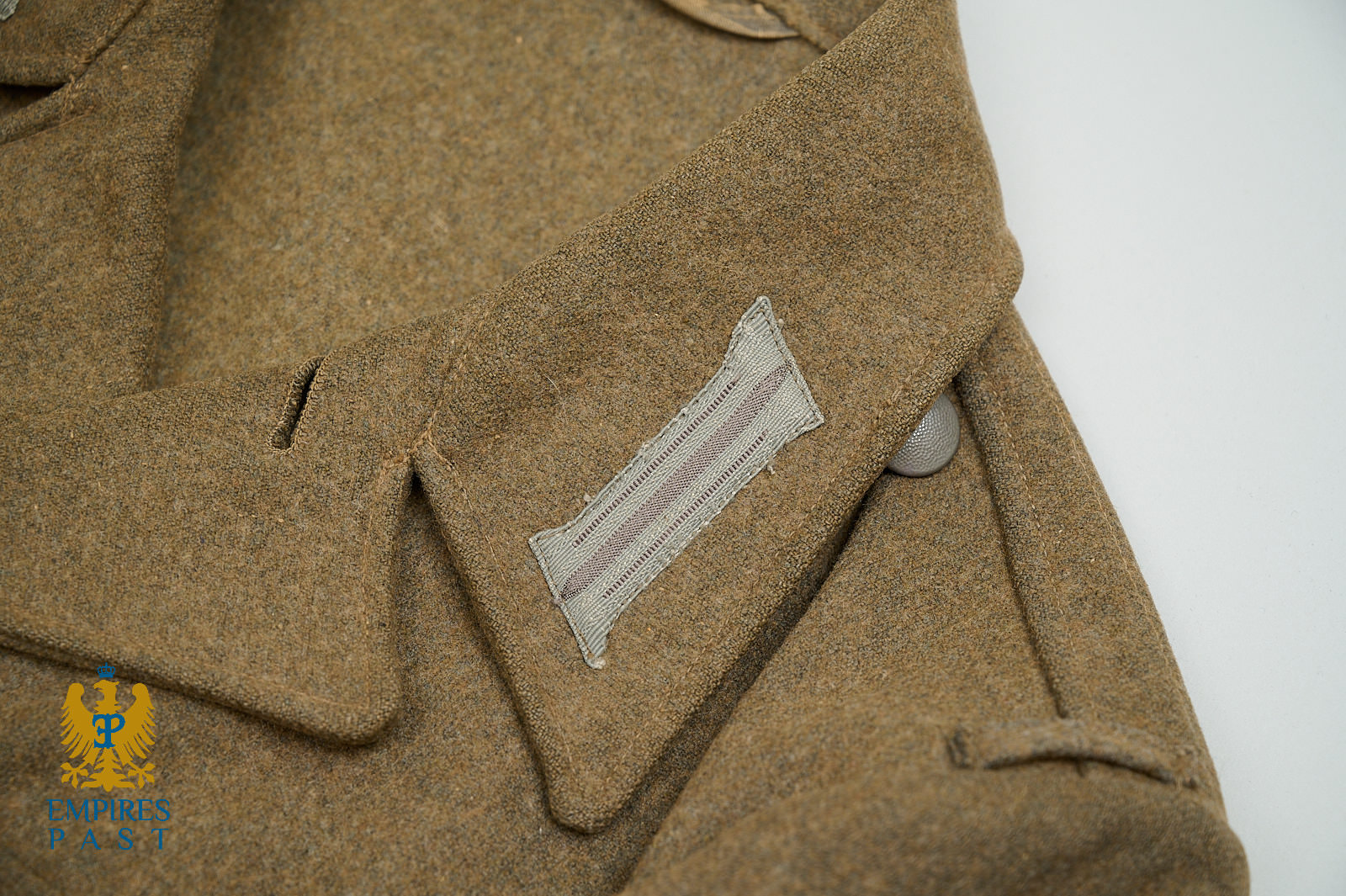
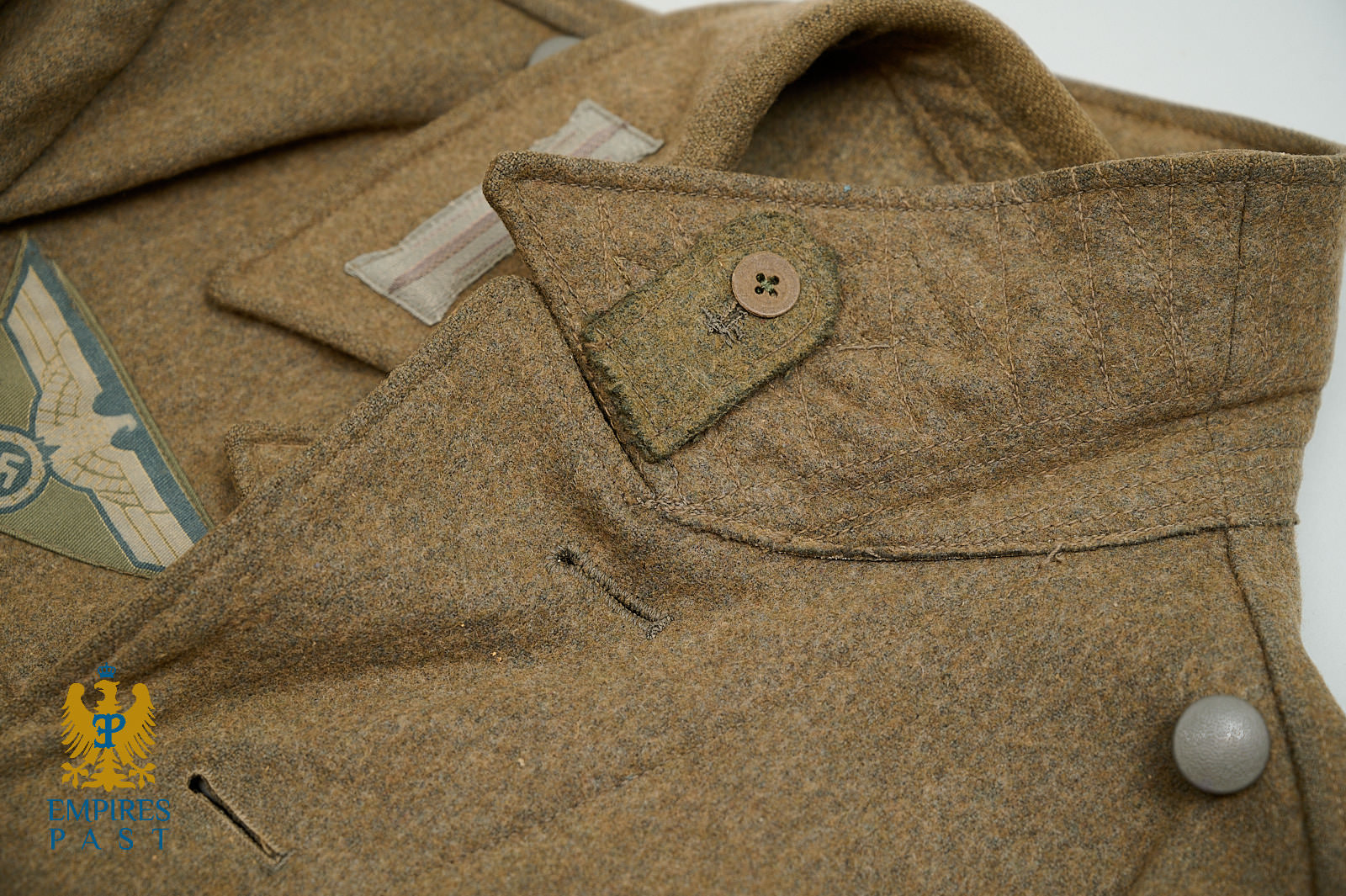
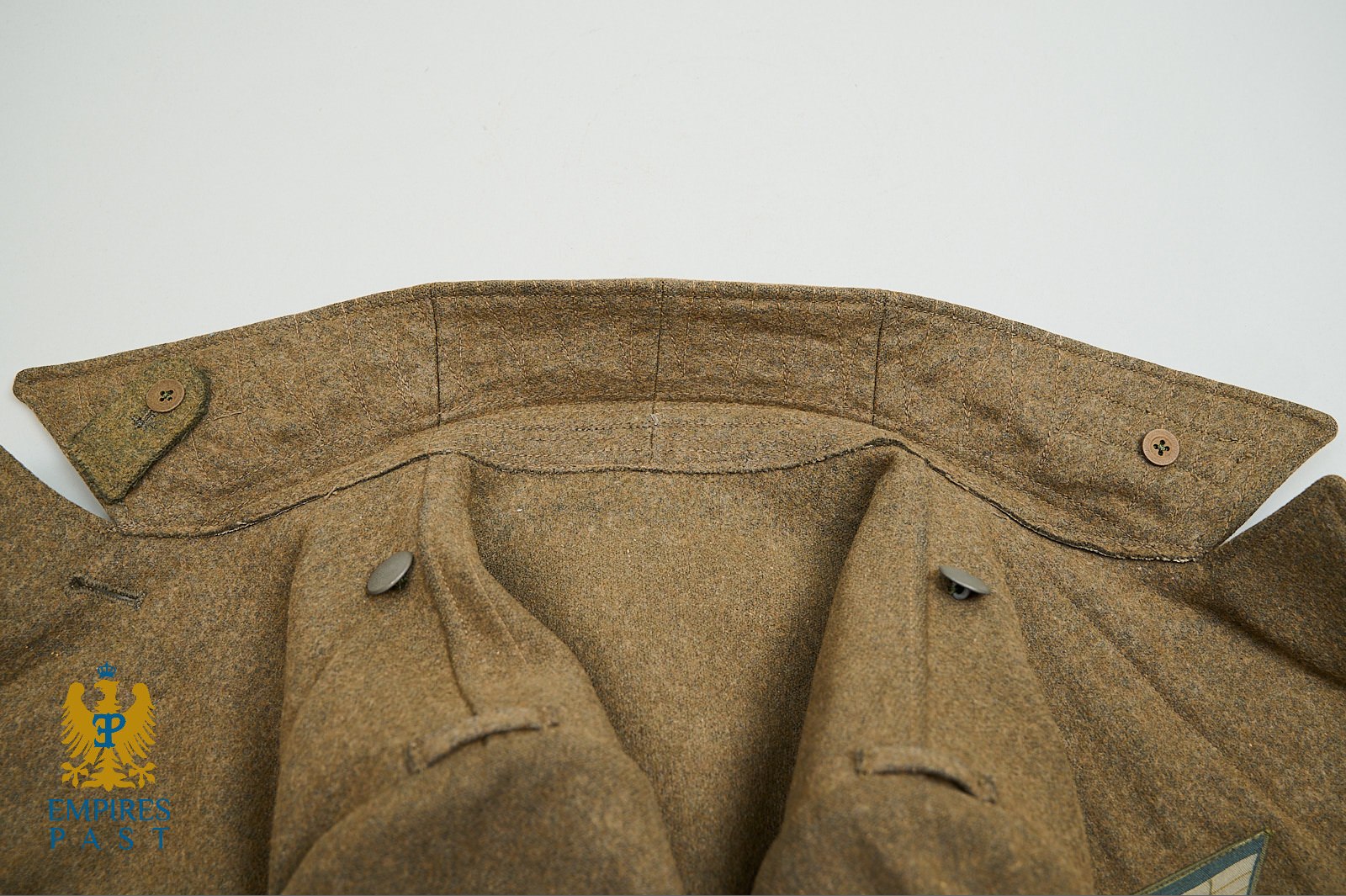
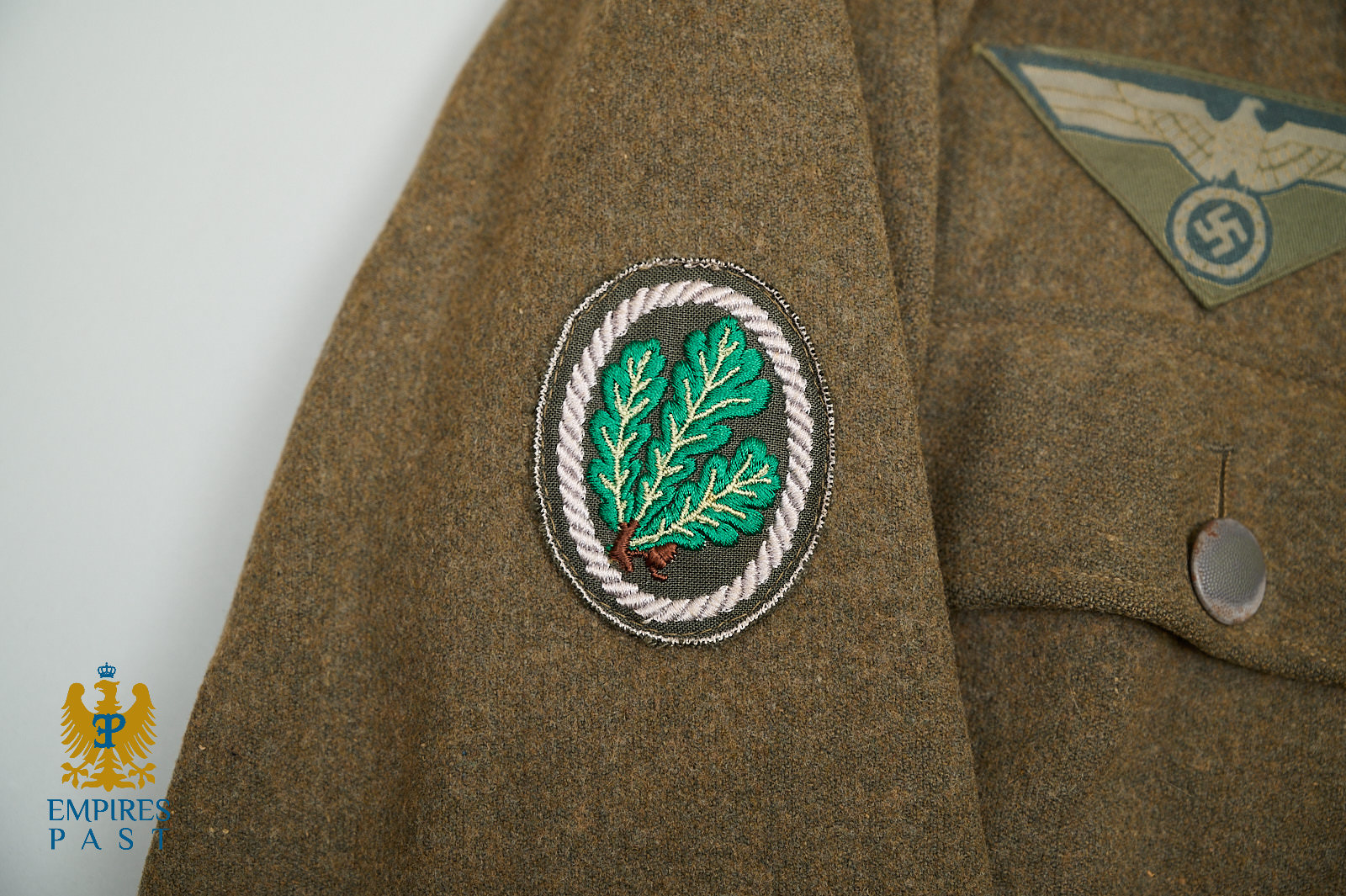
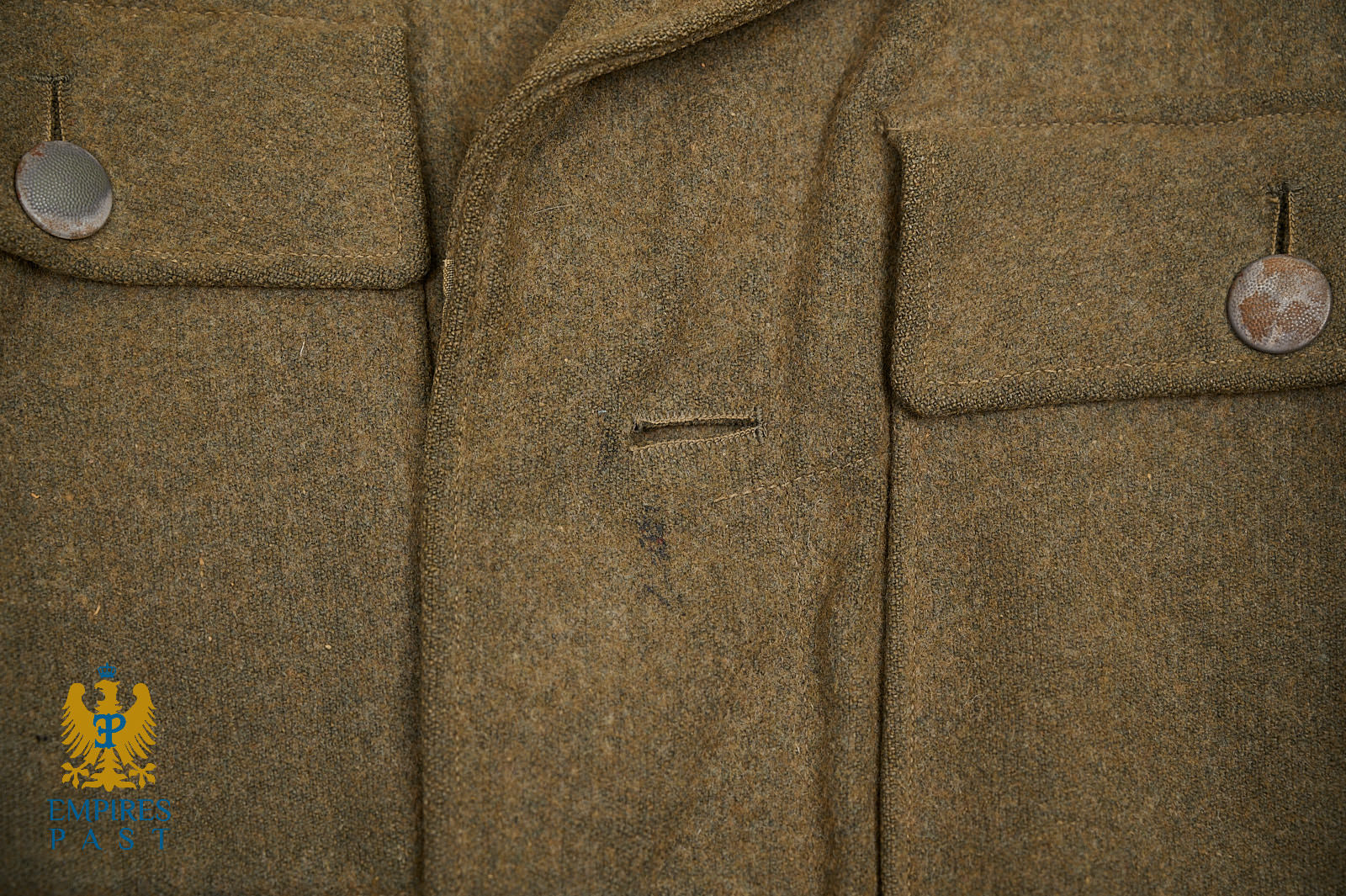
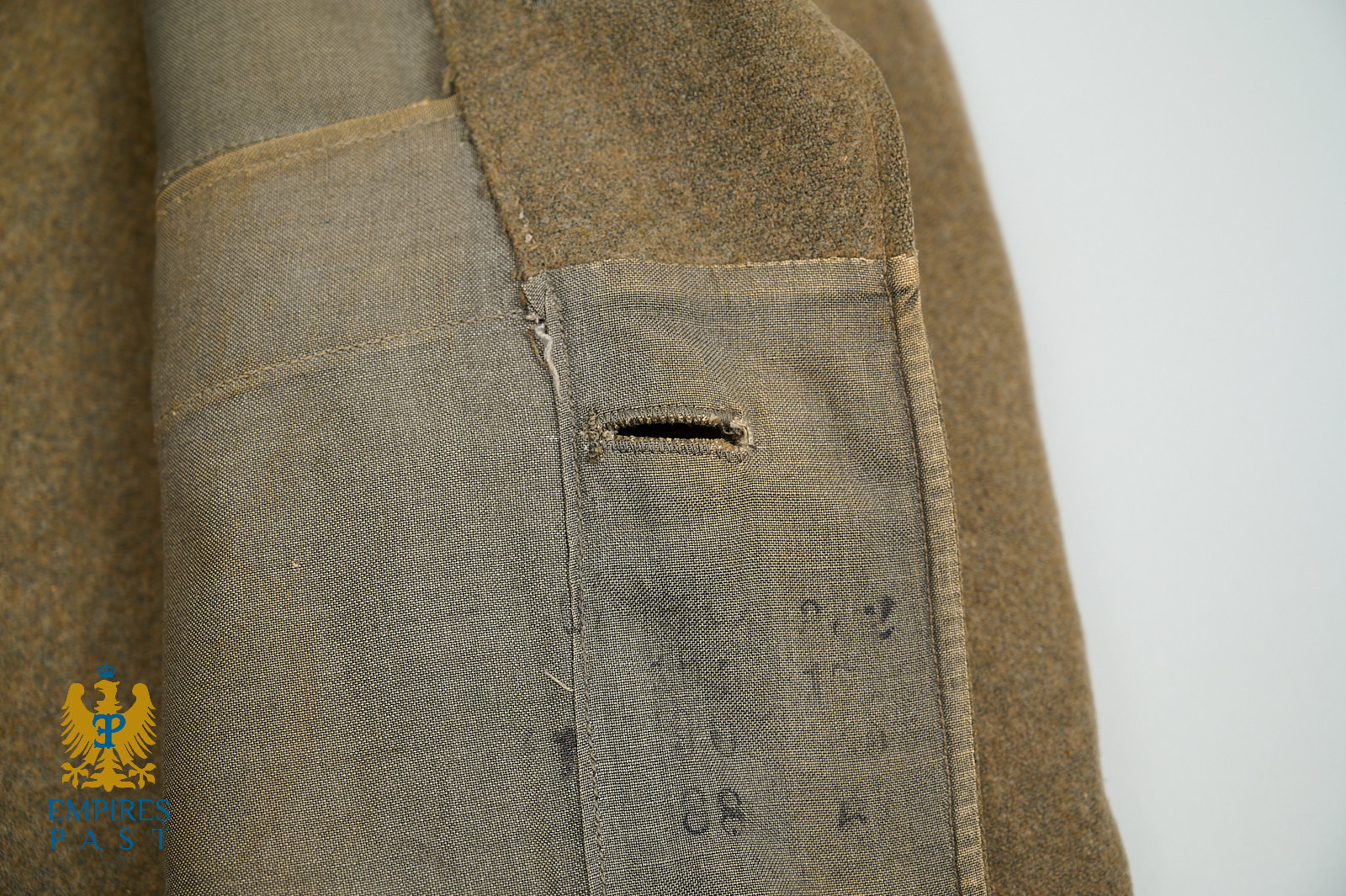
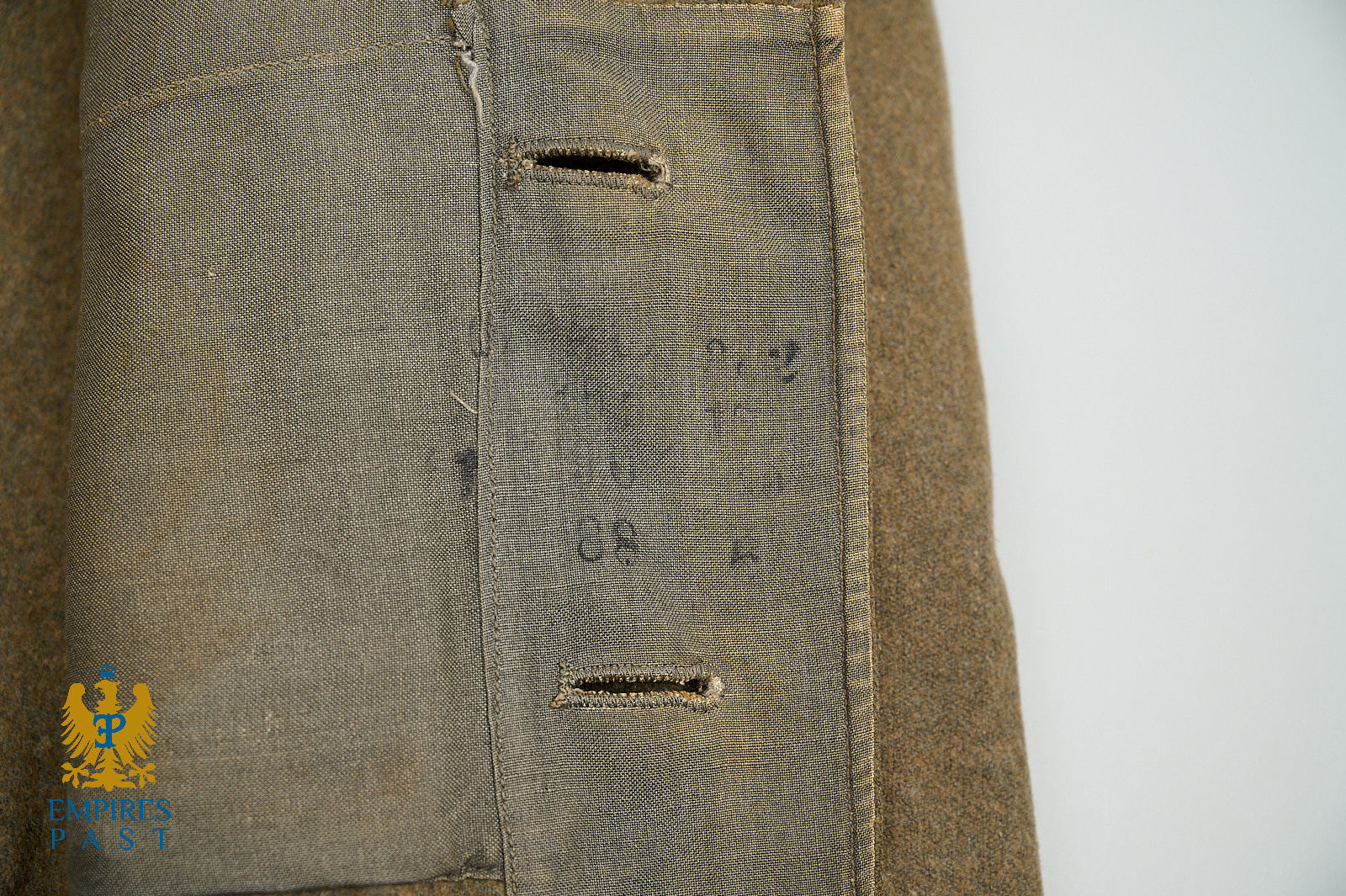
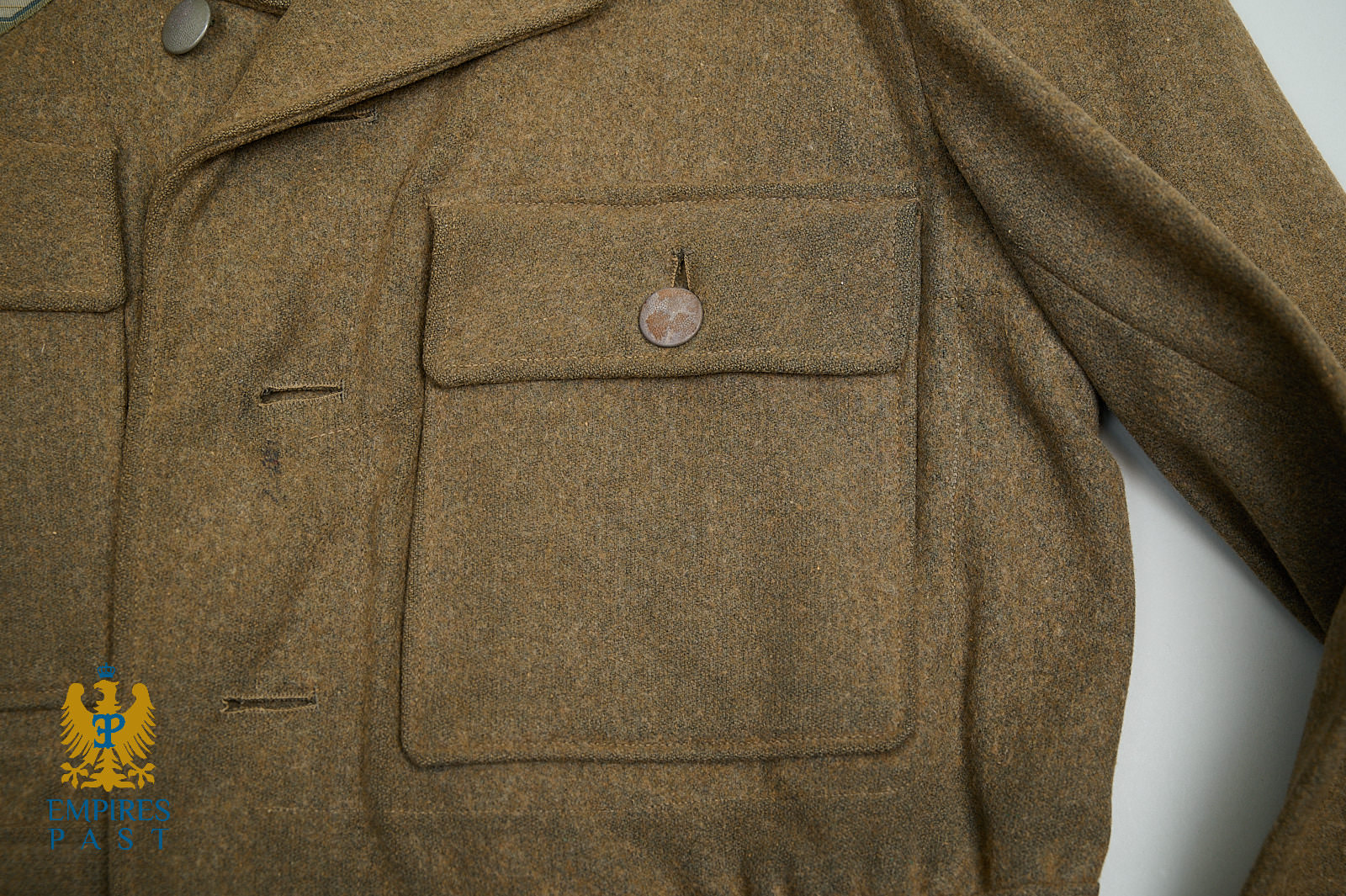
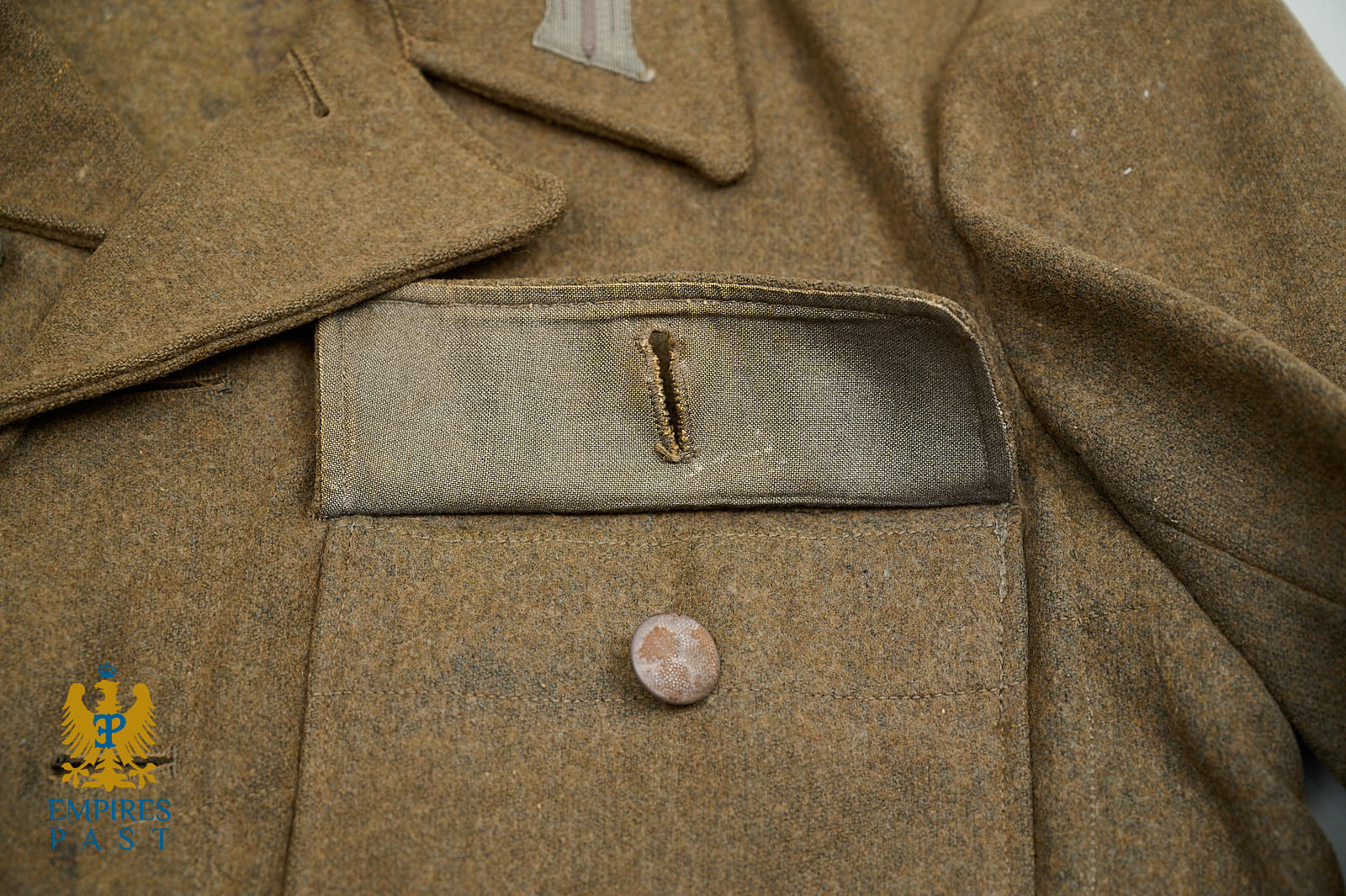
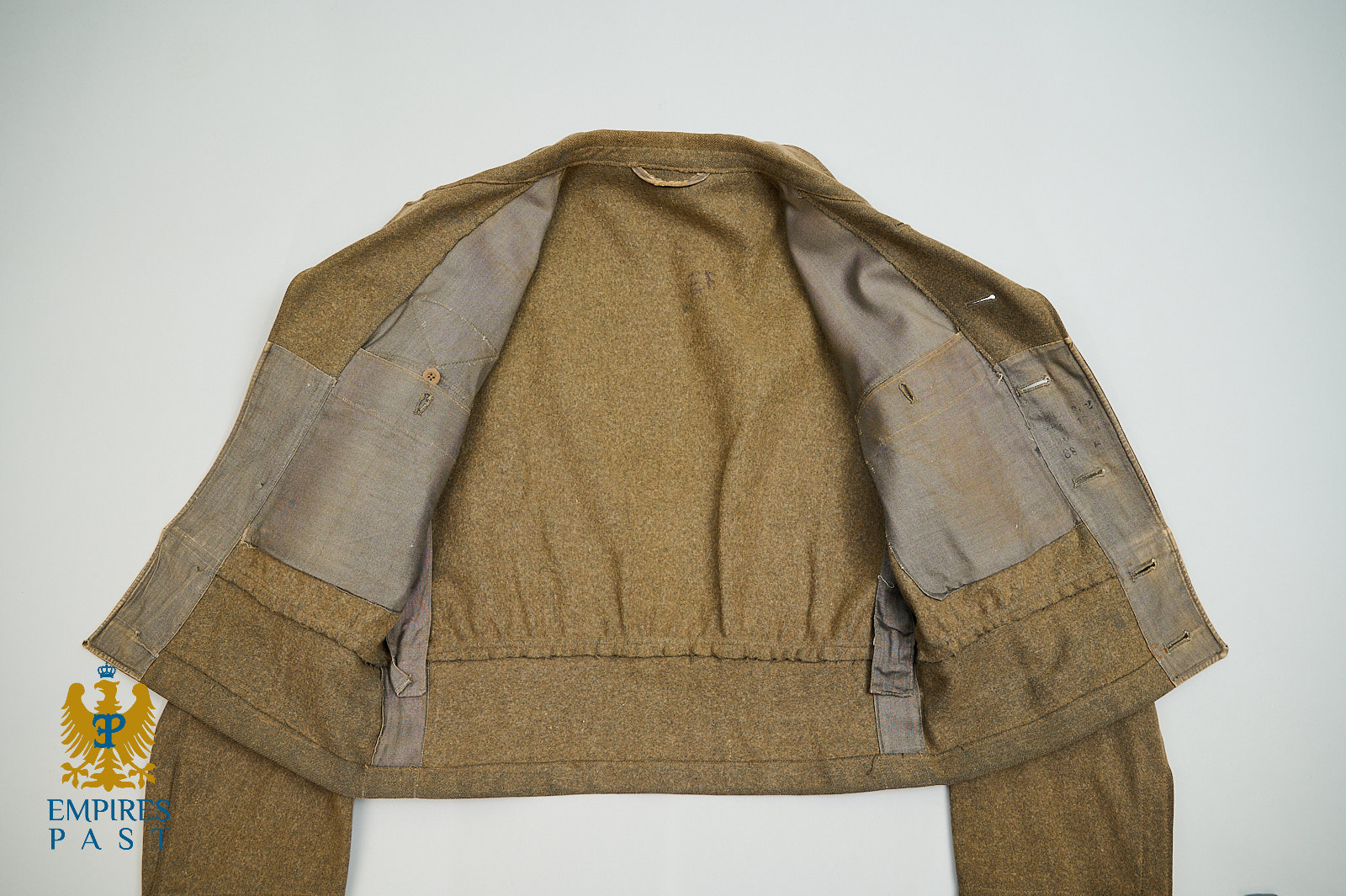
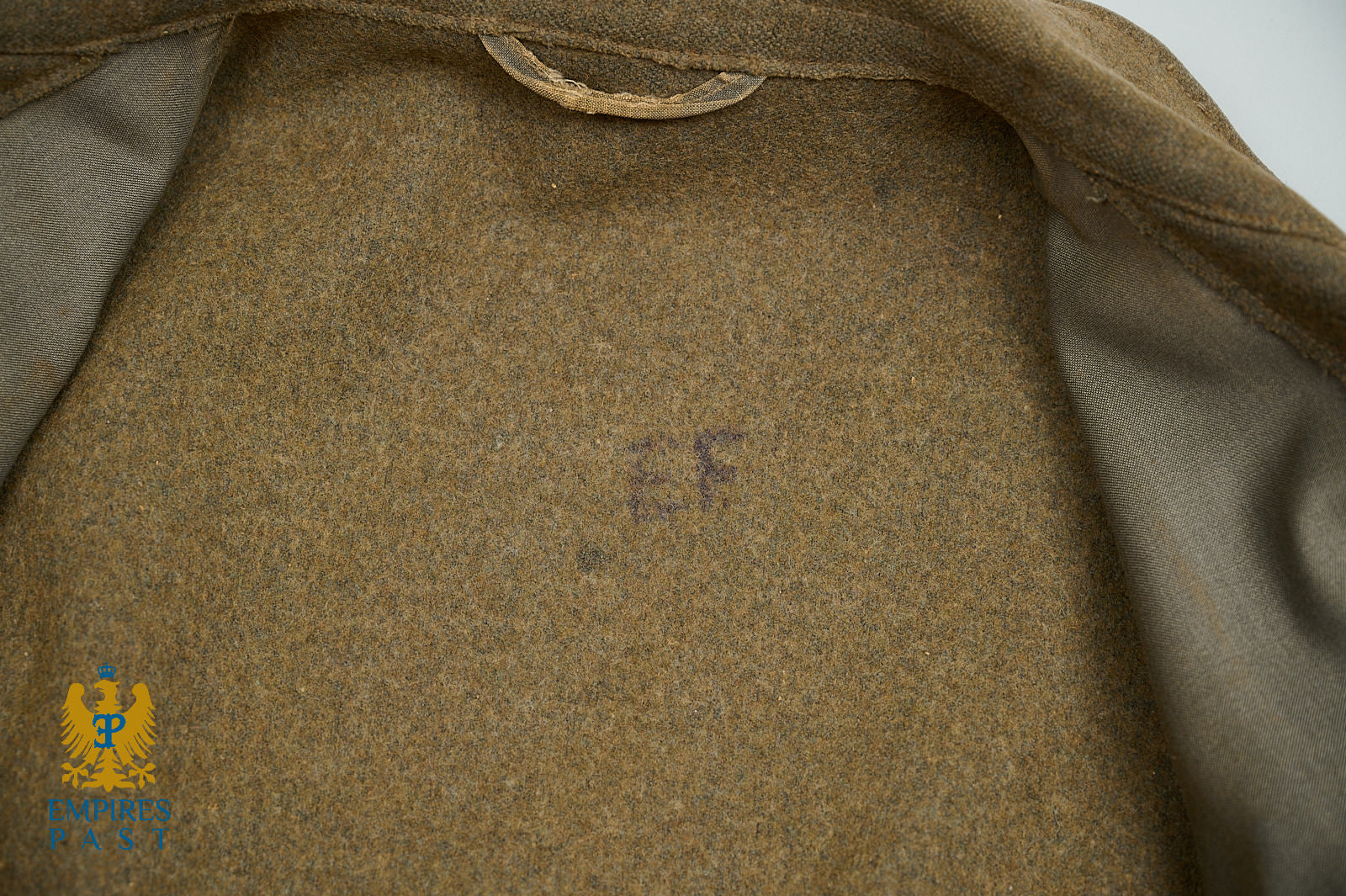
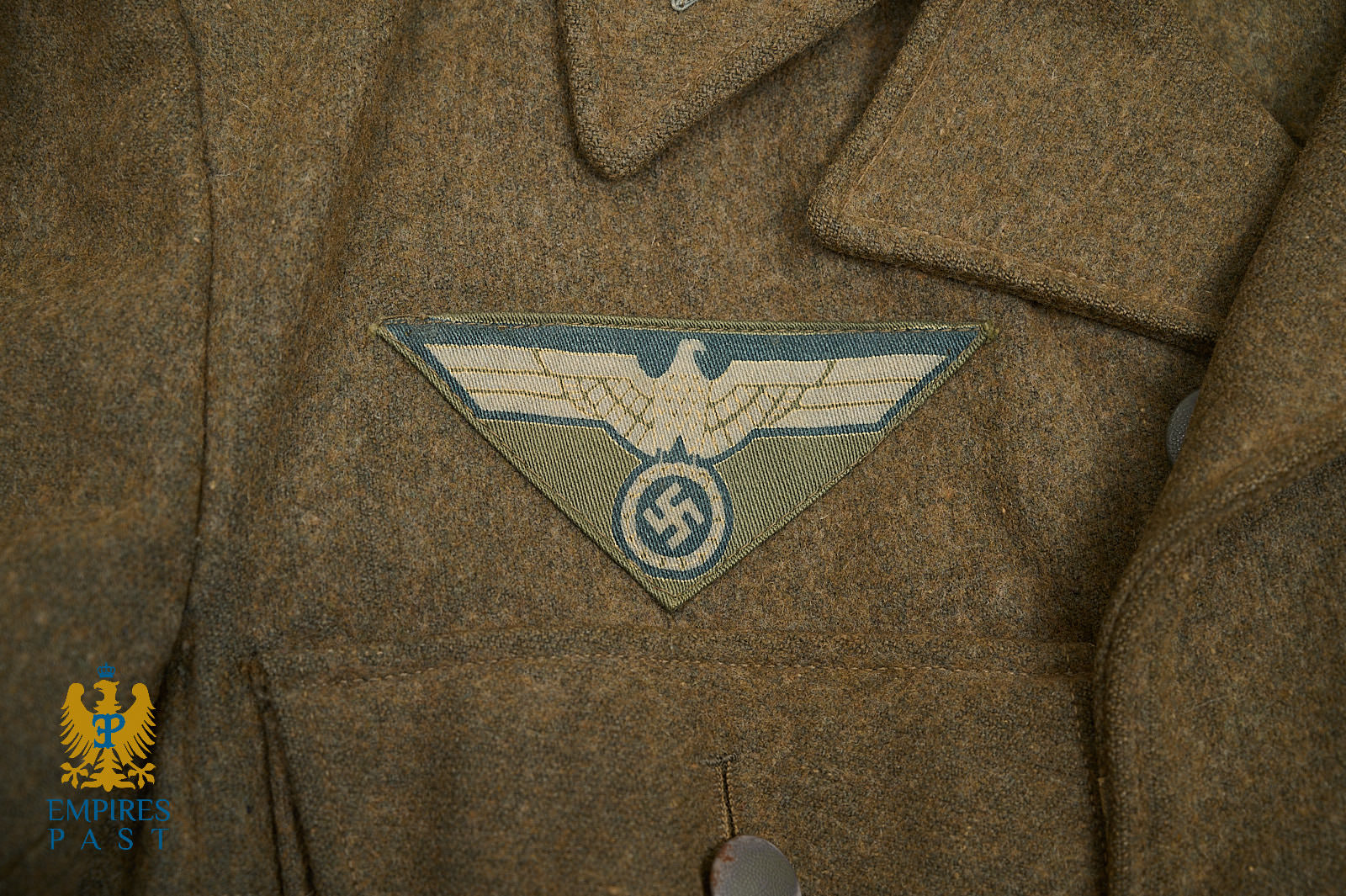
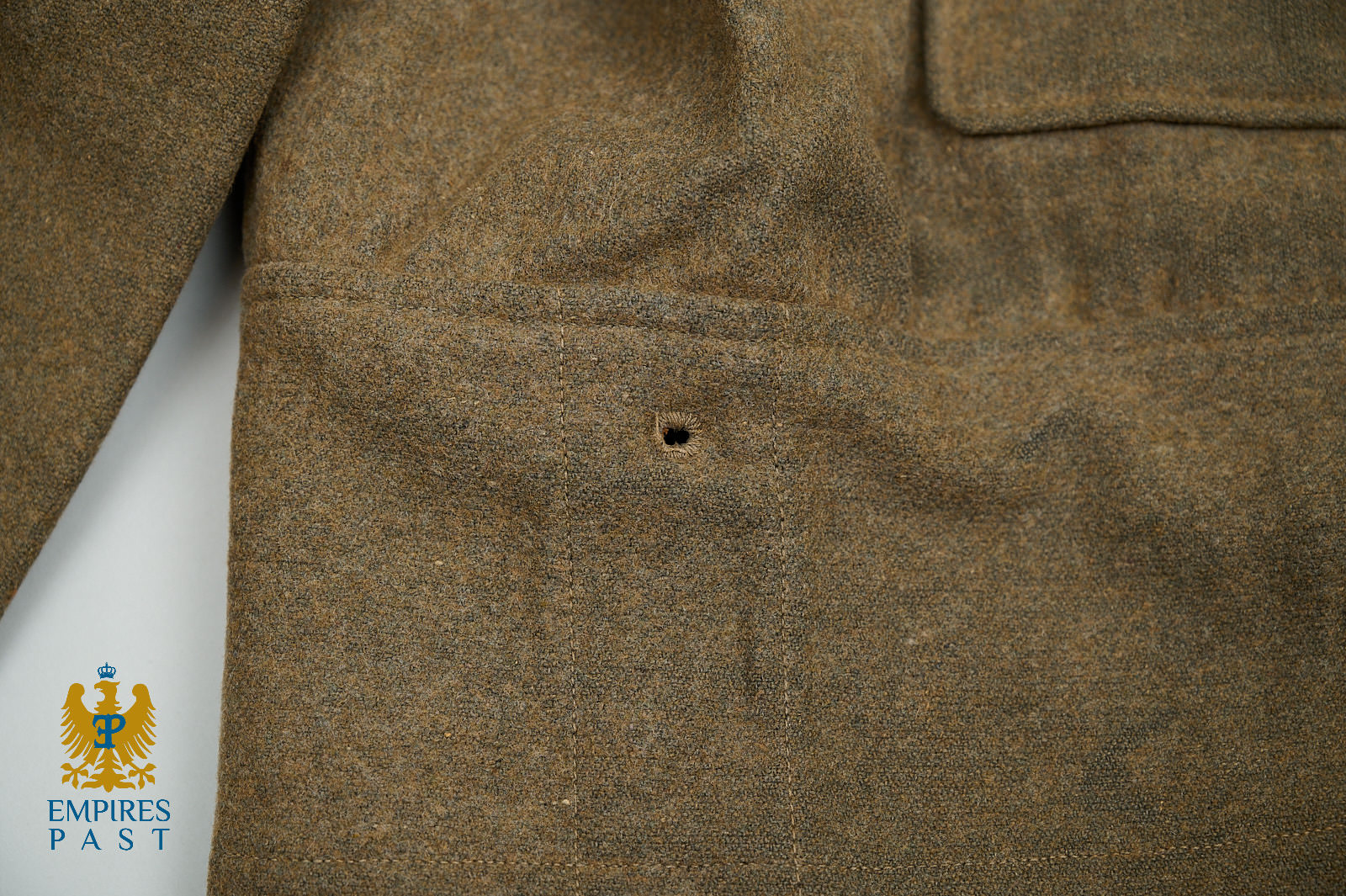
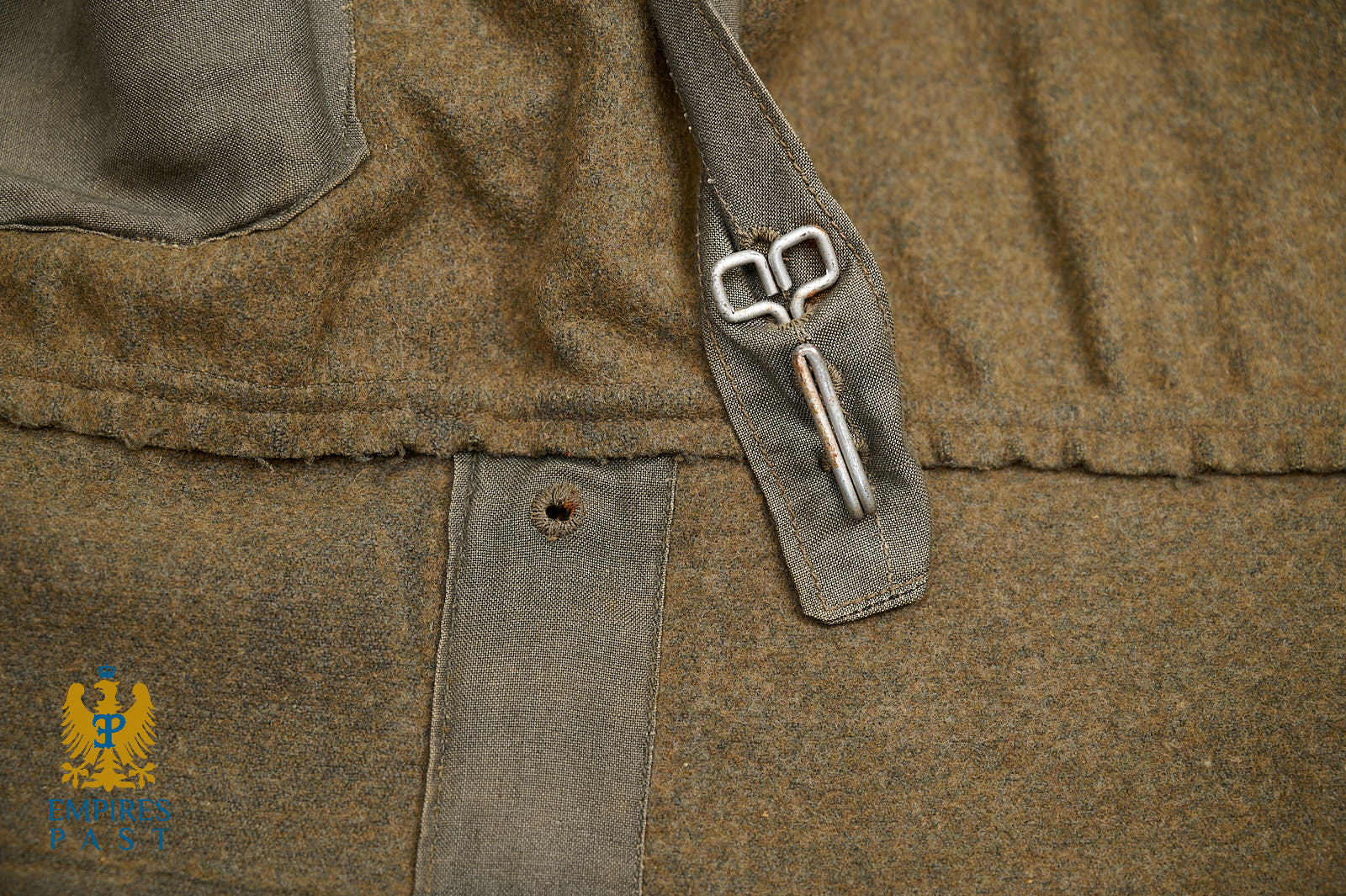
Product Description: This M44 Combat Tunic is an outstanding and extremely desirable example of a late war tunic, that would be hard to upgrade. This is a textbook, factory made, enlisted issue wool garment. It is made out of a coarse late war wool. The brown/green shade is a color the Germans referred to as “Feldgrau 44.” All of the correct late war steel buttons are intact, with some having some paint loss. The breast eagle is a very nice and desirable printed Heer type. It is machine stitched through the lining which is a common factory application method for these. The collar is complete with the original factory applied Litzen, which are the final pattern generic type as one would expect. There is a machine applied patch on the sleeve indicating this was worn by a member of a Jäger (light infantry) unit. This is a late war style of Jäger patch, machine embroidered on a thin rayon backing; this patch is not common to find. There are no shoulder straps, though the buttons and loops for these are present. Inside, this M44 Combat Tunic has a typical partial lining of late war rough rayon. It is nicely marked, with the typical late war size stamps that include a height range for the soldier, as well as an RB number maker code. This gorgeous tunic does show honest wear, with some worn nap on high points and edges, and apparent initials inked inside. There is no damage to note, no holes of any kind, no tears or stains. These enlisted combat uniforms are increasingly hard to find. This is a beautiful and rare tunic with a very rare late war printed eagle, in excellent plus plus condition.
Historical Description: The Deutsche Heer, the Army of the German military during the Third Reich, was established in 1935. Over the next 10 years, German Army troops wore a huge variety of uniforms. Enlisted men generally wore uniforms issued from military depots. Most enlisted soldiers wore wool trousers and a tunic with four external pockets, known as a Feldbluse (field blouse). Before the war, soldiers also were issued a walking-out tunic, with flashy insignia, called the Waffenrock. Officers wore the same general uniform styles but as officers, had to supply their own uniforms. They usually wore tailor made versions. There were also myriad varieties of specialized uniforms worn by certain units or in specific situations, from the stylish black wool “wraps” worn by crews of armored fighting vehicles, to the drab HBT work uniforms. There were tropical and summer uniforms, and camouflage smocks for combat troops. For troops operating in winter climates, there were long wool overcoats, fur clothing articles, and padded jacket and trousers sets. In 1944, a new uniform was introduced, featuring a short jacket with only two external pockets. Most, but not all, German Army uniform jackets bore the Heer emblem of an eagle holding a swastika.
With nearly 30 years of expertise handling, collecting, and studying some of the finest and scarcest military collectibles, Empires Past offers the best prices for your collectibles.
We purchase German, American, and Japanese Military Artifacts.
FROM SINGLE ITEMS TO ENTIRE COLLECTIONS…
WE ARE ALWAYS BUYING!!!