











Description
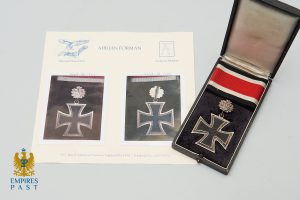
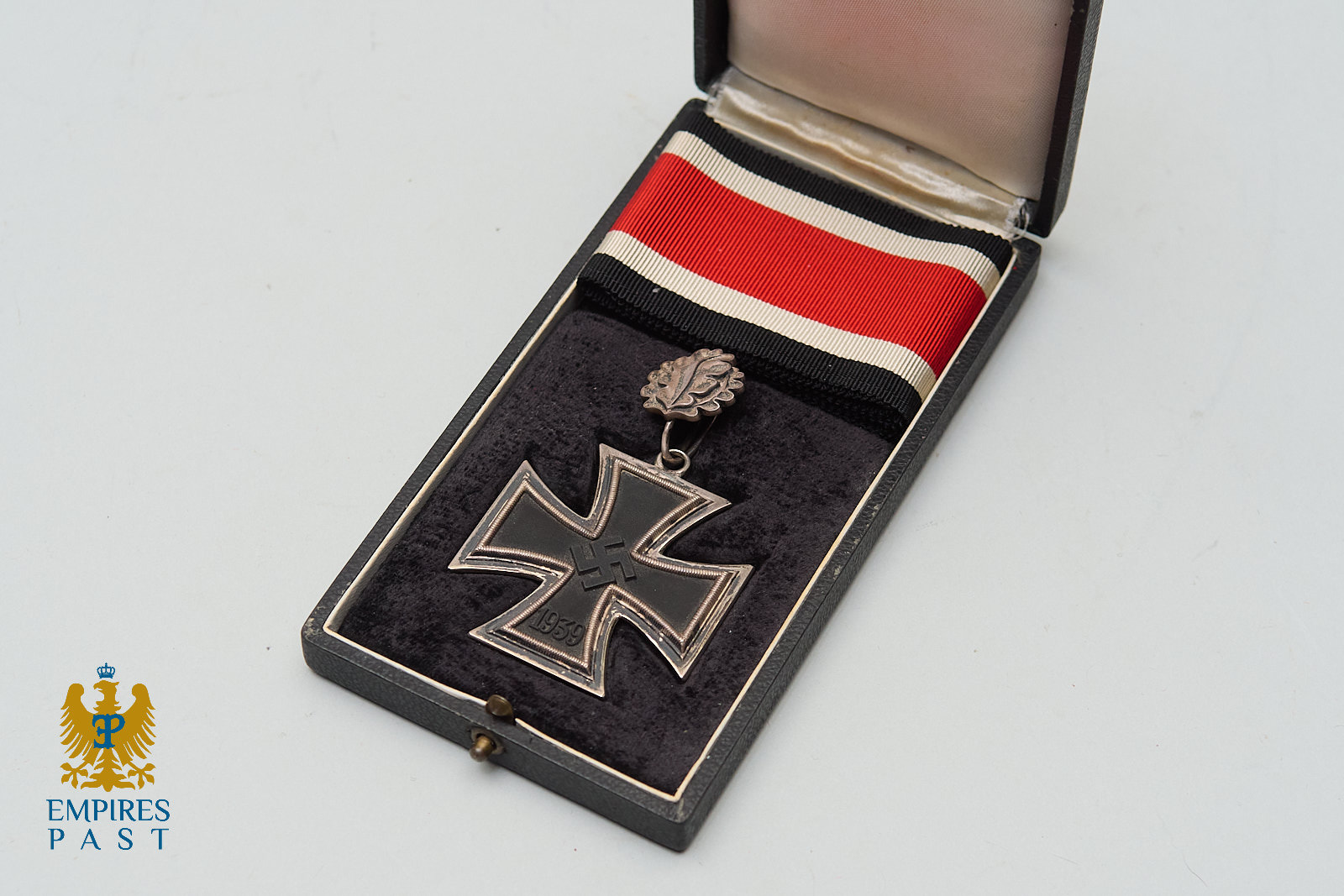
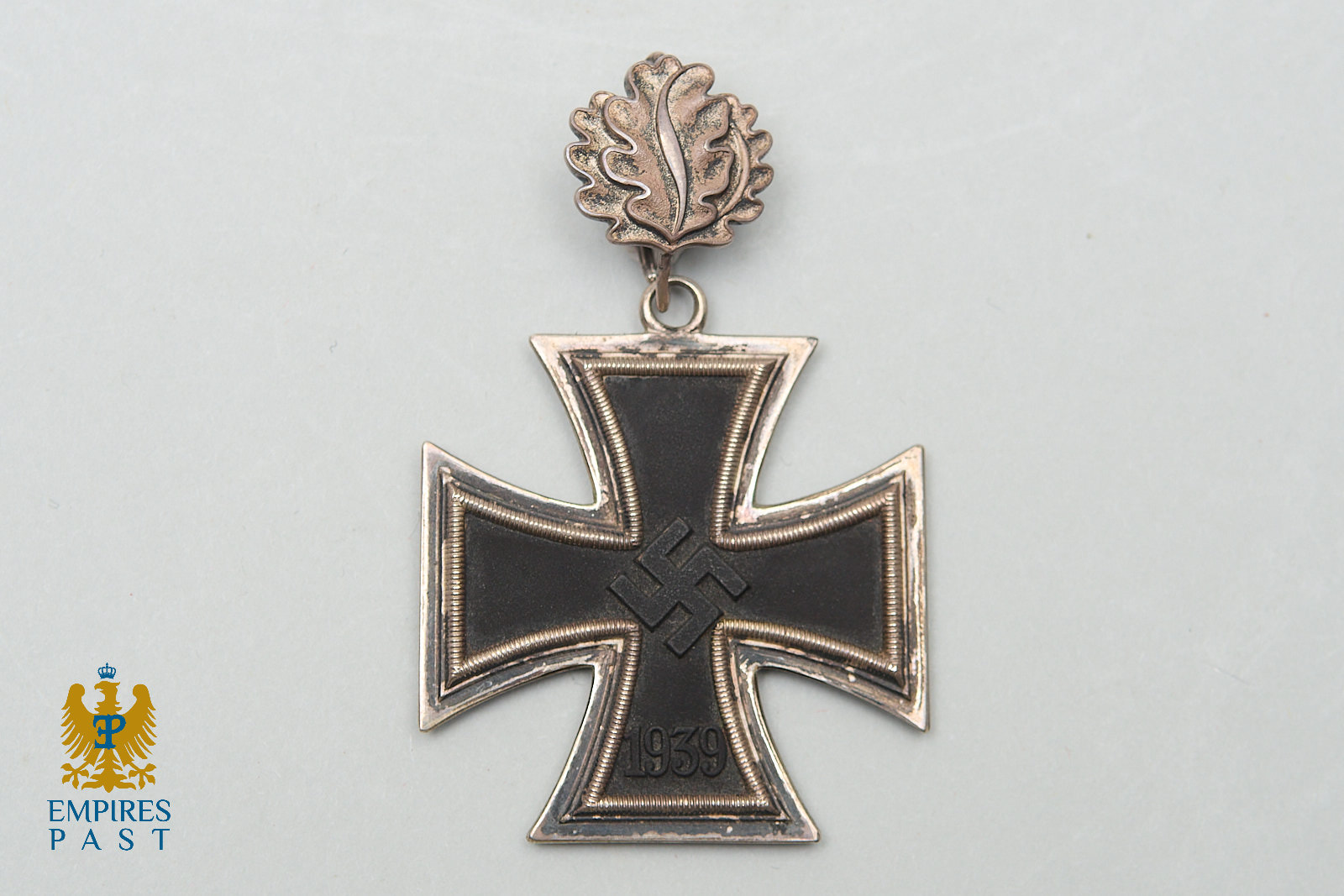
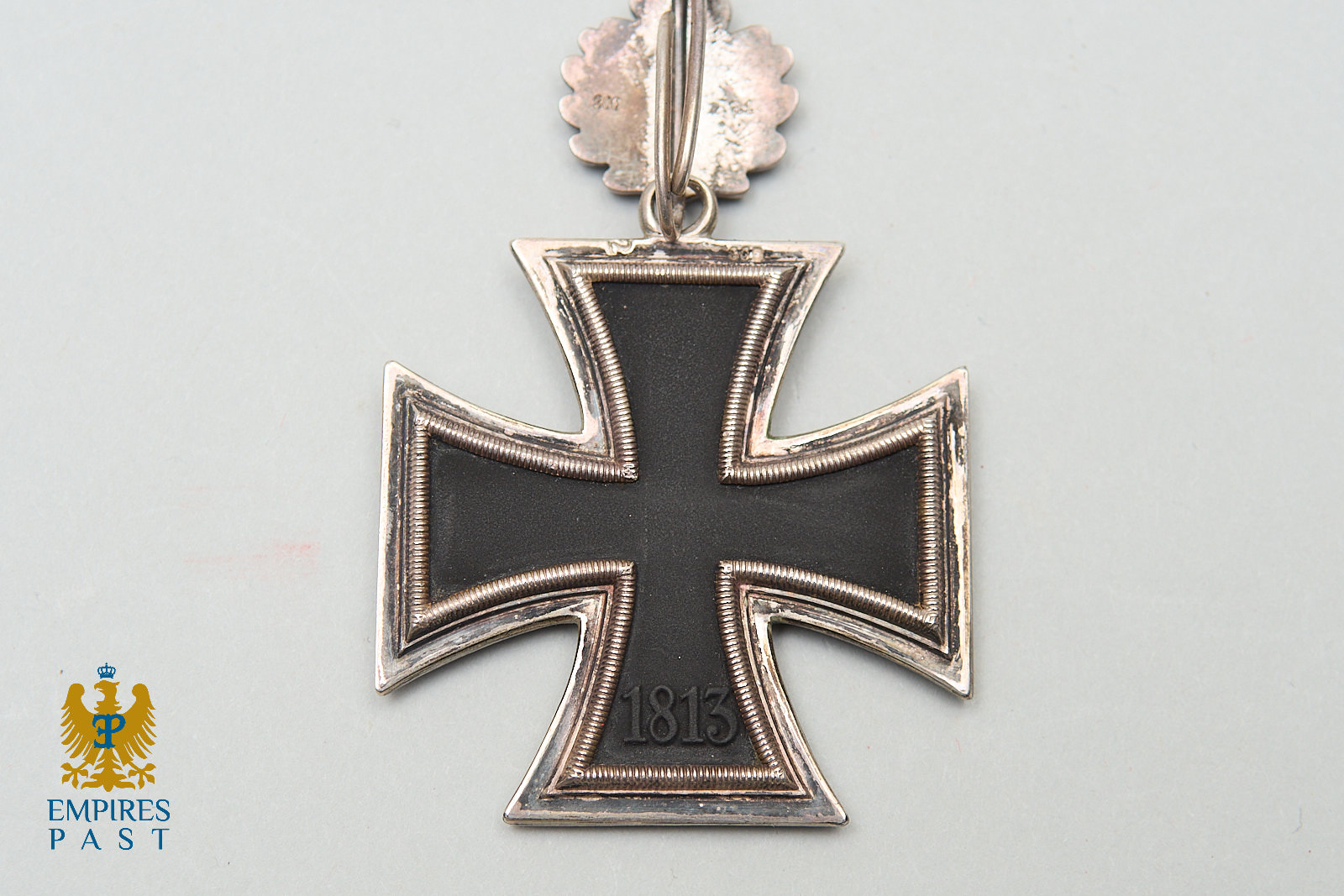
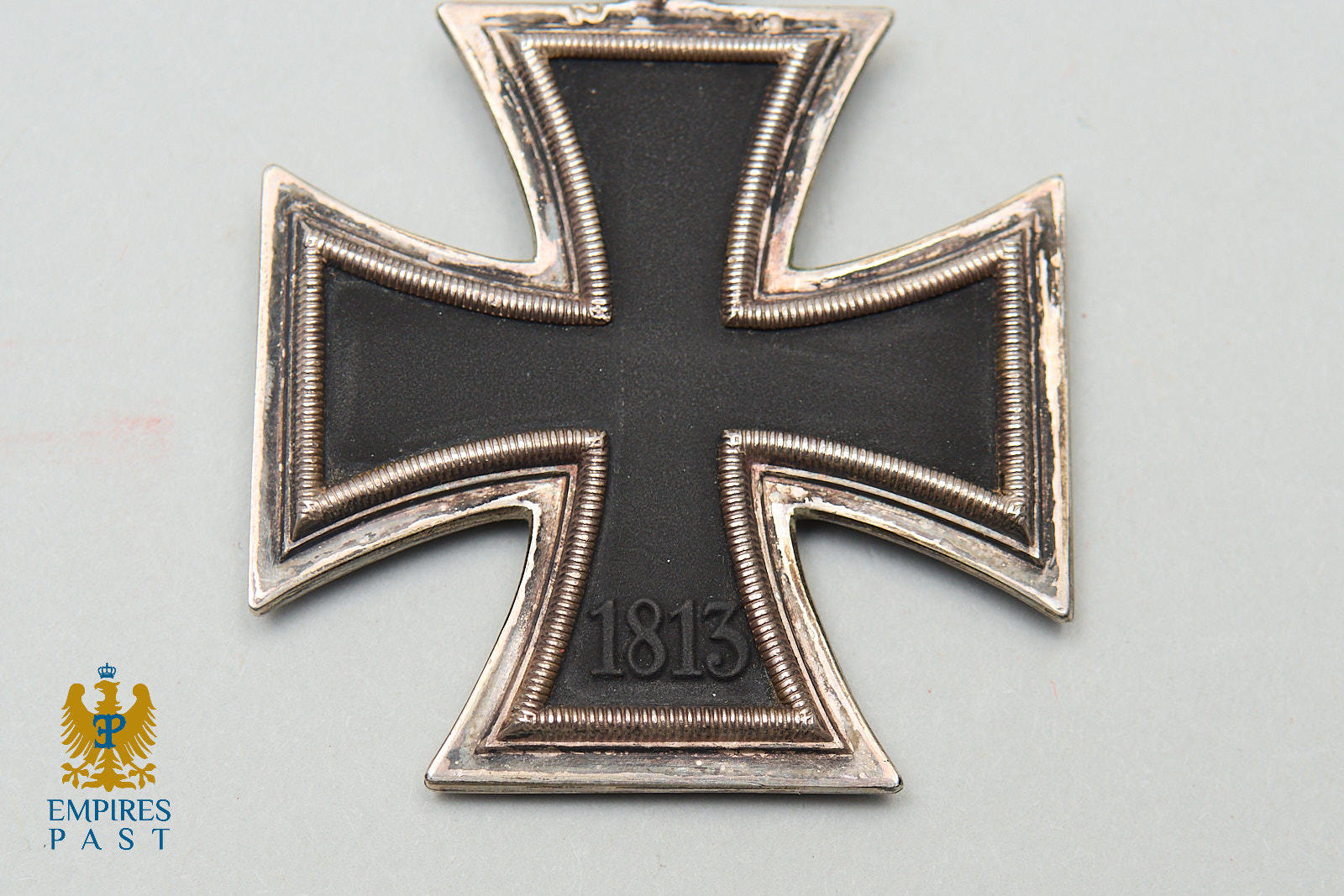
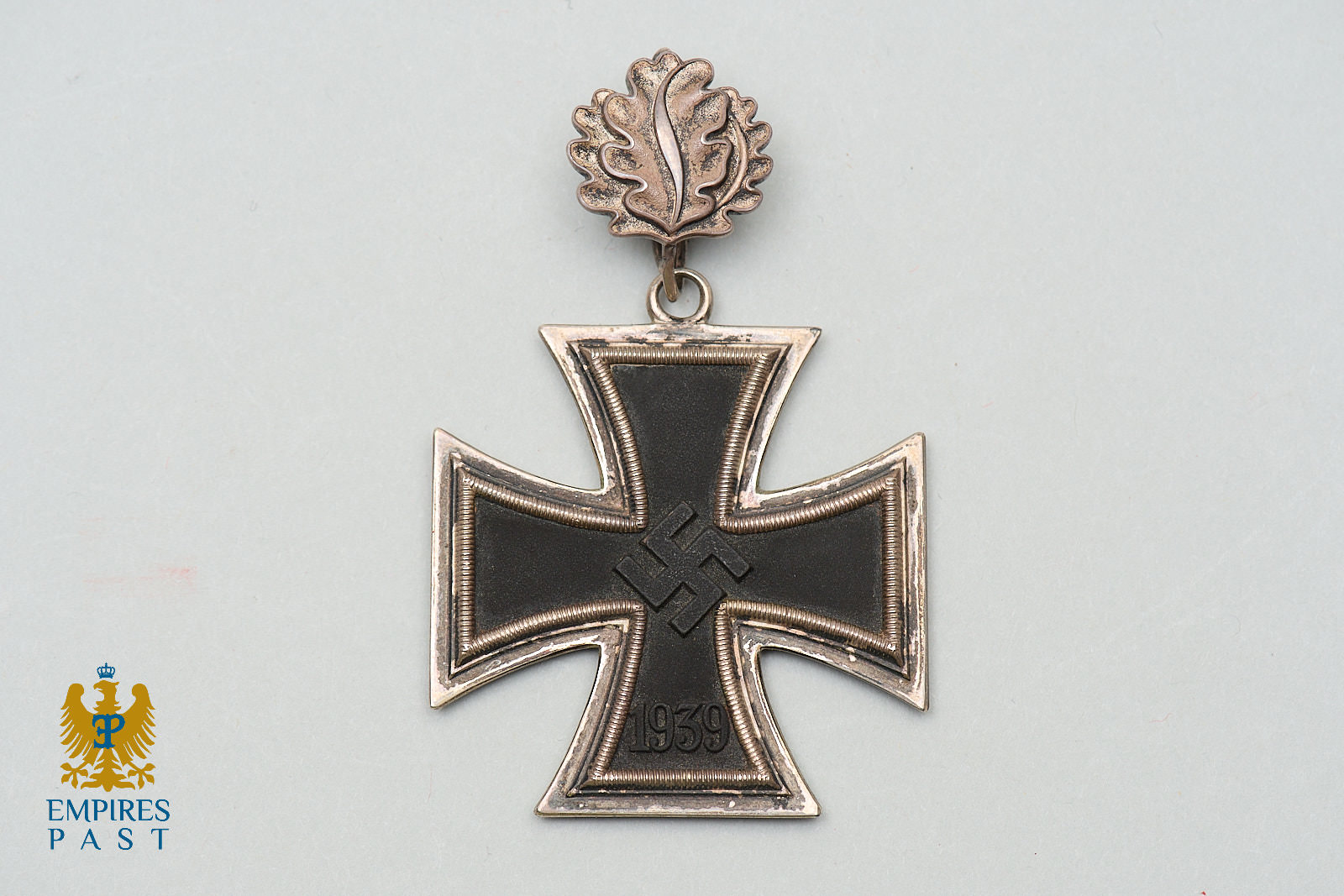
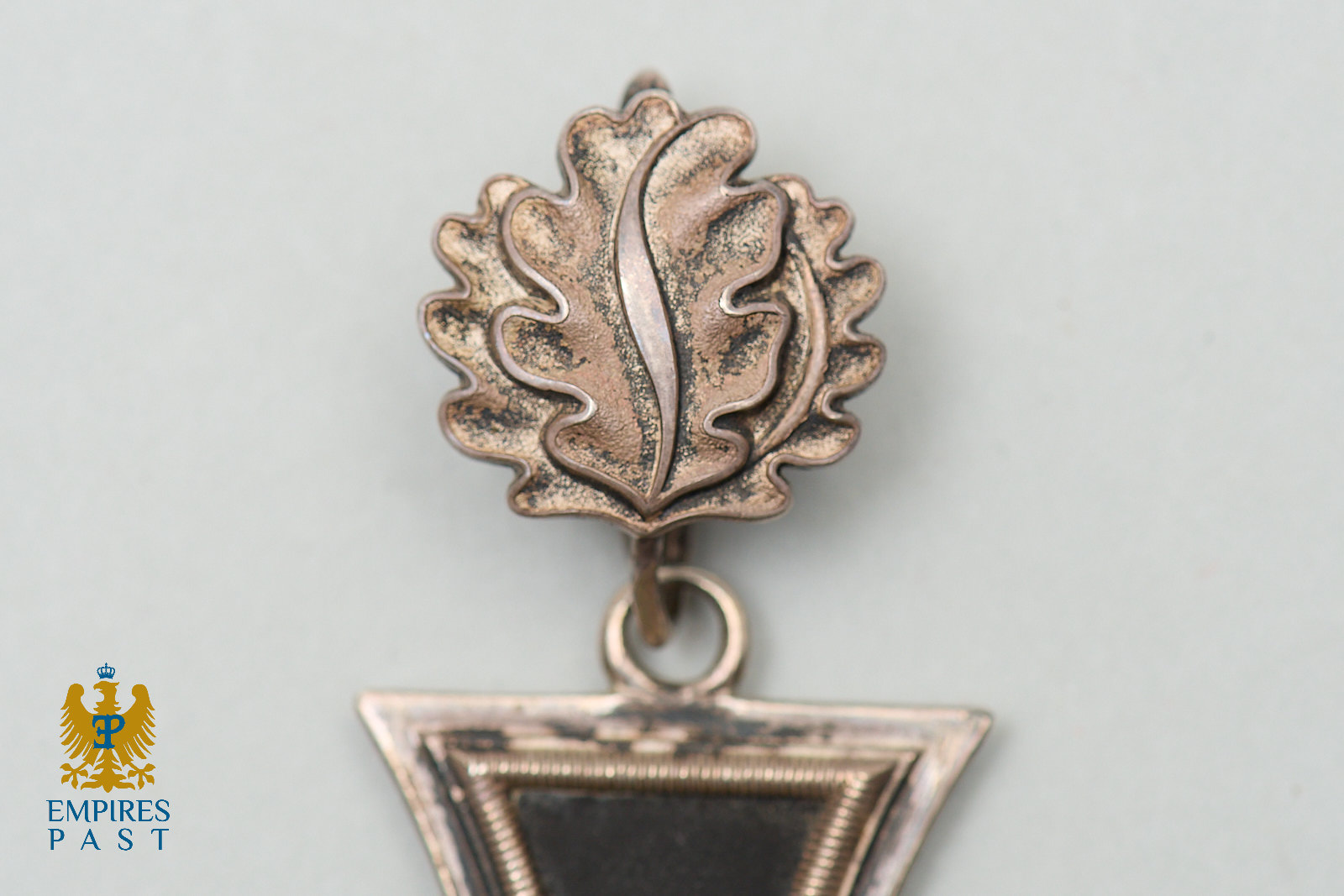
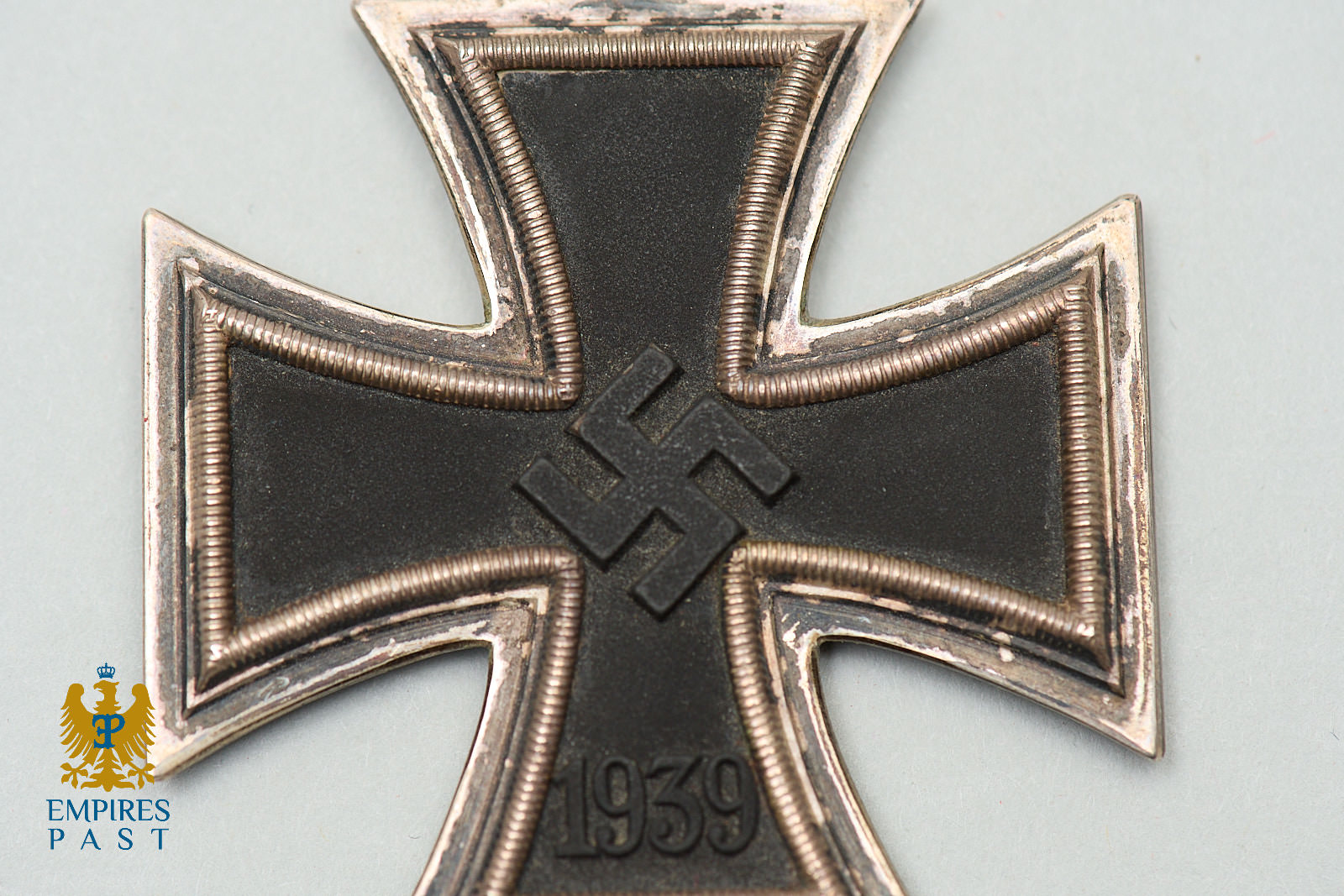
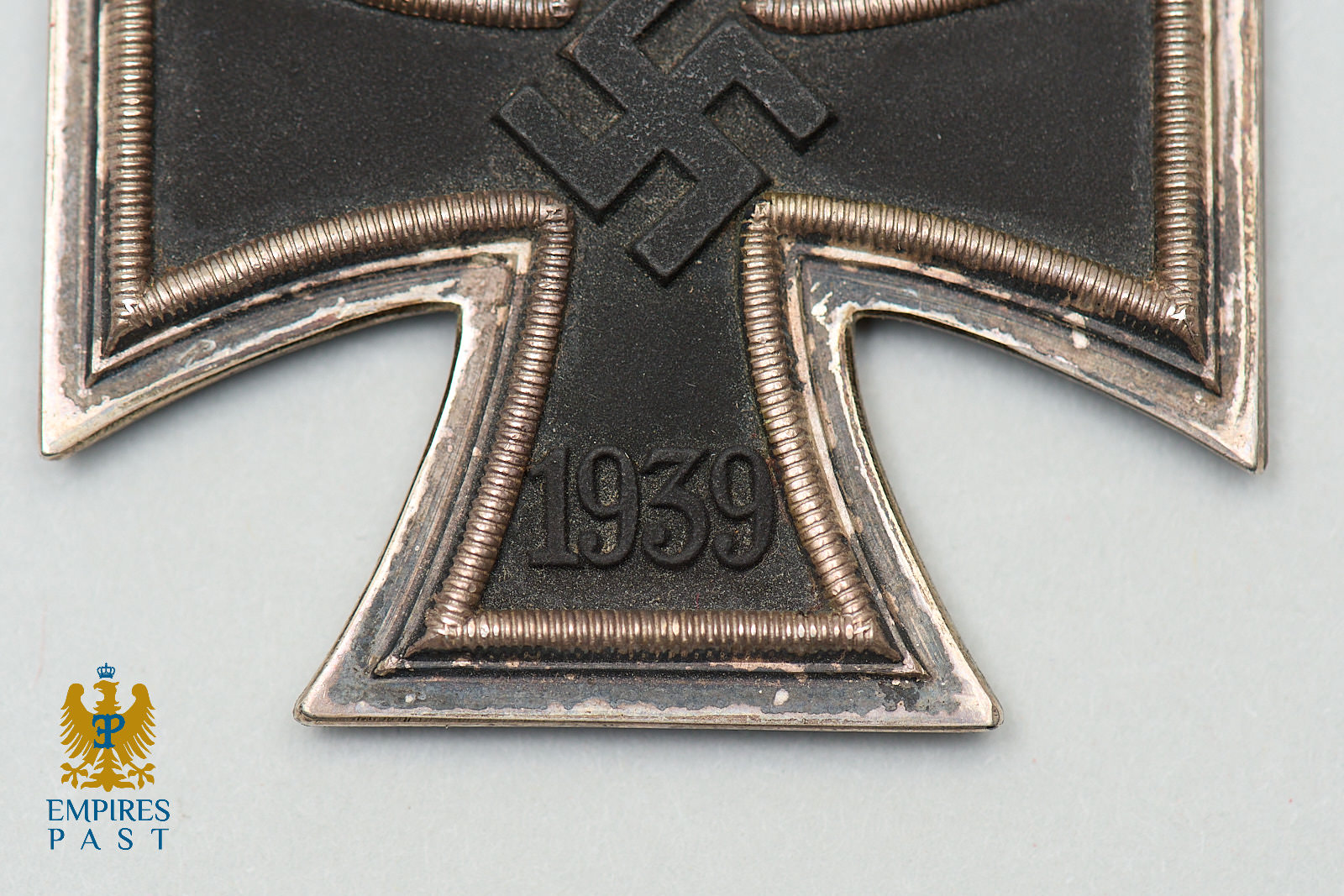
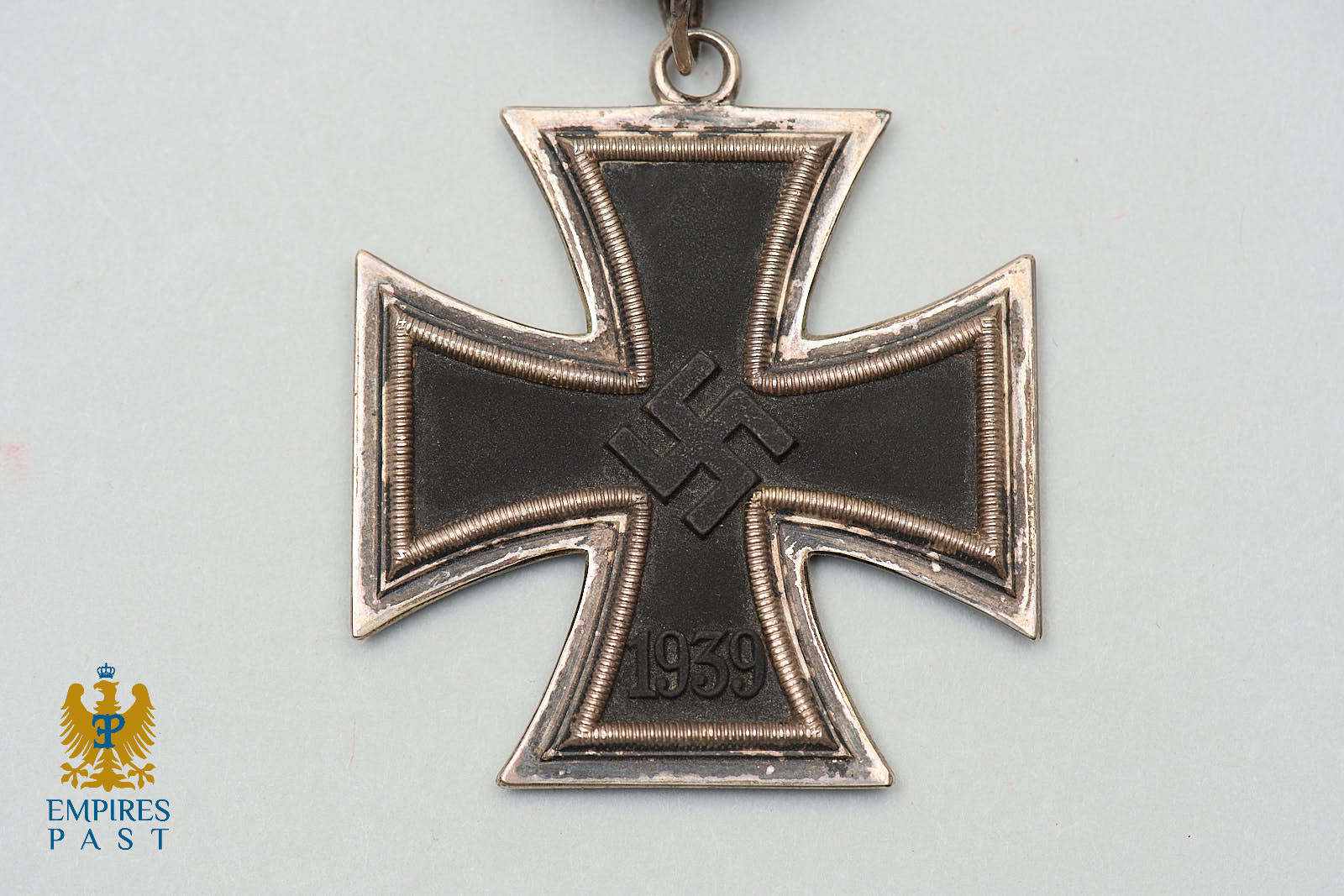
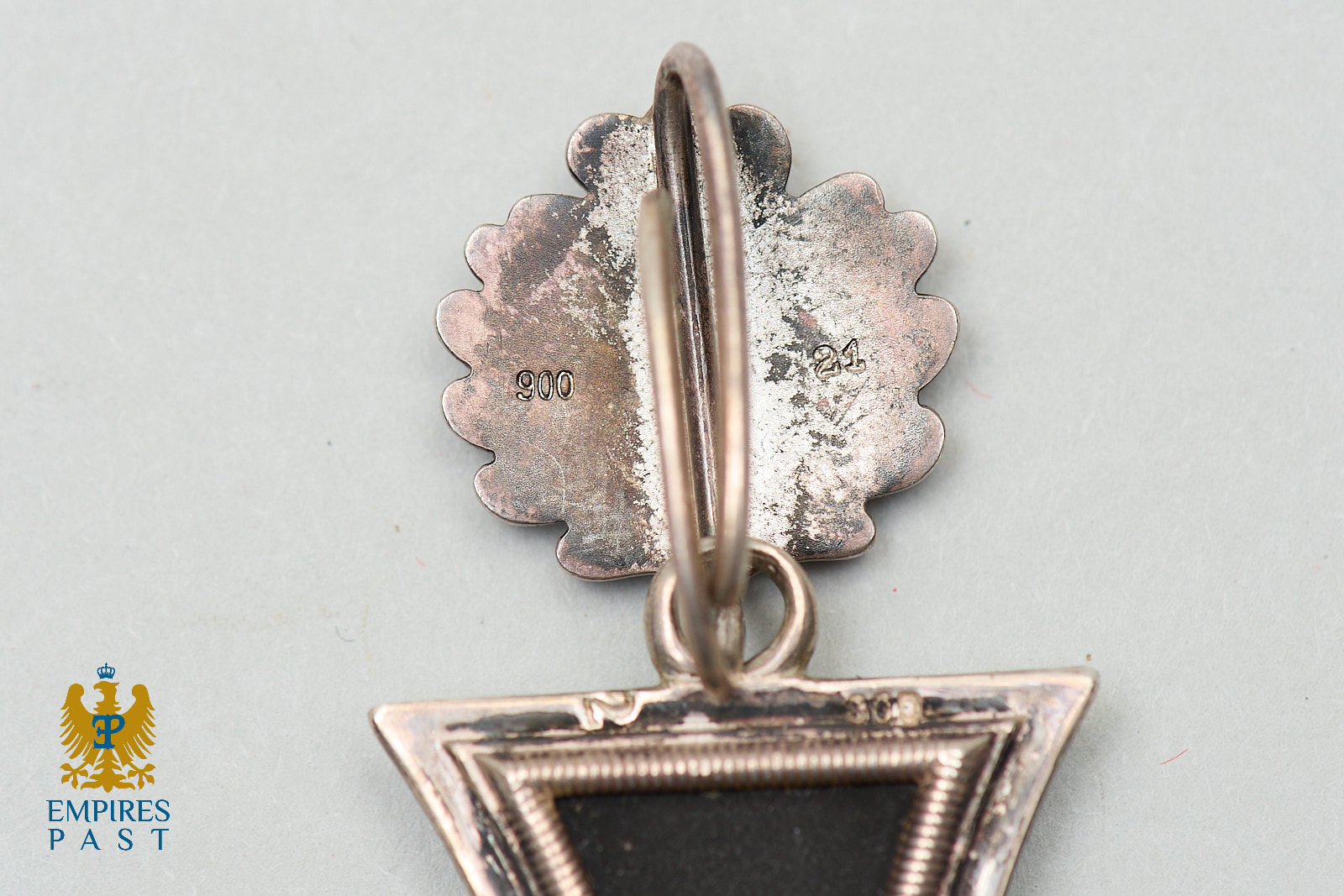
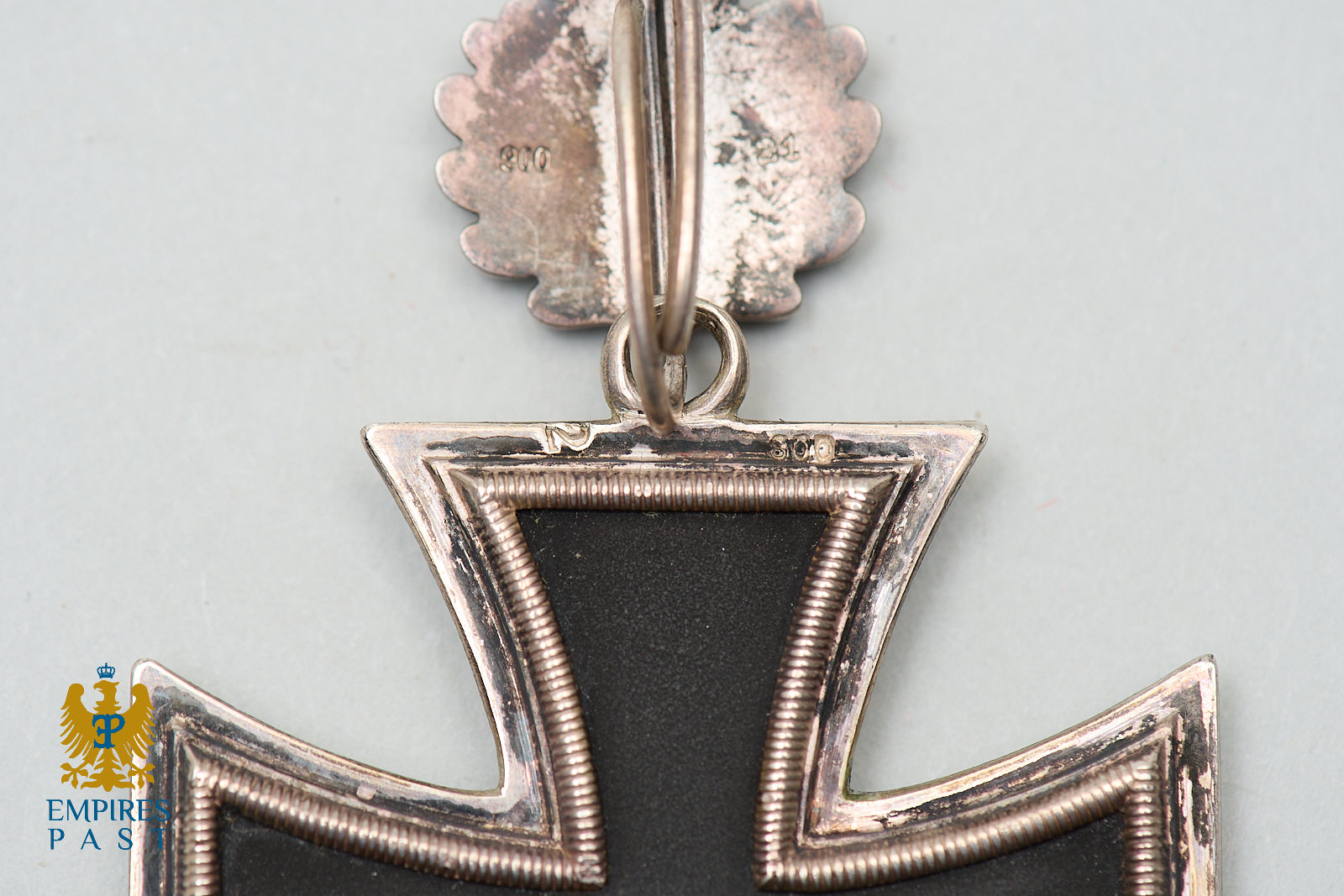
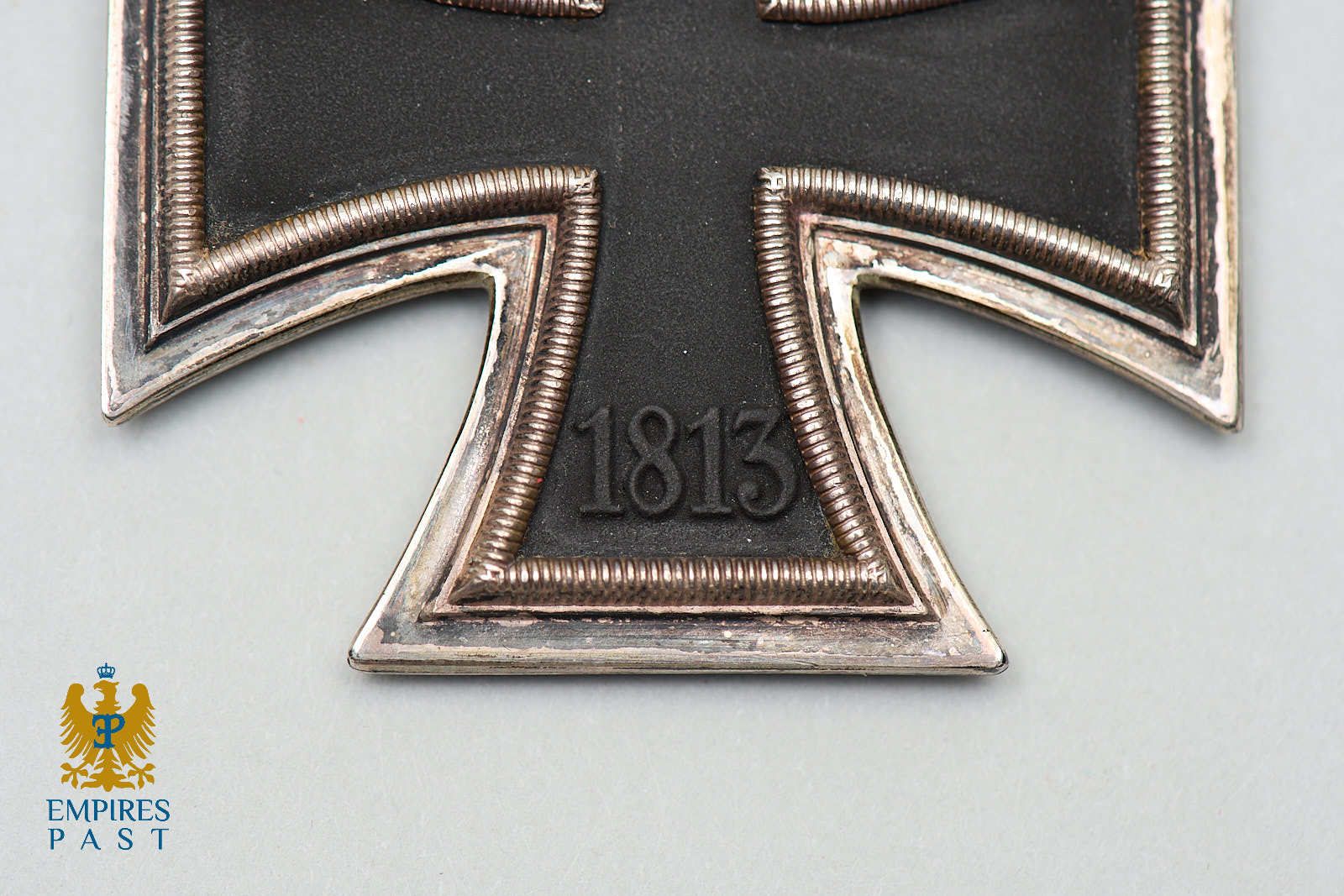
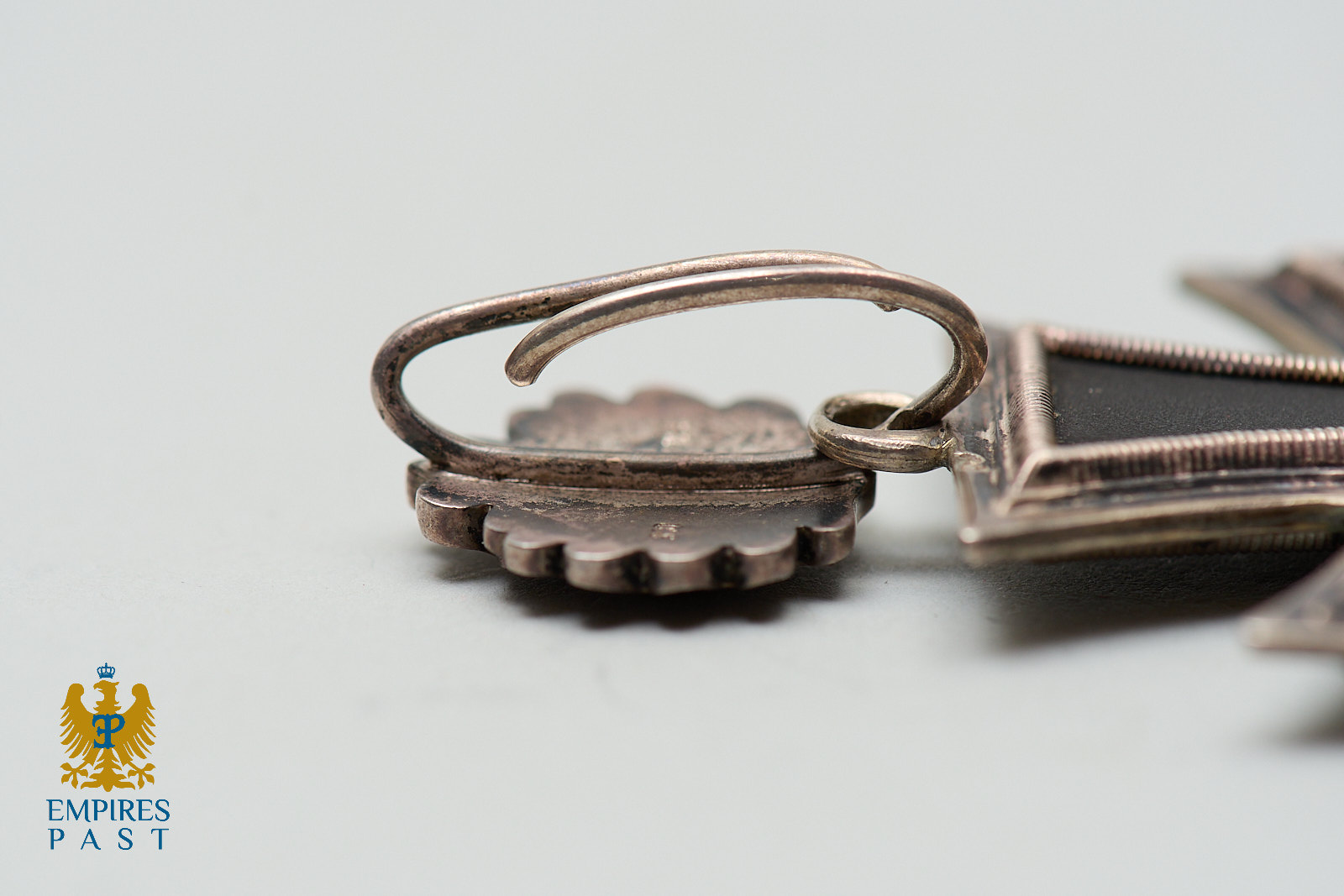
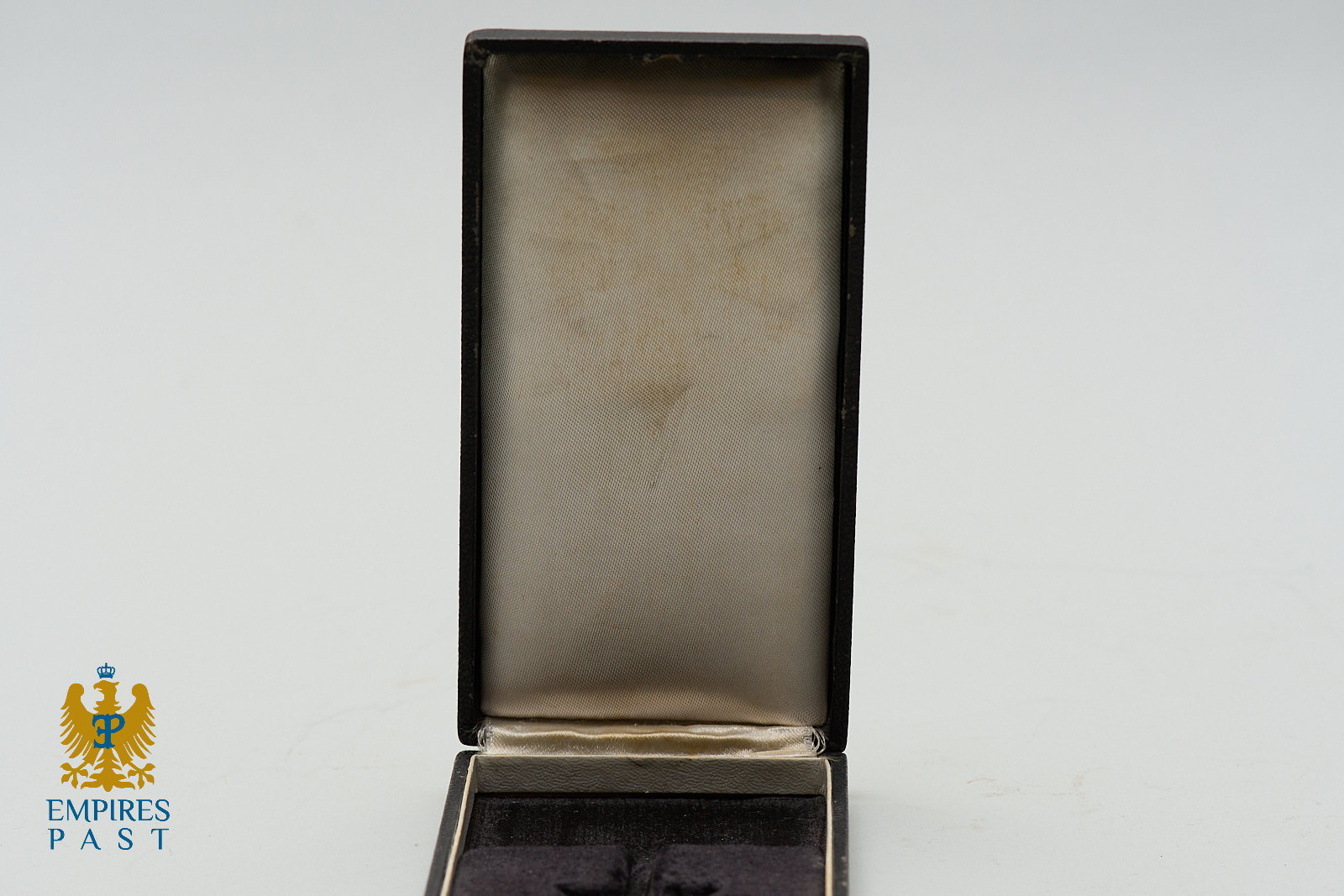
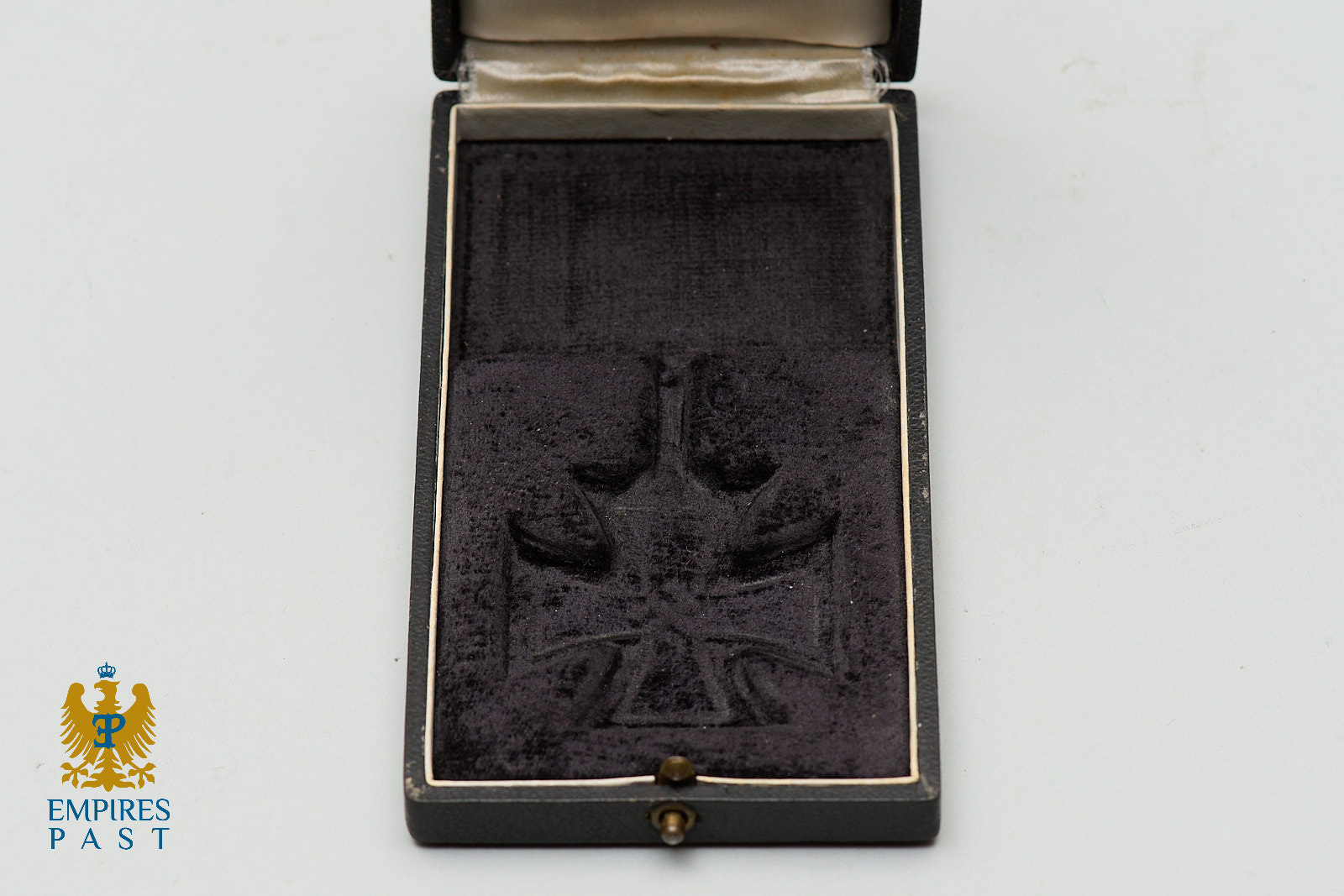
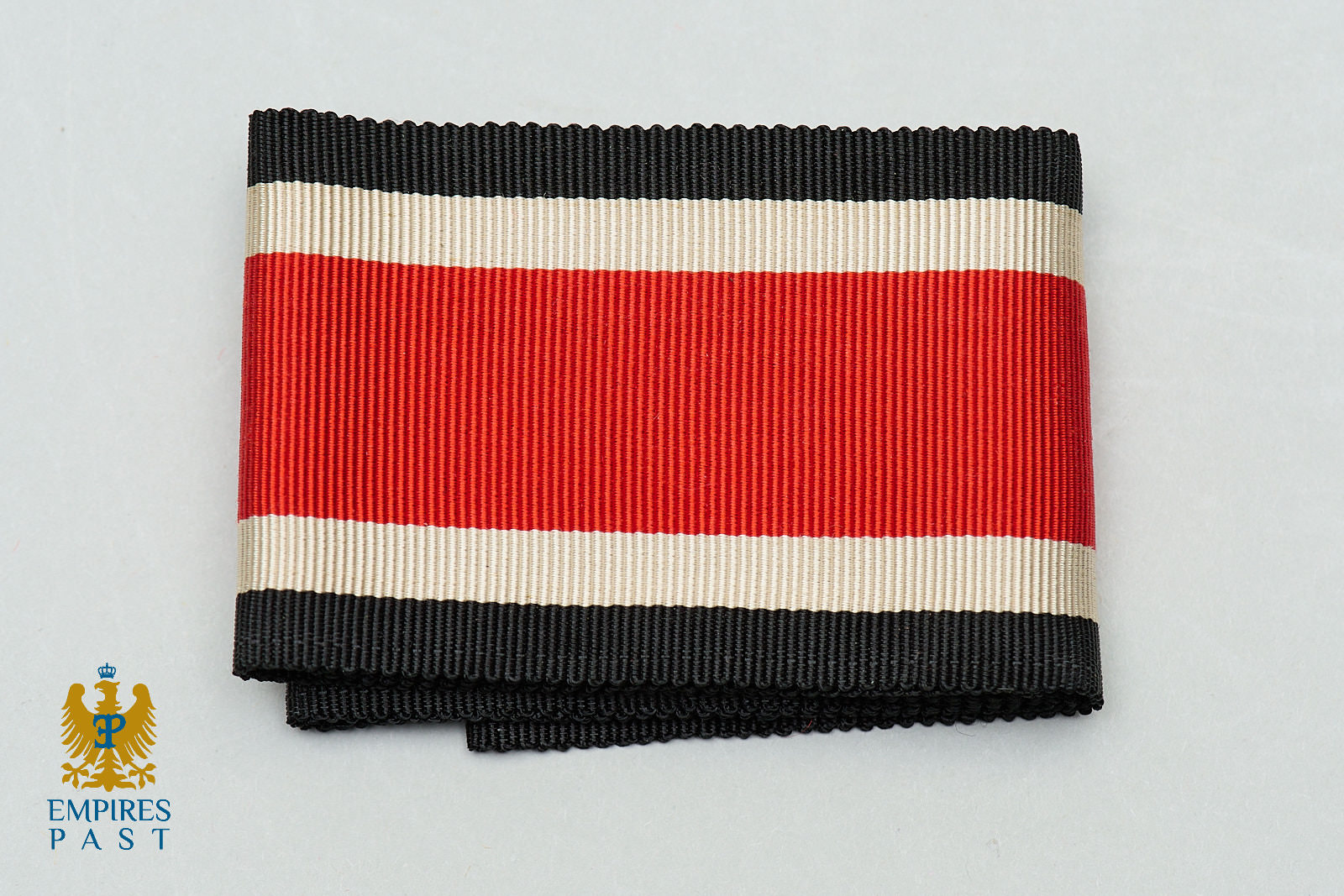
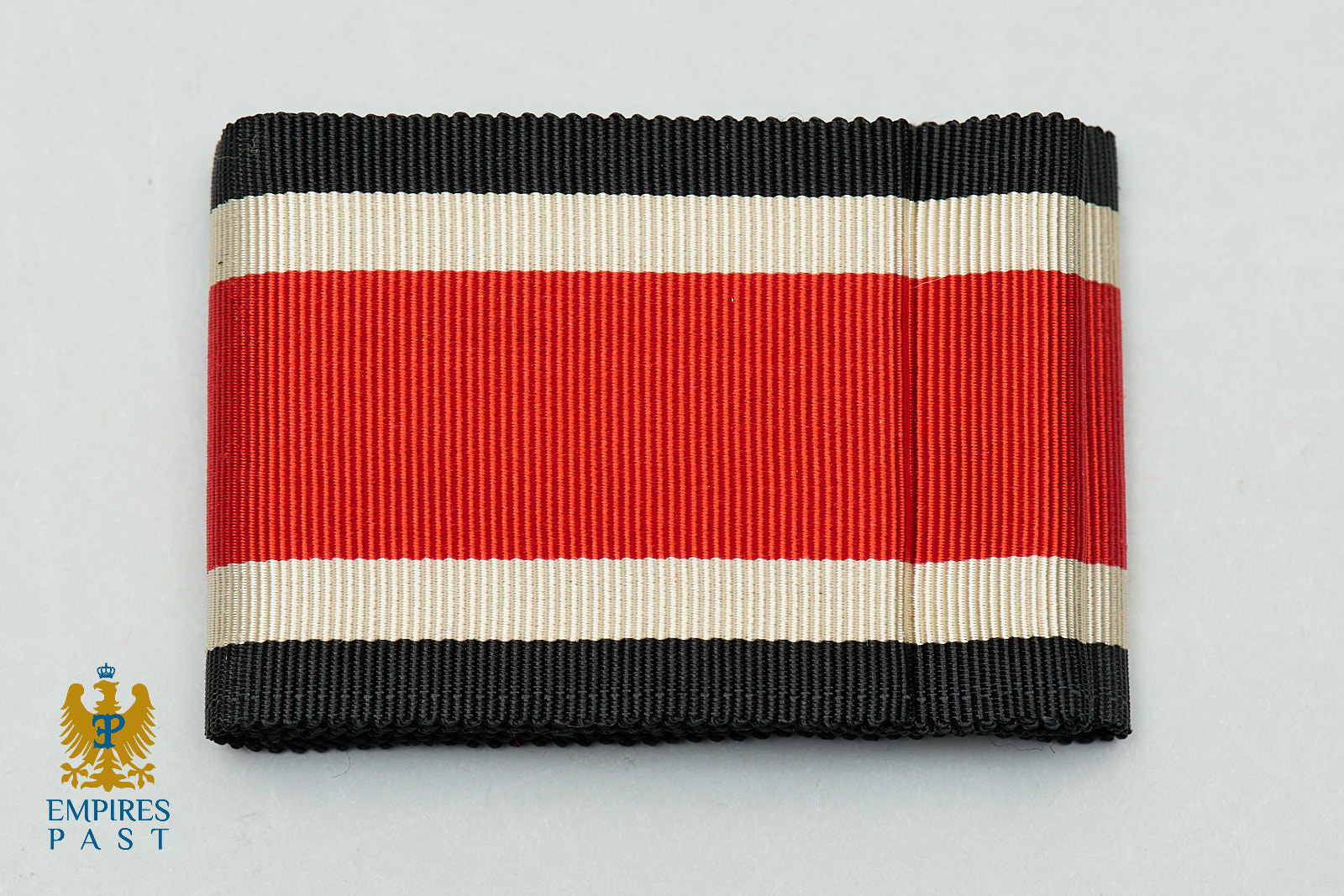
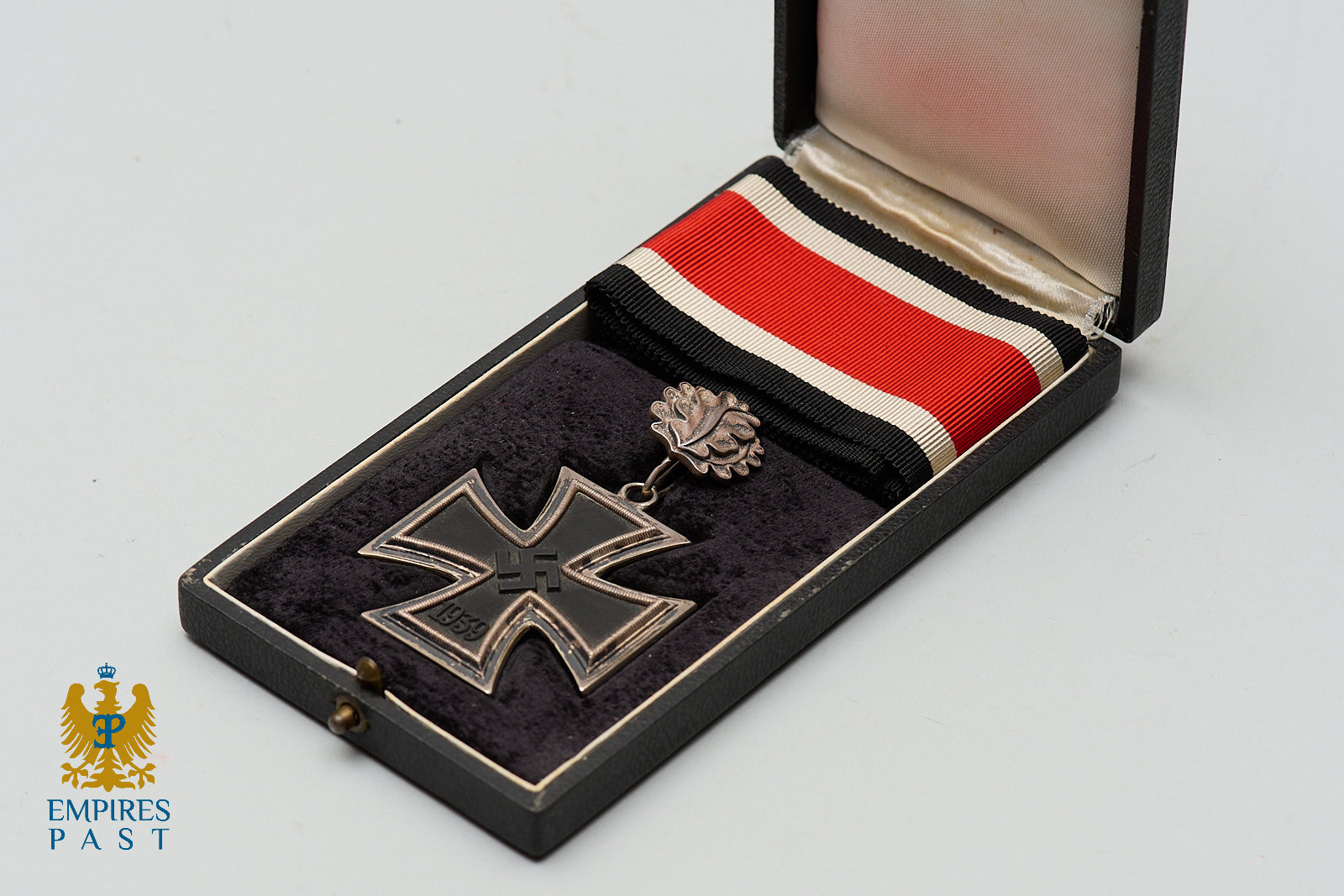
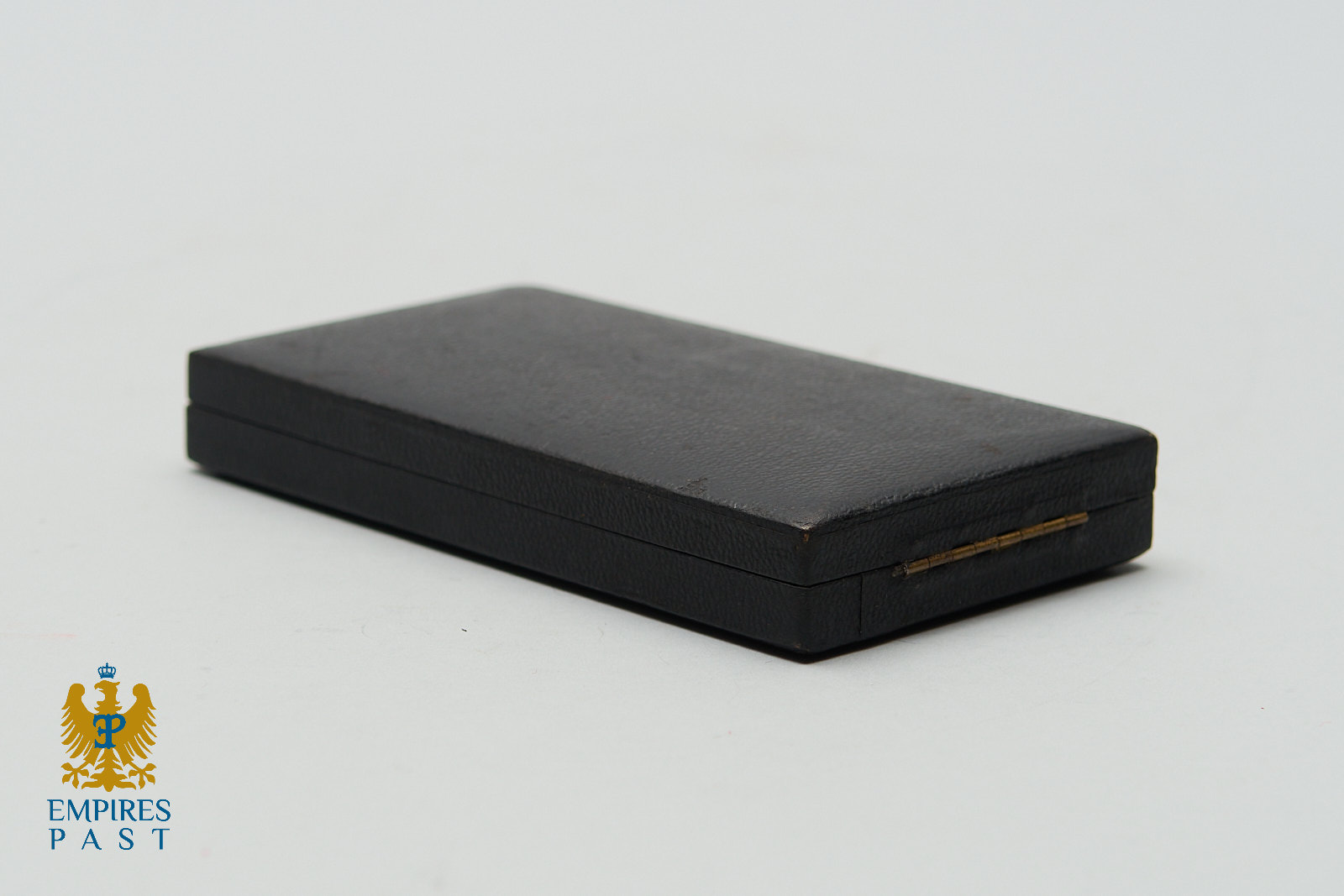
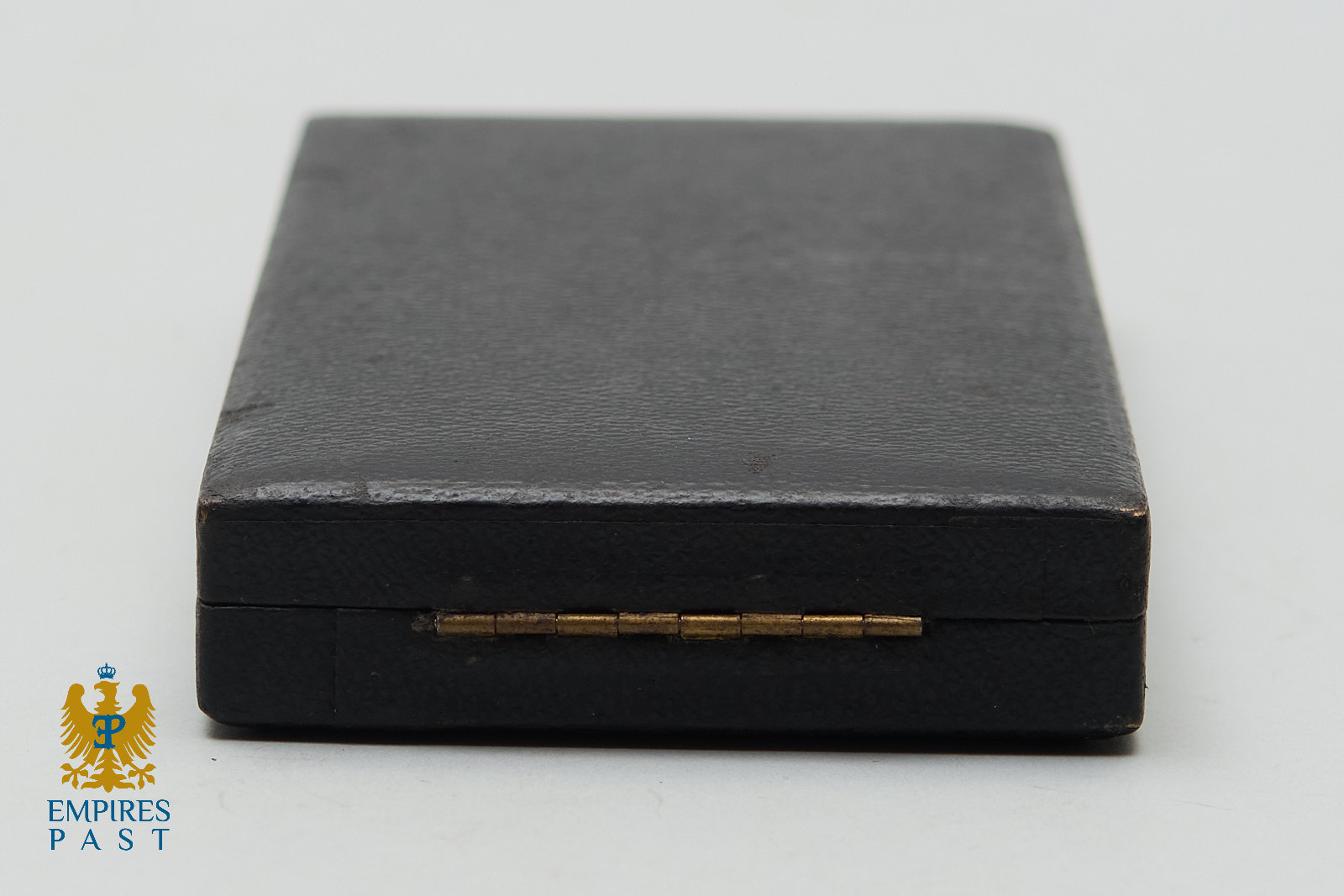
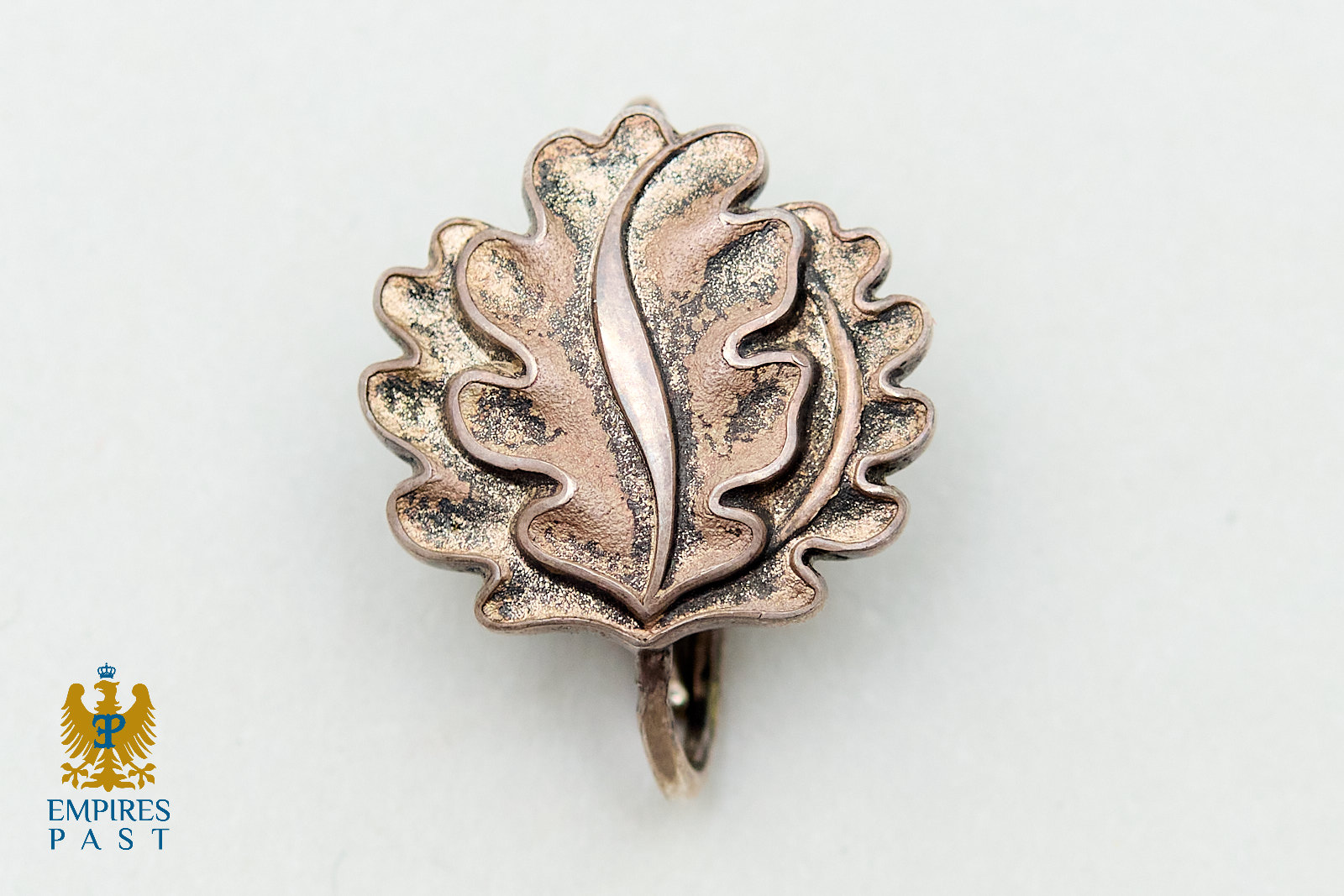
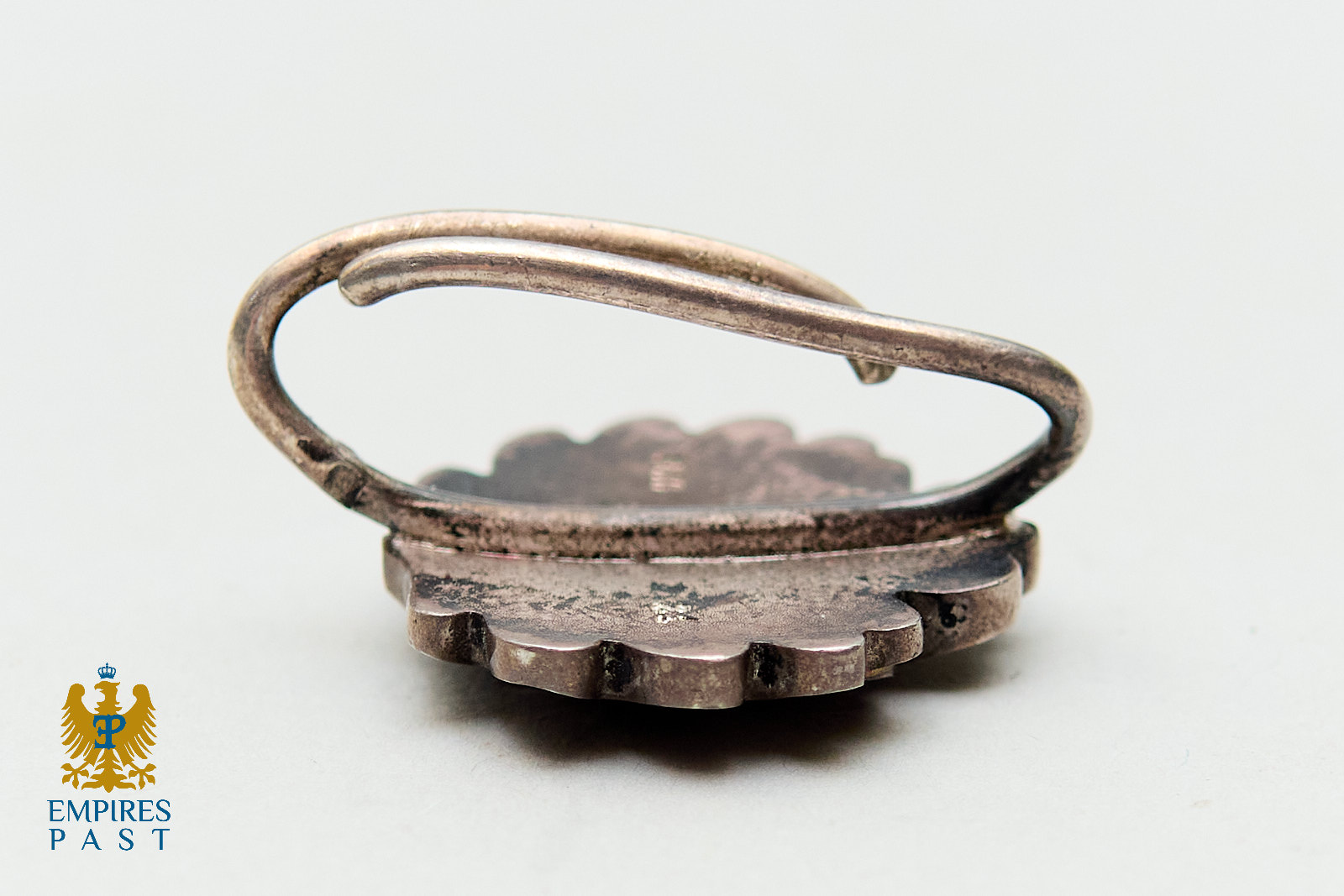
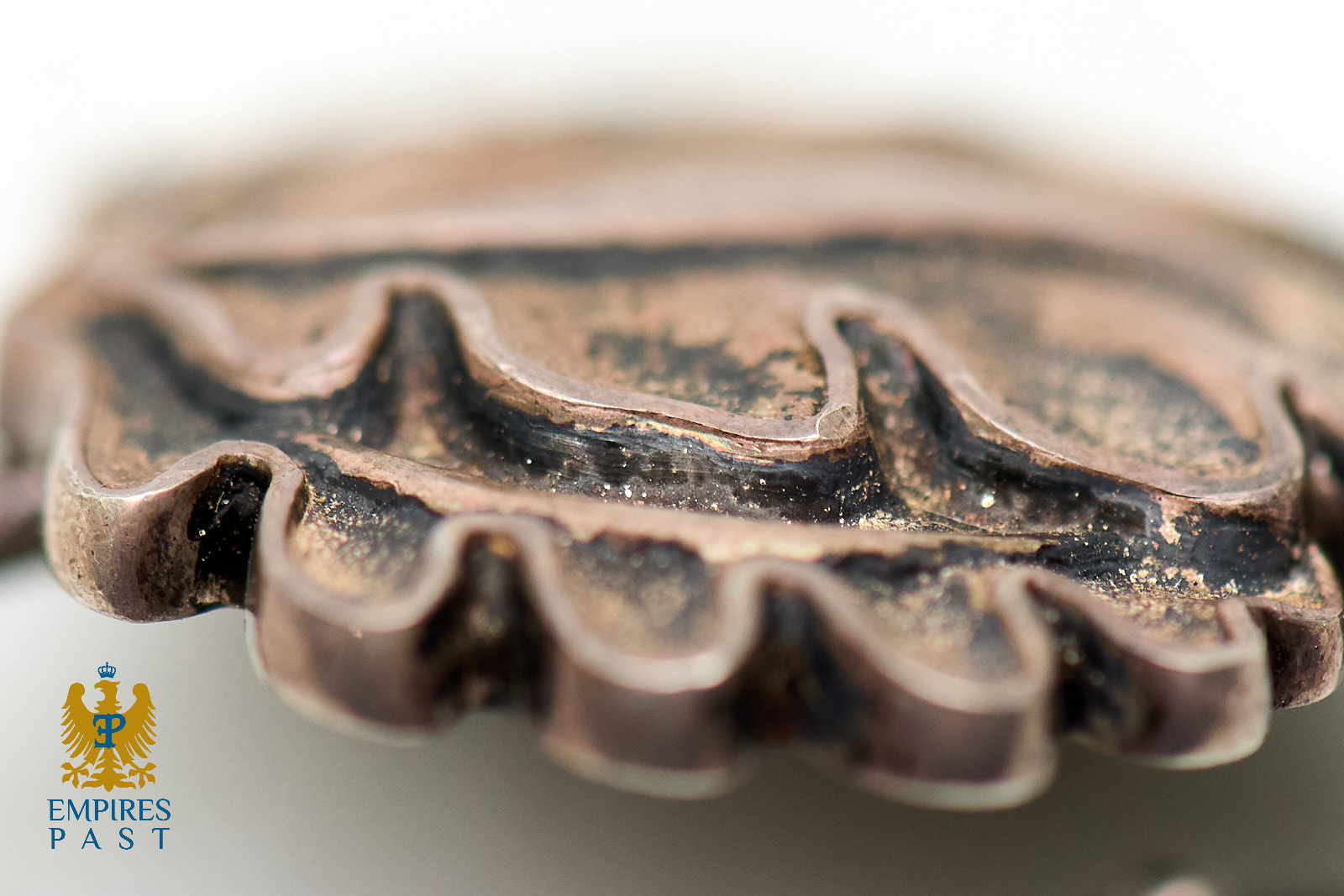
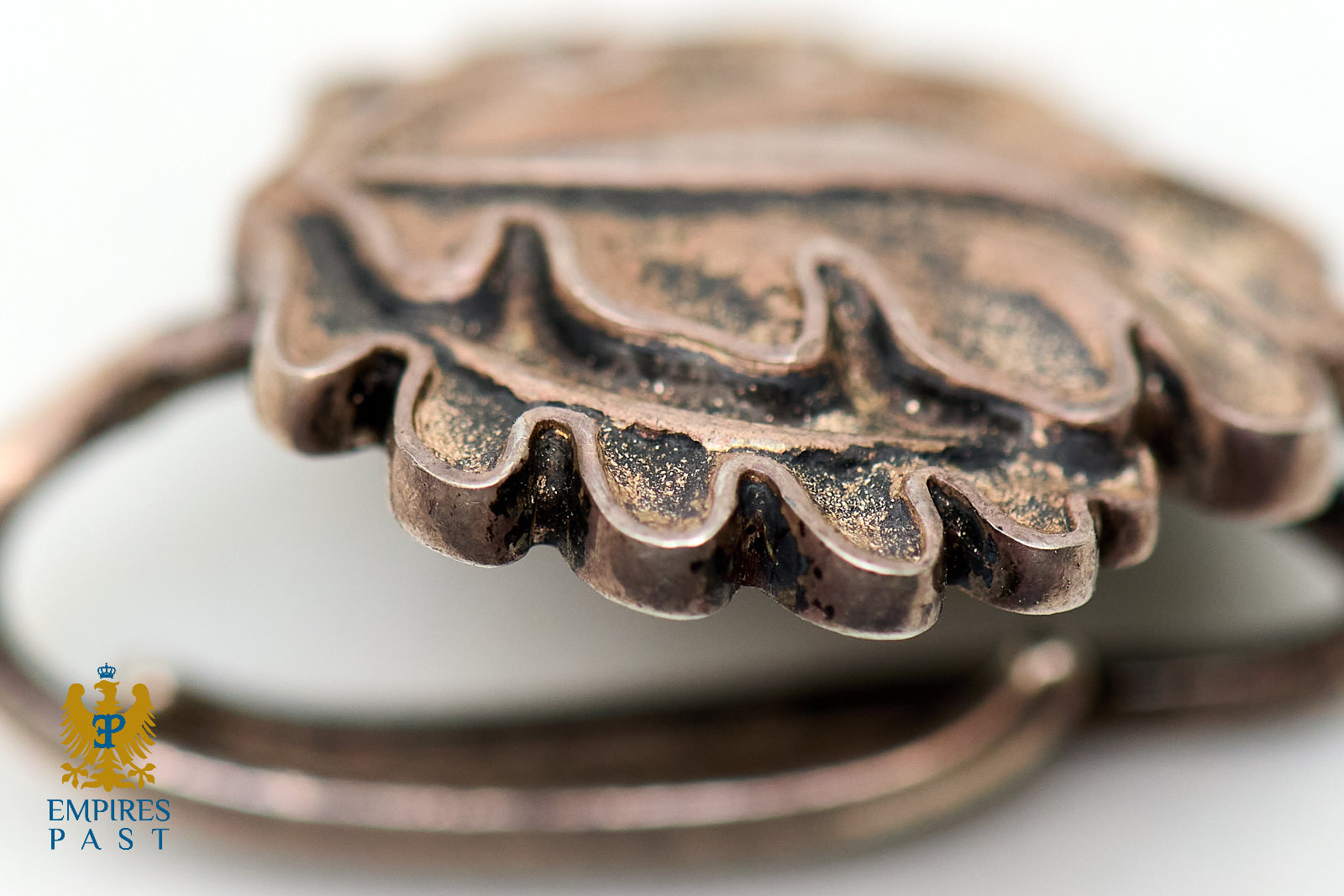
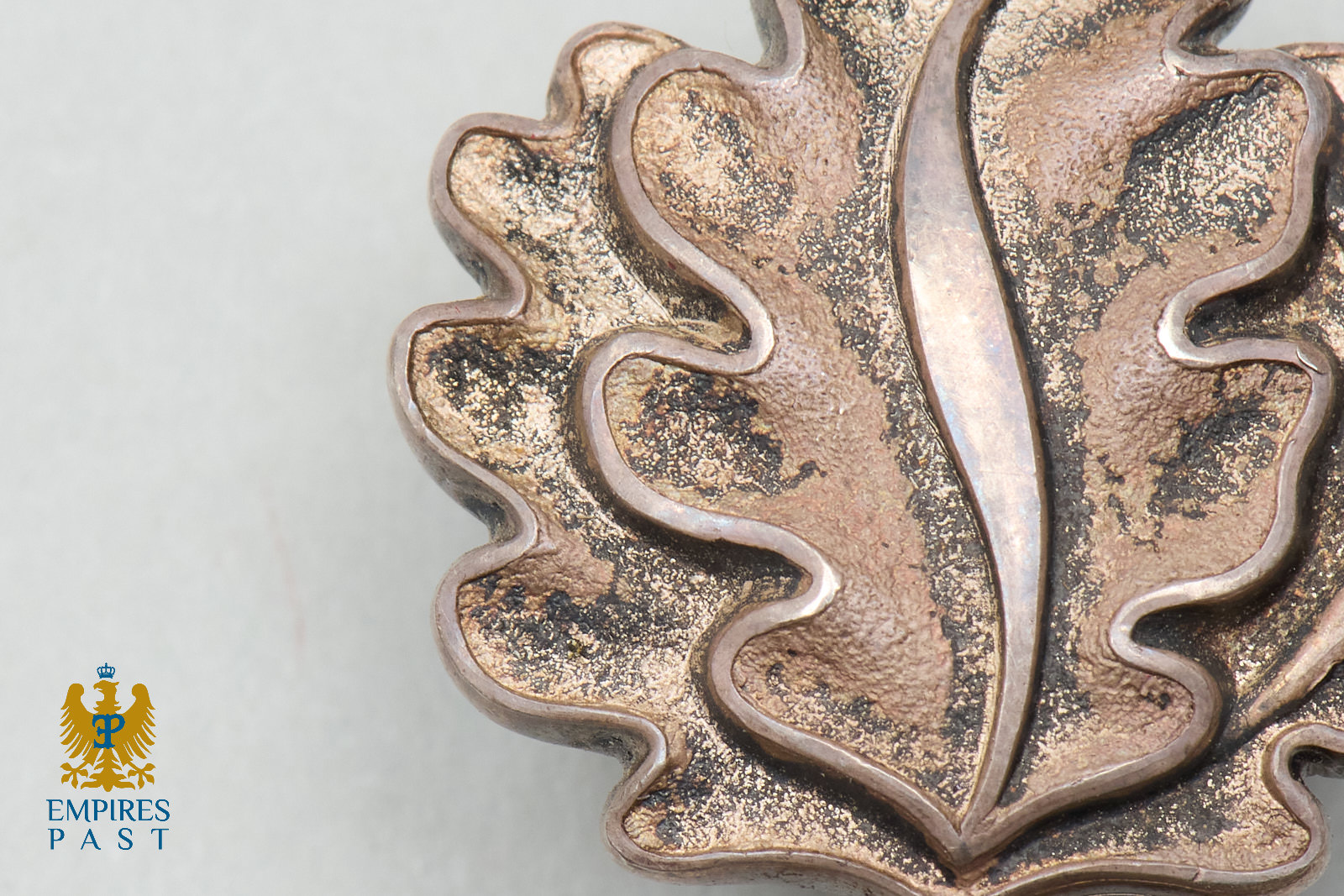
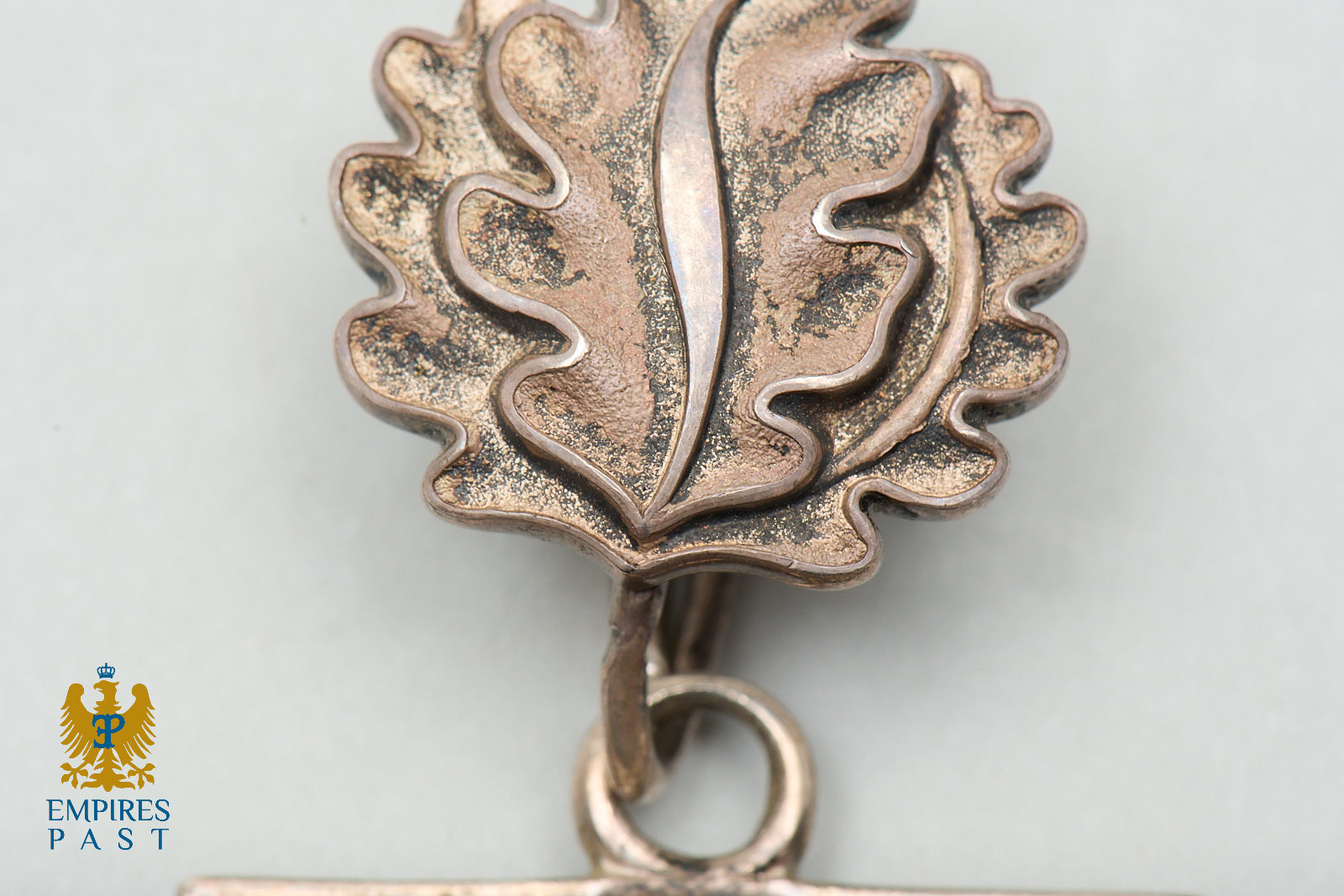
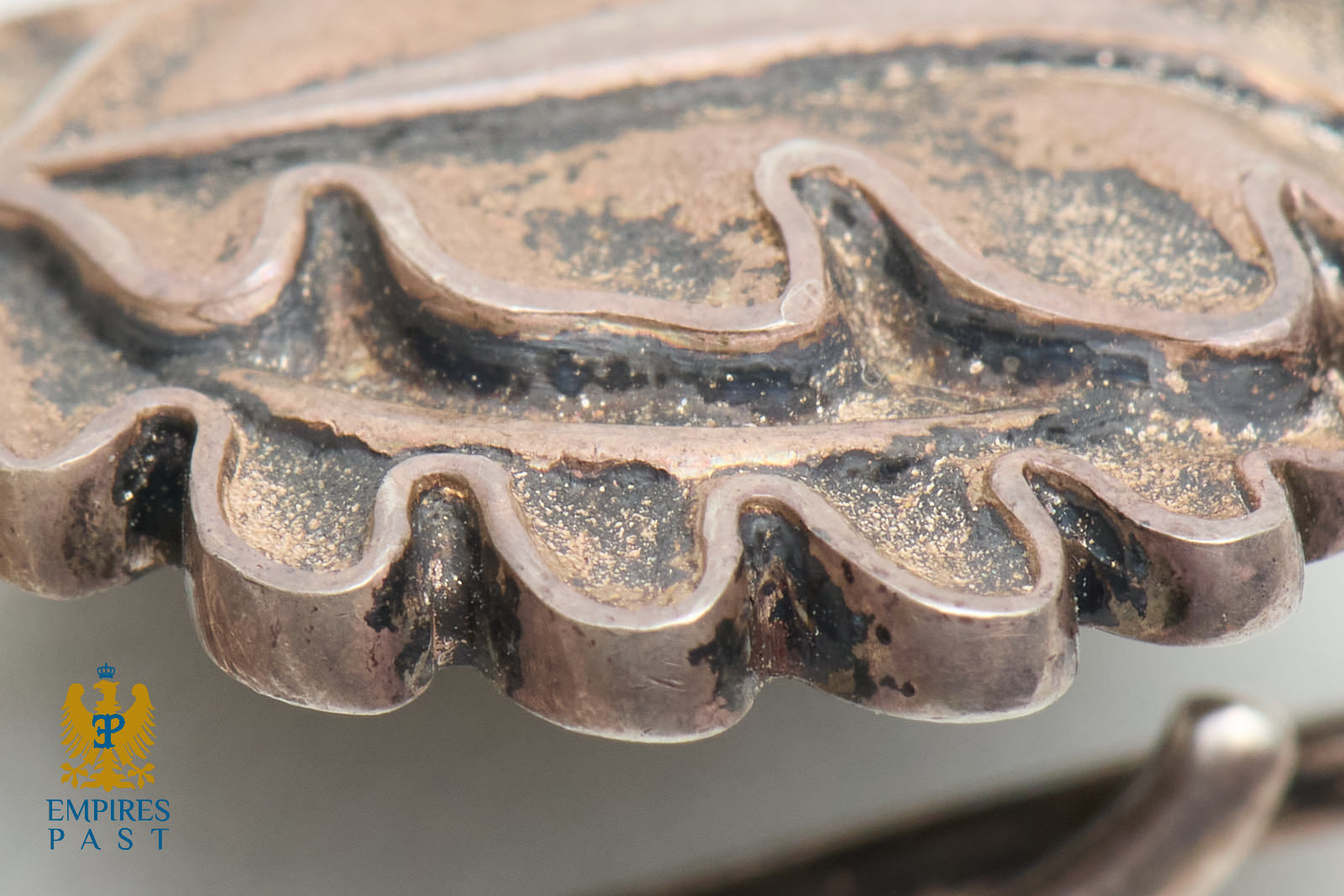
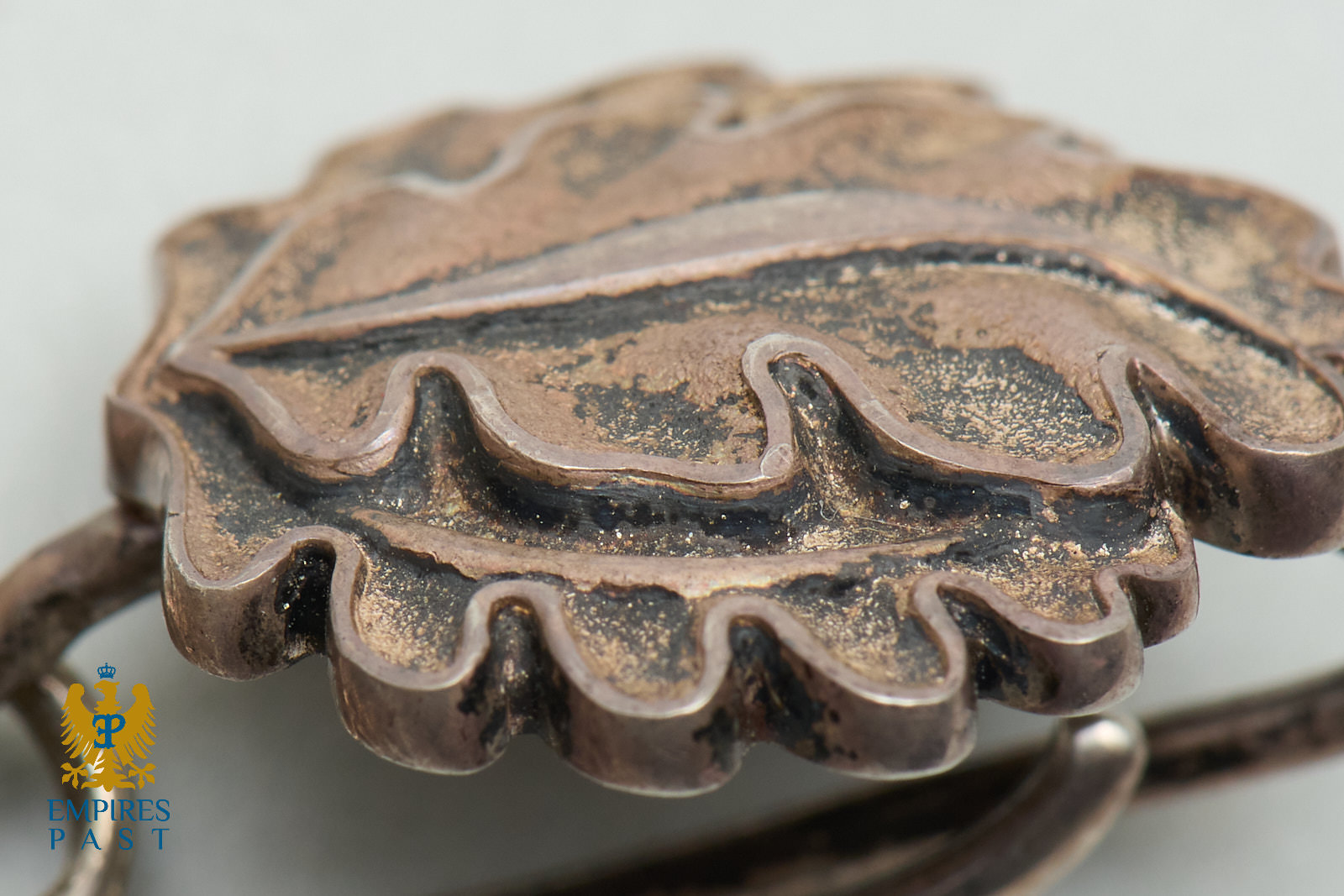
Product Description: A very nice Cased Lazy 2 Juncker Knight Cross with Oak Leaves by Gebruder Godet. The Lazy 2 Juncker Knights Cross is made of two piece “800” silver frame and a black painted iron core. The two piece silver frame remains uncleaned, an has developed a very pleasing patina. The upper reverse of the frame is stamped with Juncker’s PKZ number “2”, as well as the “800” silver content of the frame. The central inner corners of the frame contain the characteristic Juncker hash marks, with the obverse side showing the typical hand filing the worker needed to “fit” the swastika within the frames corners. The upper suspension eyelet is expertly soldered and hand finished. The iron core, with its fully intact matte “bone” black paint, is textbook for a later war produced Lazy 2 Juncker Cross. The Oak Leaves are the second pattern Godet type, made of “900” silver and also having a very pleasing uncleaned light patina. The side of the obverse Oak Leaf has the typical die flaw associated with the second pattern examples from Godet. The reverse is marked with the makers PKZ number of “21”, as well as the silver content of “900”. The reverse ribbon loop is intact and correctly finished. The correct black leatherette covered case also accompanies the cross. The exterior black leatherette is fully intact with only a few scattered marks. The front closure button and latch are textbook for a later Juncker Knights Cross and also work properly. The interior of the upper lid is lined with a fine white rayon that has developed a mild patina. The lower half, complete with its black lined inset, is also intact and without damage. A section of original wartime ribbon also accompanies the set. The set also comes with a COA from Adrian Foreman dated 18 September, 1993. It was said to me when I acquired the set, that Adrian purchased the complete set directly from a US GI Veteran, but I must also say that this was not fully documented, and therefore can not be fully proven. Overall though, this is a very nice Cased Lazy 2 Juncker Knights Cross with Oak Leaves, one of the Third Reichs highest awards it could bestow to combat soldiers and officers. Of the approximate 7,400 Knights Crosses awarded during the Second World War, only 882 would go on to receive the Oakleaves to the Knights Cross.
Historical Description: The German Knights Cross of the Iron Cross. Instituted on September 1st, 1939, the Knights Cross has come to be known as one of the most recognized awards of World War Two and Germany. Awarded for extreme individual acts of bravery during combat, or successful battlefield leadership resulting in extraordinary success, the Knights Cross and its subsequent grades were among the German Military’s most prestigious decorations. The Knights Cross, suspended by a black, red, and white ribbon, was worn around the neck. Prior to the Knights Cross, Germany’s highest military, the Pour Le Merit, was reserved for Officers. The highest bravery awards an enlisted man could obtain was the Iron Cross 1stClass. Keeping with the National Socialist idea, and the breaking of the old Prussian aristocratic ways, Adolf Hitler created an award which, for the first time in the history of the Iron Cross, every member of Germany’s armed forces was eligible to be awarded, provided the requirements of awarding had been met. The awarding process determining whether a soldier was worthy of the award, began as a recommendation at the company level. This recommendation was then reviewed and either approved or denied. Upon approval, it would continue through the appropriate chain of command. If approval continued through unopposed, the recommendation ultimately ended in the hands Adolf Hitler, with himself making the final judgment. Most recommendations did not reach Adolf Hitler, or were lost in the chaos of war. The Knights Cross was awarded 7,364 times during the war. It is estimated that approximately 20,000 Knights Crosses were produced between September 1939 to May 1945.
Keeping with the rich heroic history of the Iron Cross, the Knights Cross was also constructed of three separate pieces, a core and two outer frames. The obverse displaying a rotating swastika in the center with the date “1939” for the year of introduction during the present conflict, and the reverse featuring only the date “1813” for the first year of the institution of the Iron Cross. The core, made of iron, zinc, or brass, was placed between the two outer silver frames and delicately hand soldered together. The cross was then suspended by a large loop through the frames top eyelet. A ribbon of black, white, and red was then threaded through the suspension loop. The production of the Knights Cross was strictly regulated, and only after the company’s granted approval by the government, were they legally allowed to produce the Knights Cross. In 1941, the German Government restricted the sale of the Knights Cross only to those with proper documentation proving their eligibility.
Wartime manufacturers of Knights Crosses are Juncker, Steinhauer & Luck, Klein & Quenzer, Otto Schickle, C.F. Zimmermann, Gebruder Godet, Unknown “3/4 Ring”.
With nearly 30 years of expertise handling, collecting, and studying some of the finest and scarcest military collectibles, Empires Past offers the best prices for your collectibles.
We purchase German, American, and Japanese Military Artifacts.
FROM SINGLE ITEMS TO ENTIRE COLLECTIONS…
WE ARE ALWAYS BUYING!!!