







Description
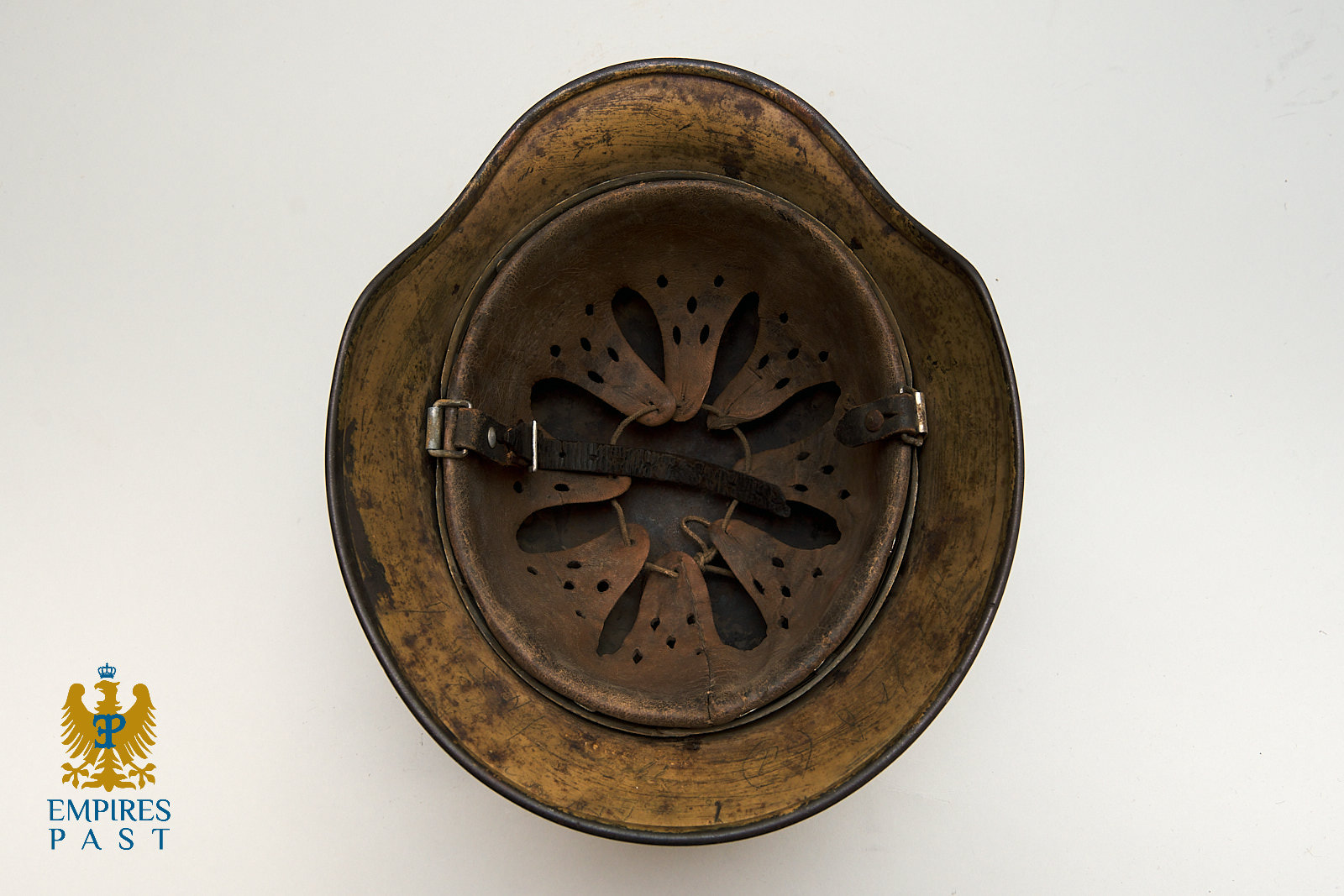
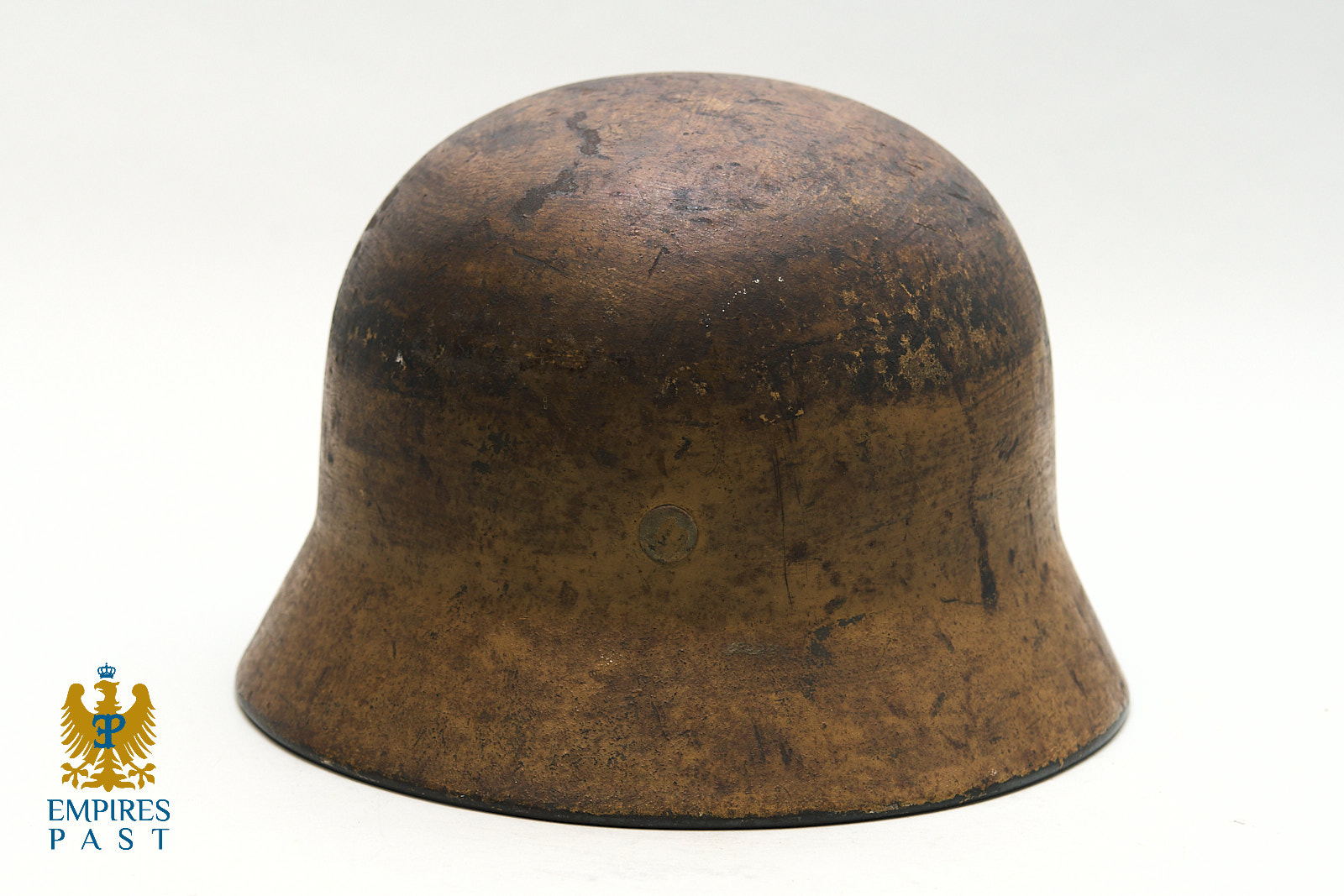
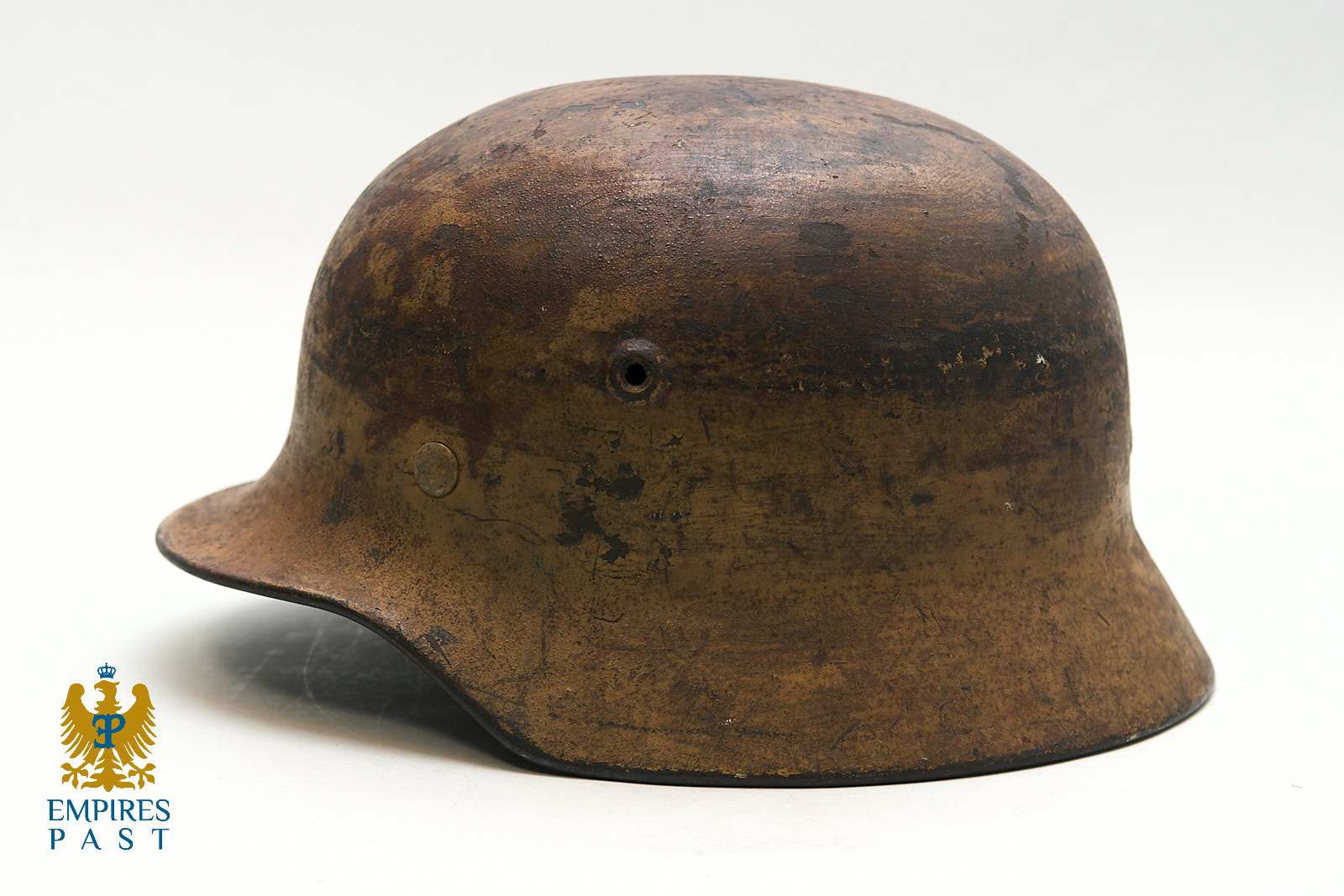
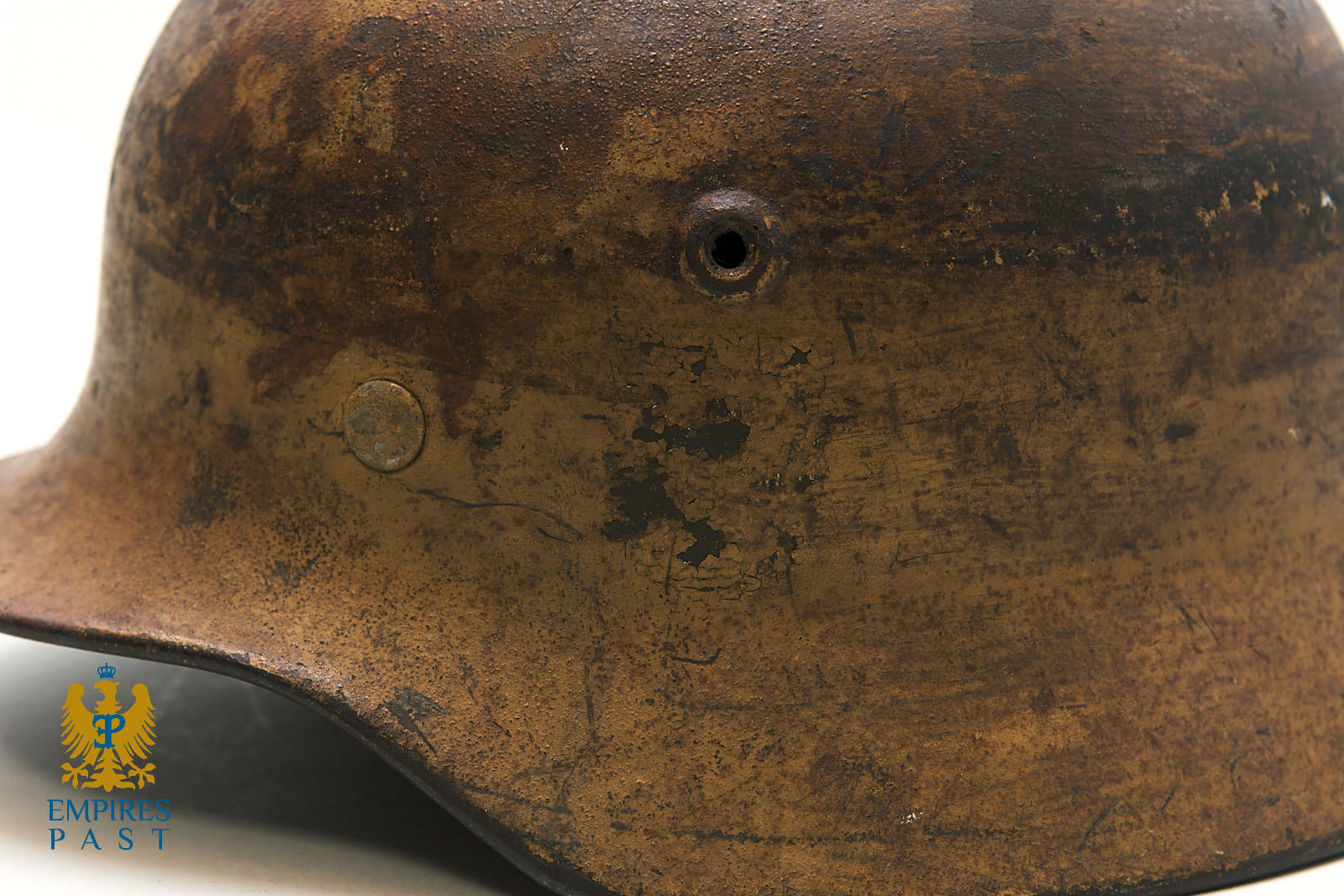
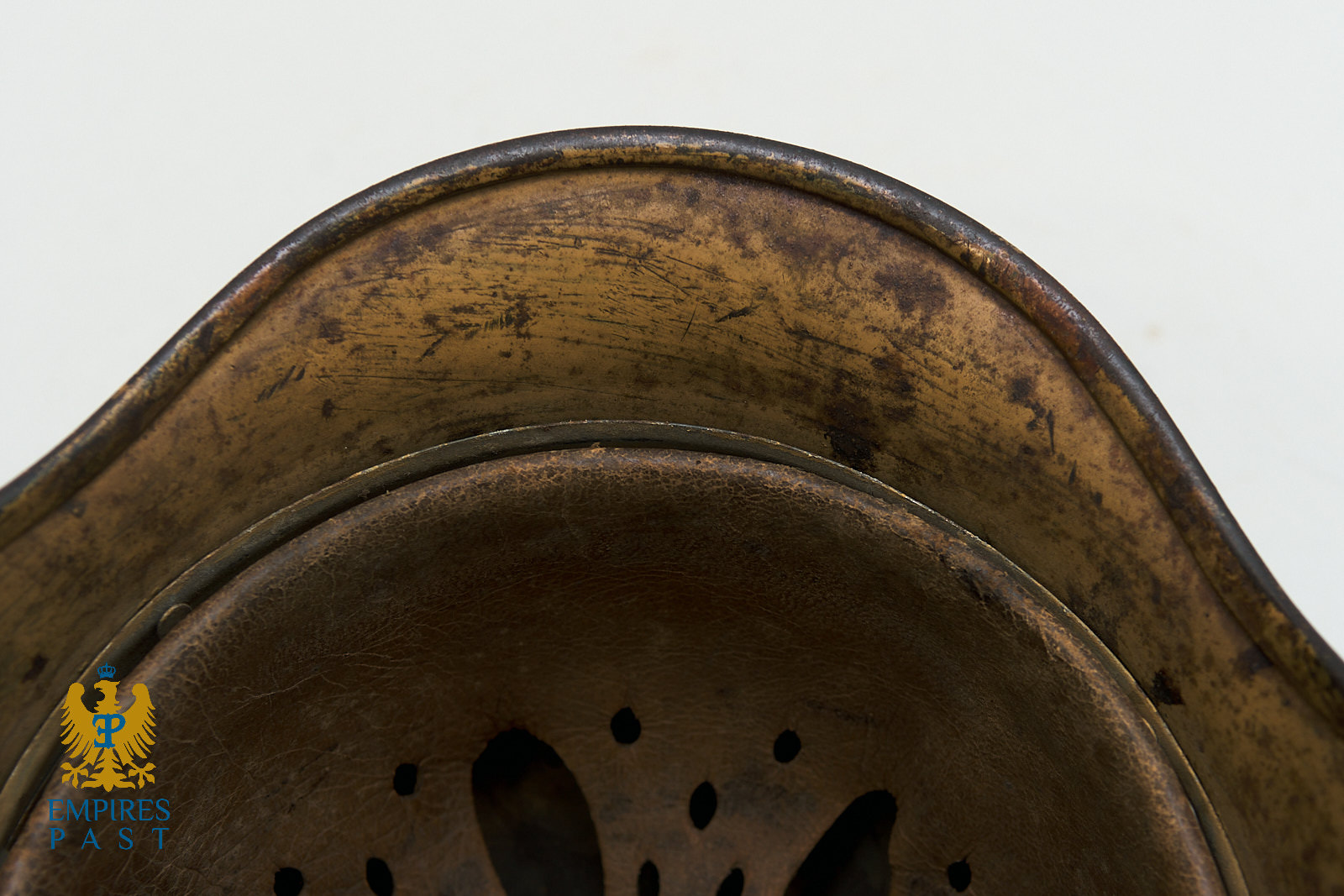
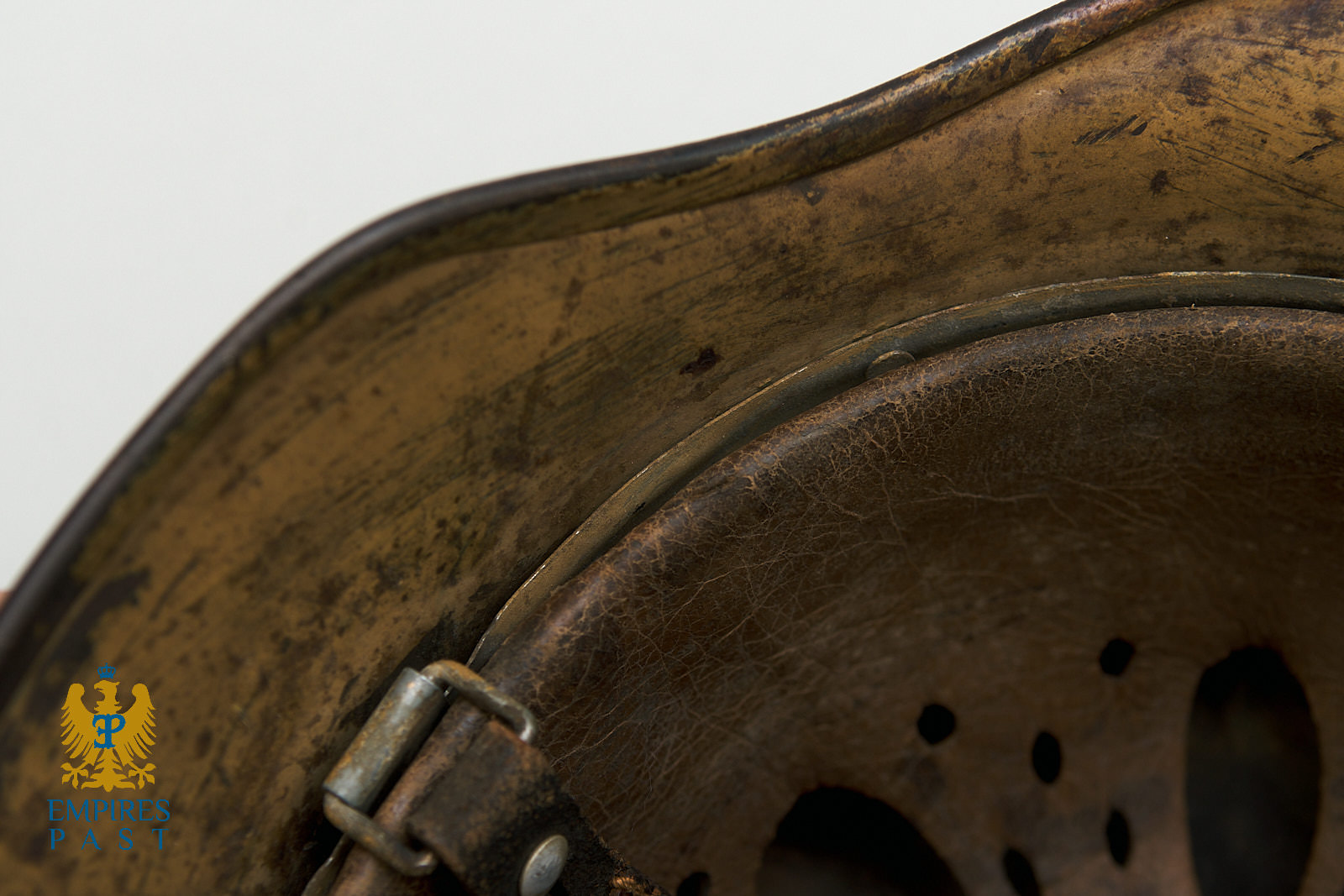
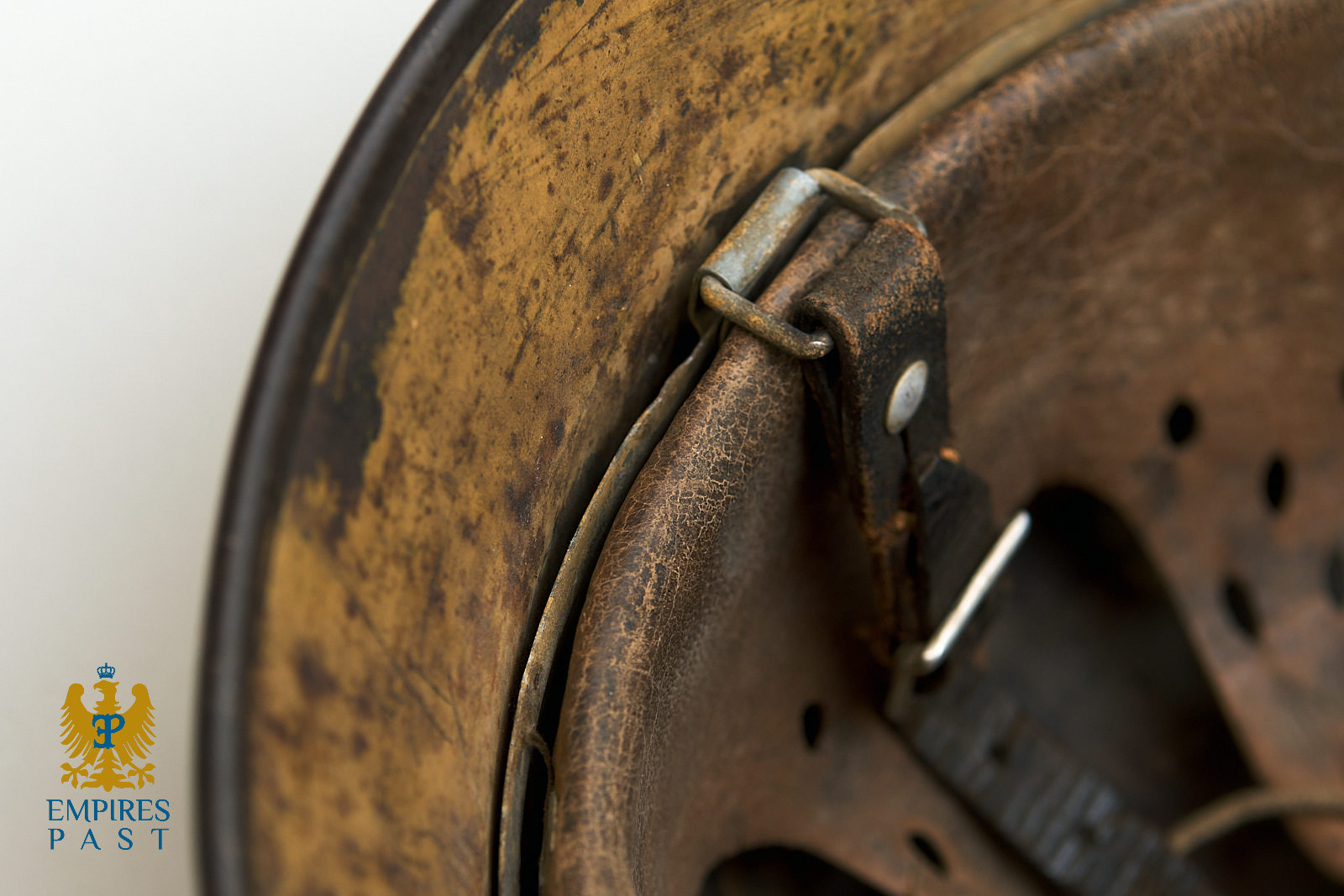
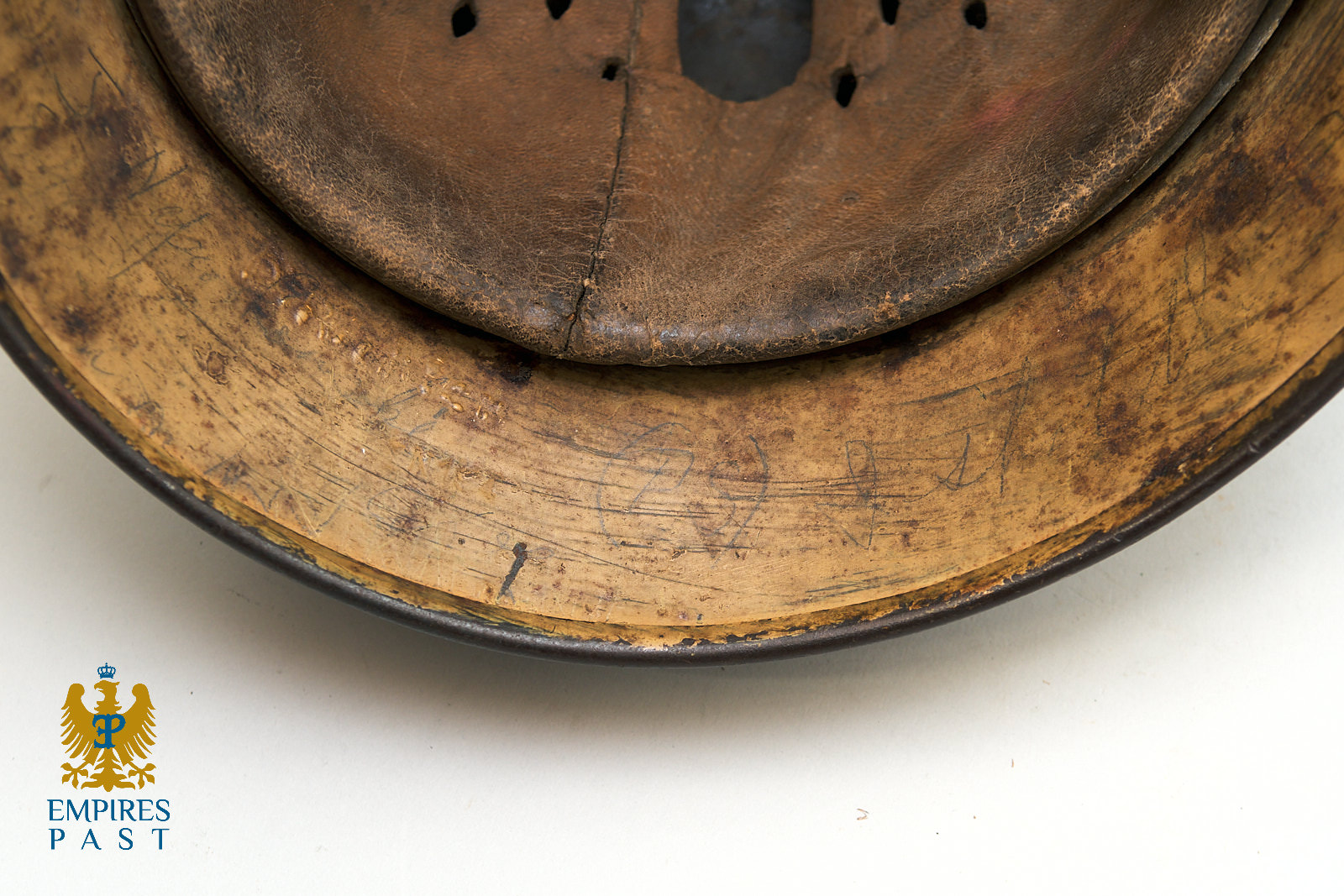
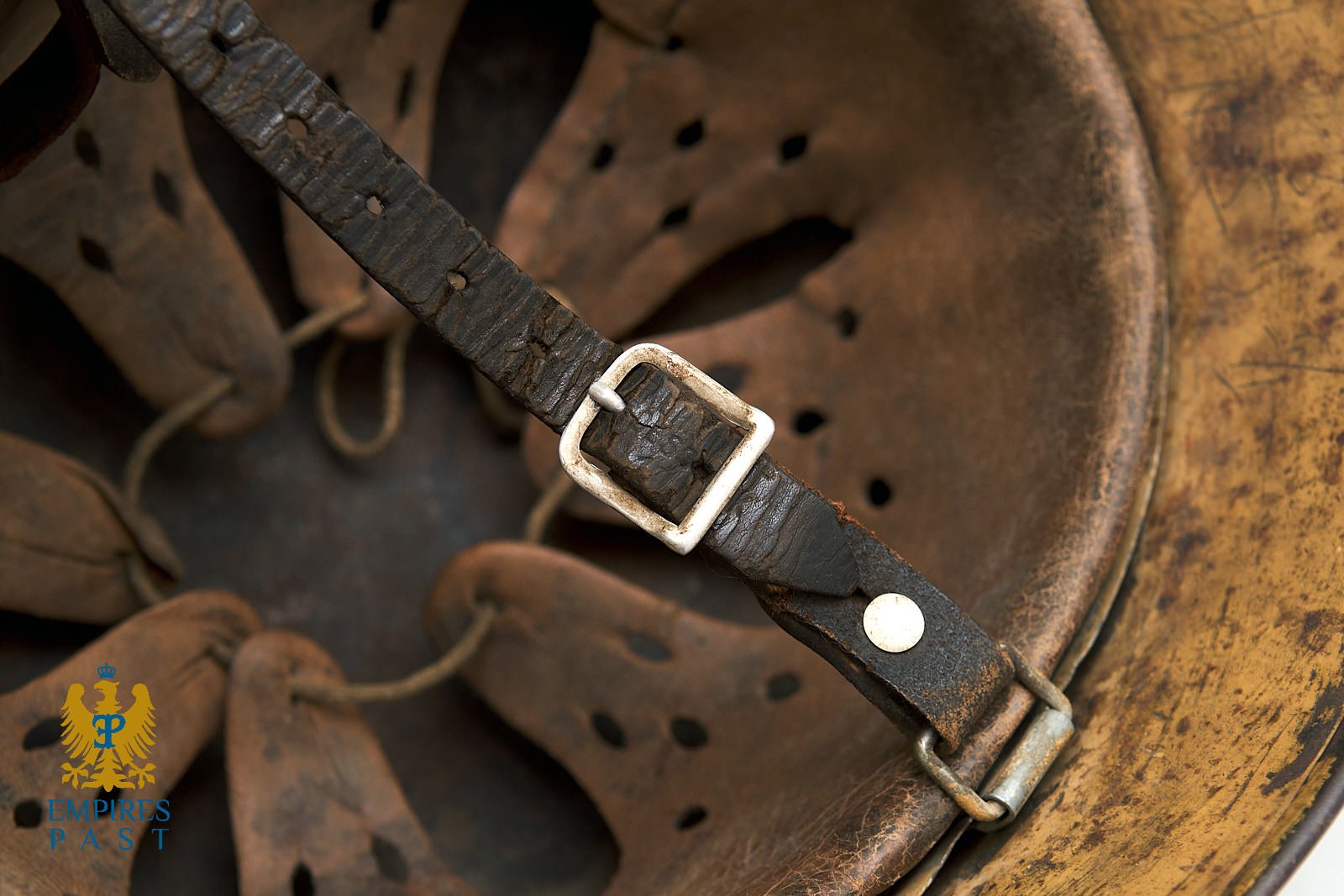
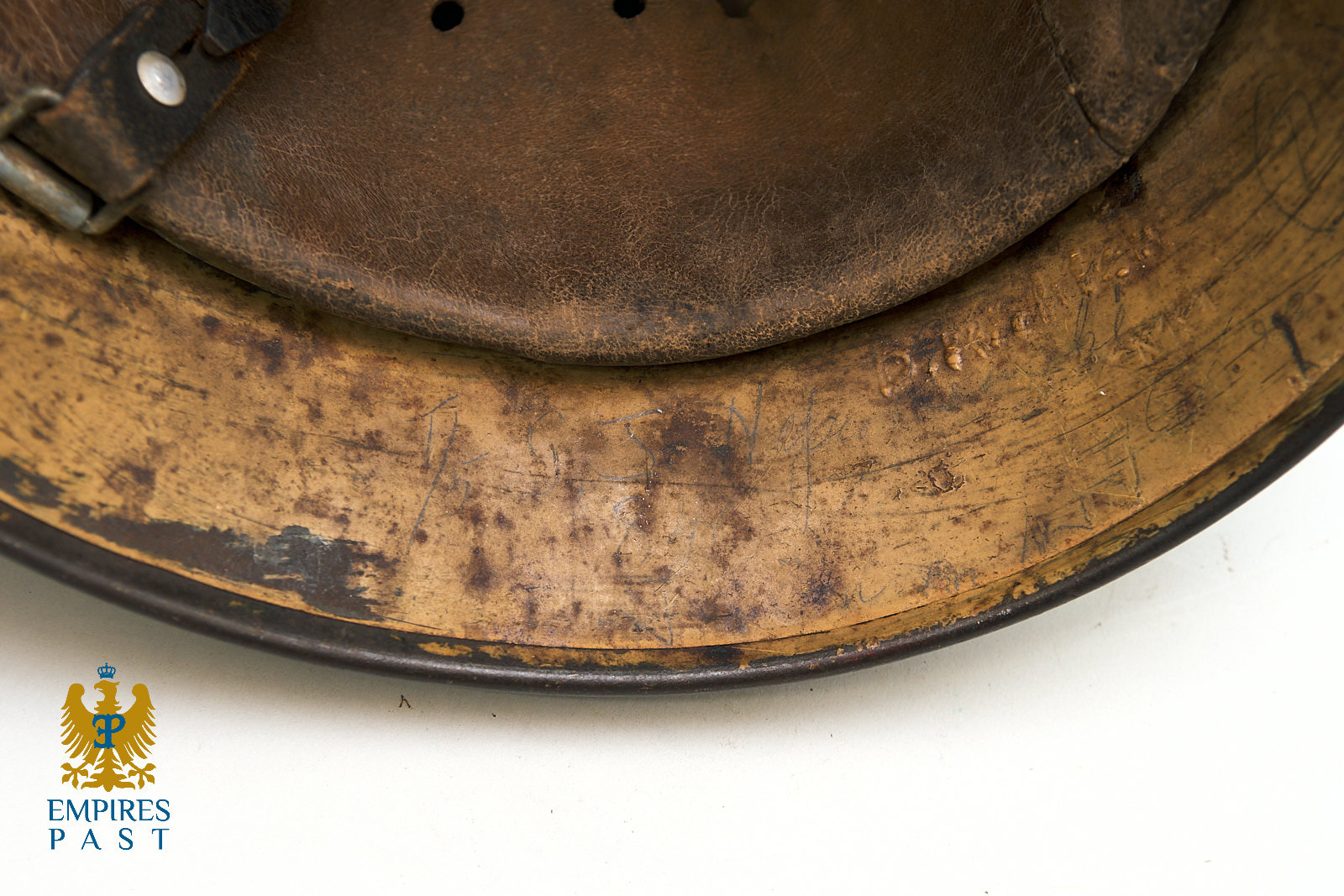
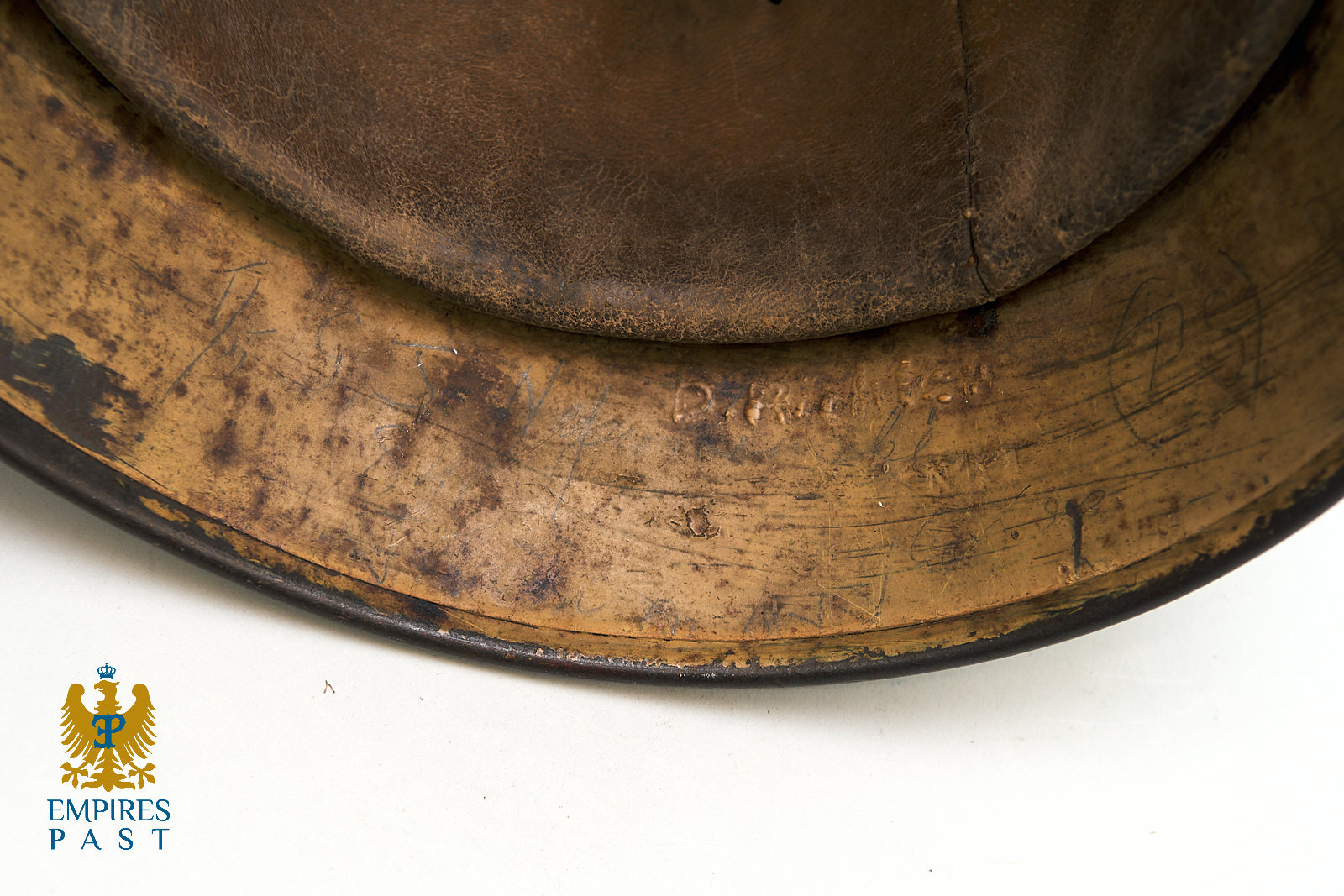
Product Description: A highly sought after Afrika Korps Camo M40 Heer Helmet. This Afrika Korps Camo M40 Heer Helmet is a very nice size 66 produced by Quist with lot number DN104. The exterior camo is consistent with the type of pinkish-tan camo used during the campaign in Afrika. The helmet exterior retains most of its pinkish-tan camo paint with most of the wear and heavy patina being on the upper dome area. Brush stokes can be seen on this Afrika Korps Camo M40 Heer Helmet from when the paint was originally applied. The Heer decal was painted over, with the paint developing a crazing over the years. An added bonus not commonly seen is the interior skirt of helmet, which has also been paint with the same pinkish-tan paint that was used on the exterior of the helmet. The same camo paint can also be seen on the steel liner band, indicating this is the original helmet liner, and has not been touched or molested since the war. A name on the helmets skirt was painted over when the helmet was originally camouflaged, the name reads “D. Richler. Penciled writing on the skirt can be seen on the interior helmet skirt, which can be partially read, but is still difficult to fully discern. It is possible this writing is a note that was written on the helmet from a GI sending the helmet home as a war trophy. One of the phrases which can be read reads: “(PS) I shot him”. This phrase alone is not one I have encountered often, and is a small remainder of the brutality of the war. The steel banded leather liner exhibits signs of daily wear with no damage. The chinstrap appears to have been cut, indicating a battlefield casualty which would also give credit to the phrase written in pencil on the liner skirt “(PS) I shot him”. This is a very nice and honest Afrika Korps Camo M40 Heer Helmet with character that is rarely seen on the market.
Historical Description: When the German Army first marched into war in 1914, it went to the front lines wearing the traditional “Picklehaube” helmets. The war soon developed to necessitate the need for an improved headgear to protect the wearer. The German Army developed the M16 helmet in 1915 and began issuing it in mass quantity to its fighting troops in 1916. The M16 underwent changes to bring about the next model, the M18. Both the M16 and M18 saw use by the German Army during WW1, as well as the interwar years by the Reichswehr and Freikorps. In 1931, a new liner system was developed. The M16 and M18 helmets were in mass supply right up to the time the Nazi Party took control of the German government. During Adolf Hitler’s rearming of the German military in the early 1930’s, the M16 and M18 helmets saw extensive refitting with the newer liner system, fresh paint, and the addition of a centralized decal system for the newly formed Wehrmacht’s respective branches. Decals were generally placed on each side of the helmet, one side being the branch and the other the national colors shield or party shield. In 1935, the M35 helmet was introduced. This new design was lighter and more streamlined than the older style helmets and is what the world now recognizes as the iconic helmet of the German Military. M35 helmets can most easily be identified from the separate rivet ventholes and rolled edges. With the outbreak of war, some changes were made to bring in a new model, the M40. The changes made to this new model was the use of a more matte field grey finish and the vent holes were now integral to the helmets shell. In 1940, the national colors decals and party shields were ordered to be removed. It should be noted that many M35 helmets were brought up to date by repainting them with the matte field grey finish and/or other modifications if necessary. These refitted helmets are what collectors now term “reissue helmets”. The next model helmet to evolve was the M42. The model M42 has the same features of the M40 with the exception of the edges of the helmet not being rolled and remain flared. This was to speed up production and lower cost as the war dragged on and the German economy began changing to a total war economy. In 1943 all decals were ordered to be removed from combat helmets.
With nearly 30 years of expertise handling, collecting, and studying some of the finest and scarcest military collectibles, Empires Past offers the best prices for your collectibles.
We purchase German, American, and Japanese Military Artifacts.
FROM SINGLE ITEMS TO ENTIRE COLLECTIONS…
WE ARE ALWAYS BUYING!!!