
Description
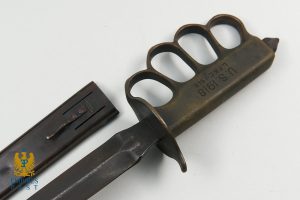
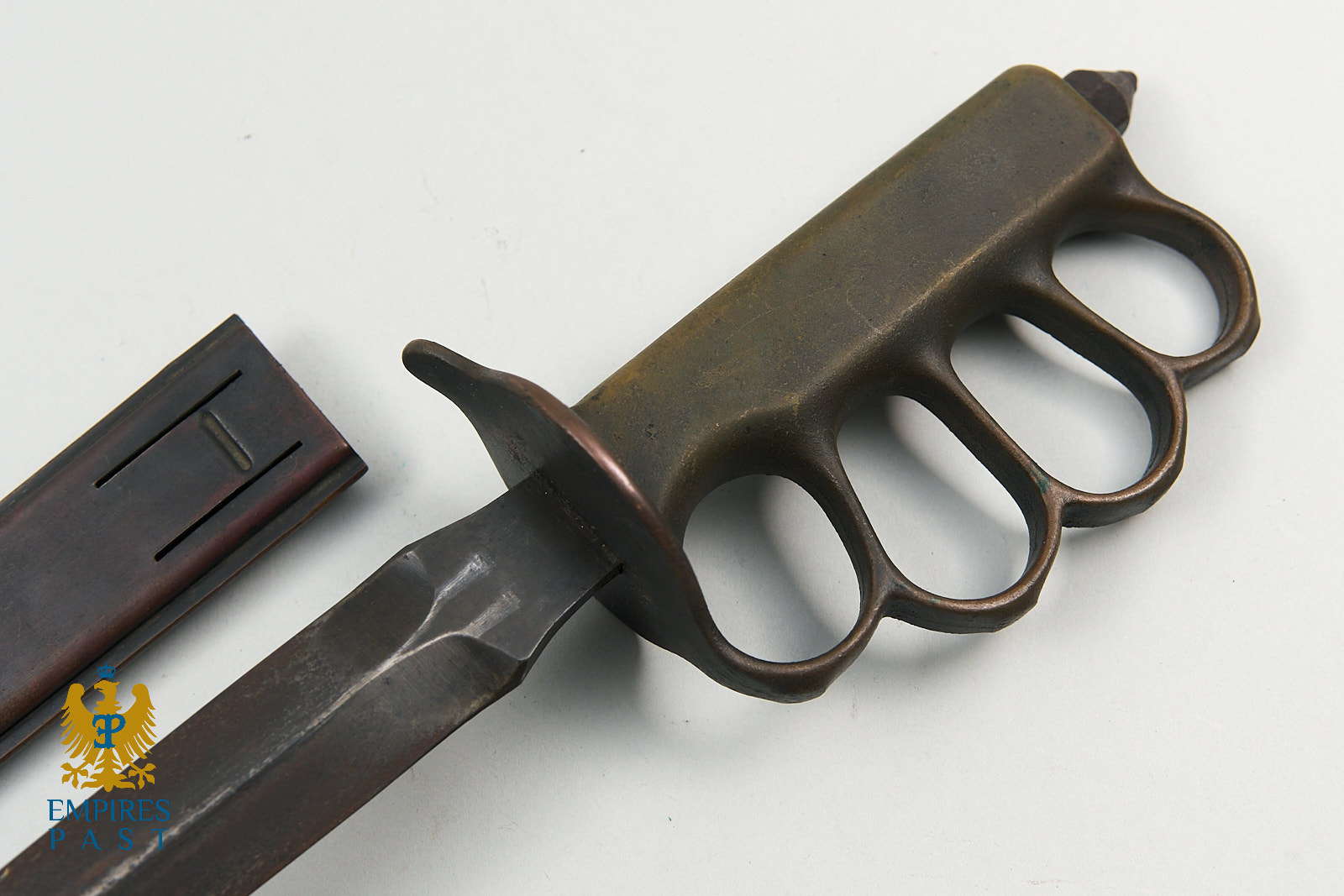
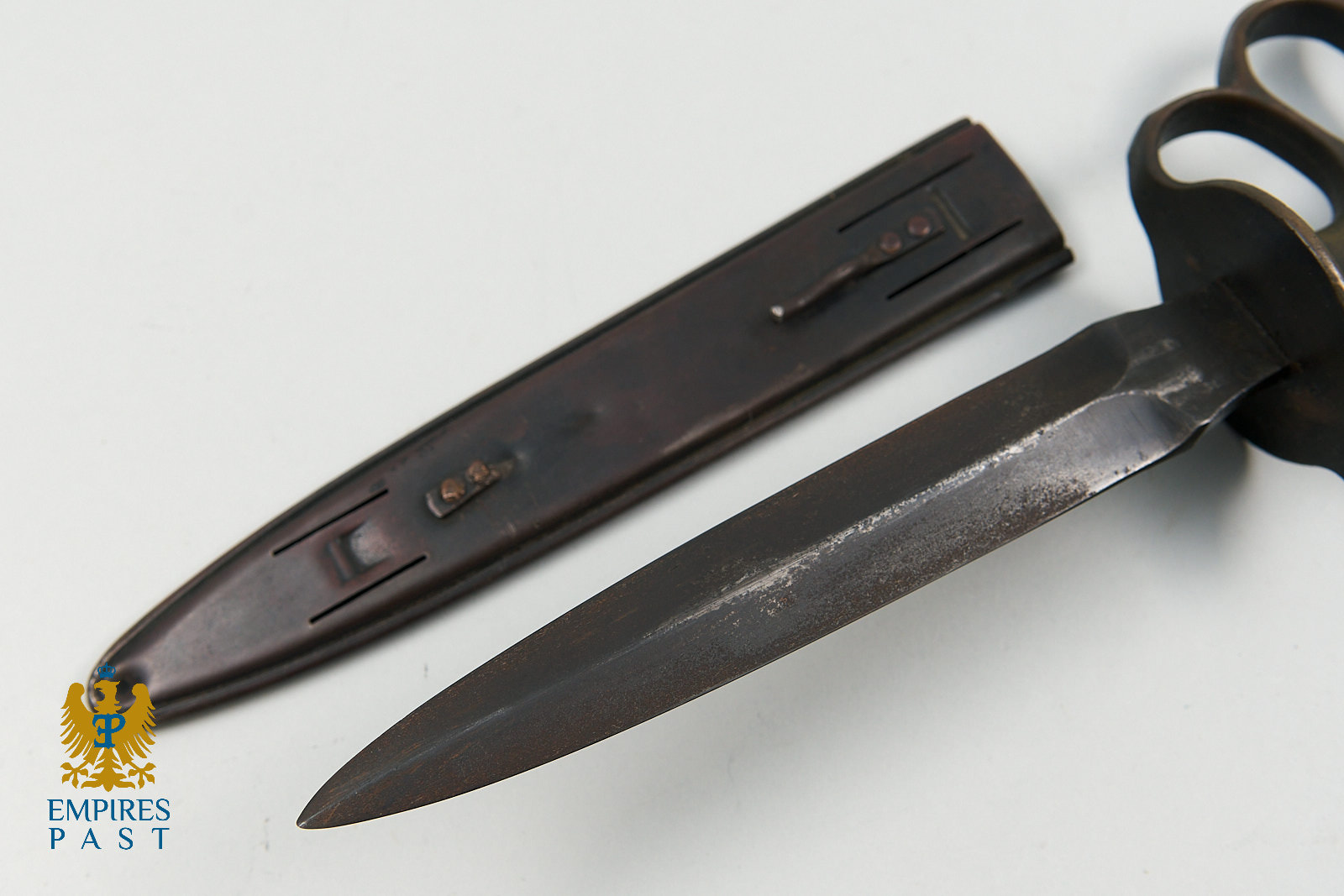
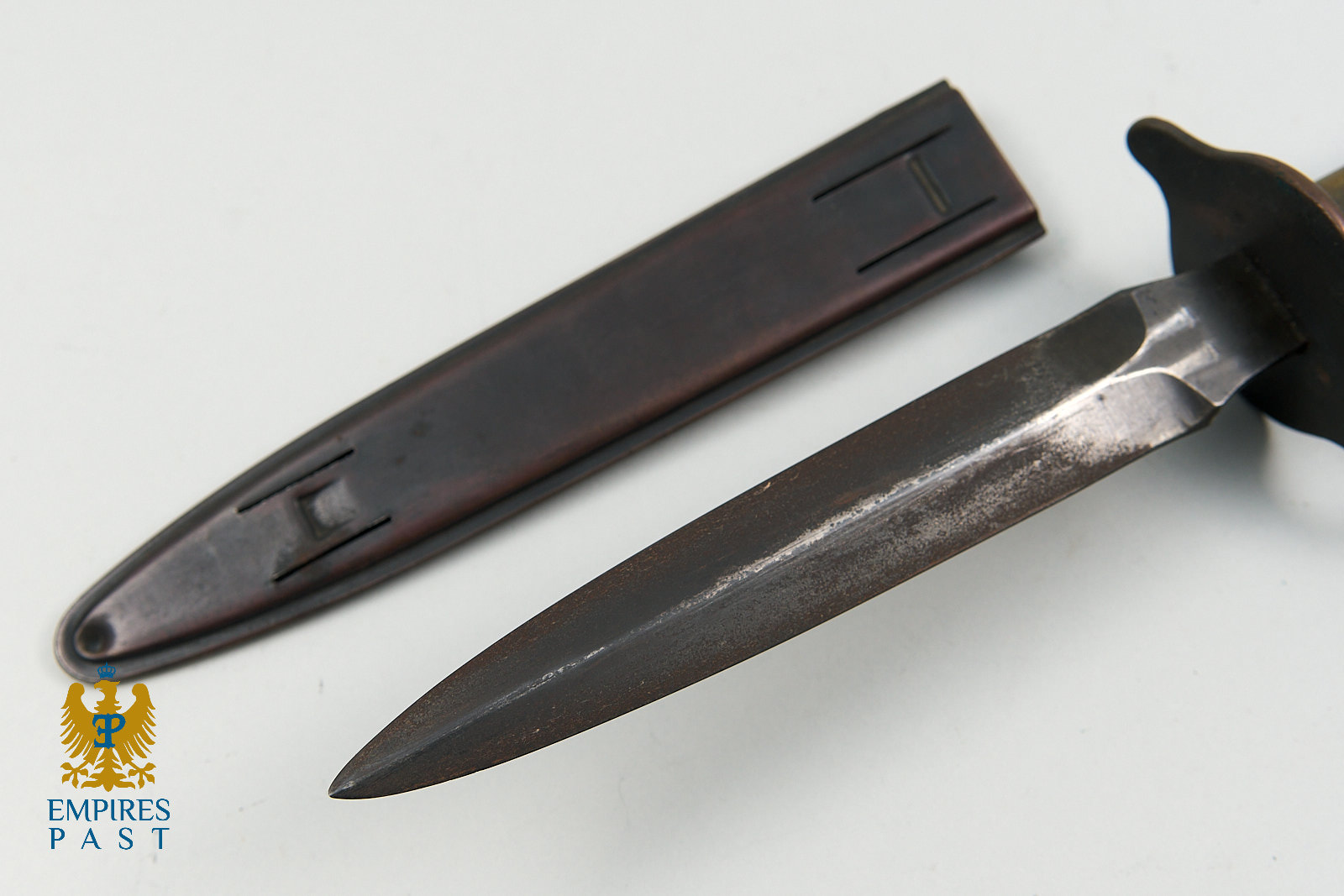
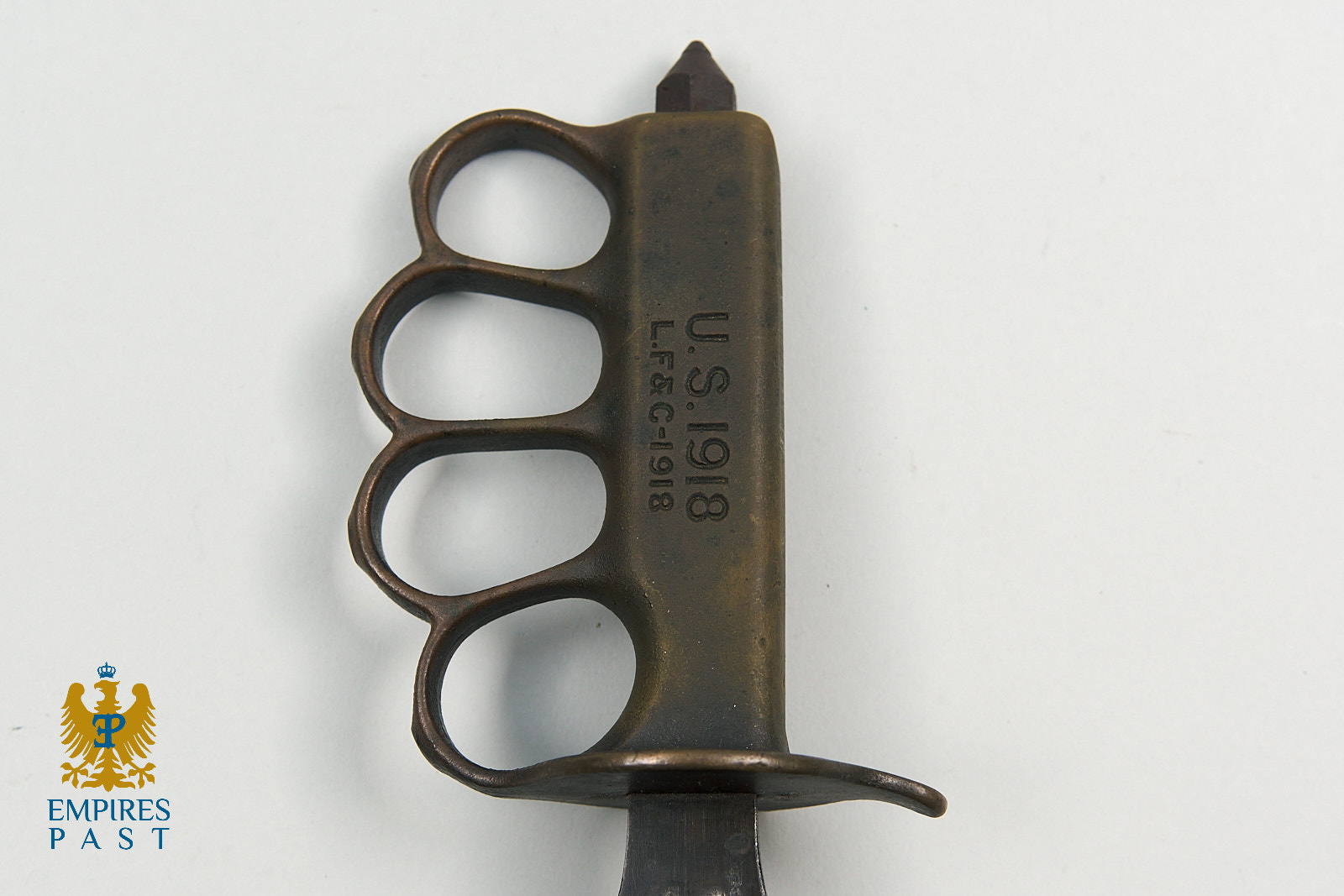
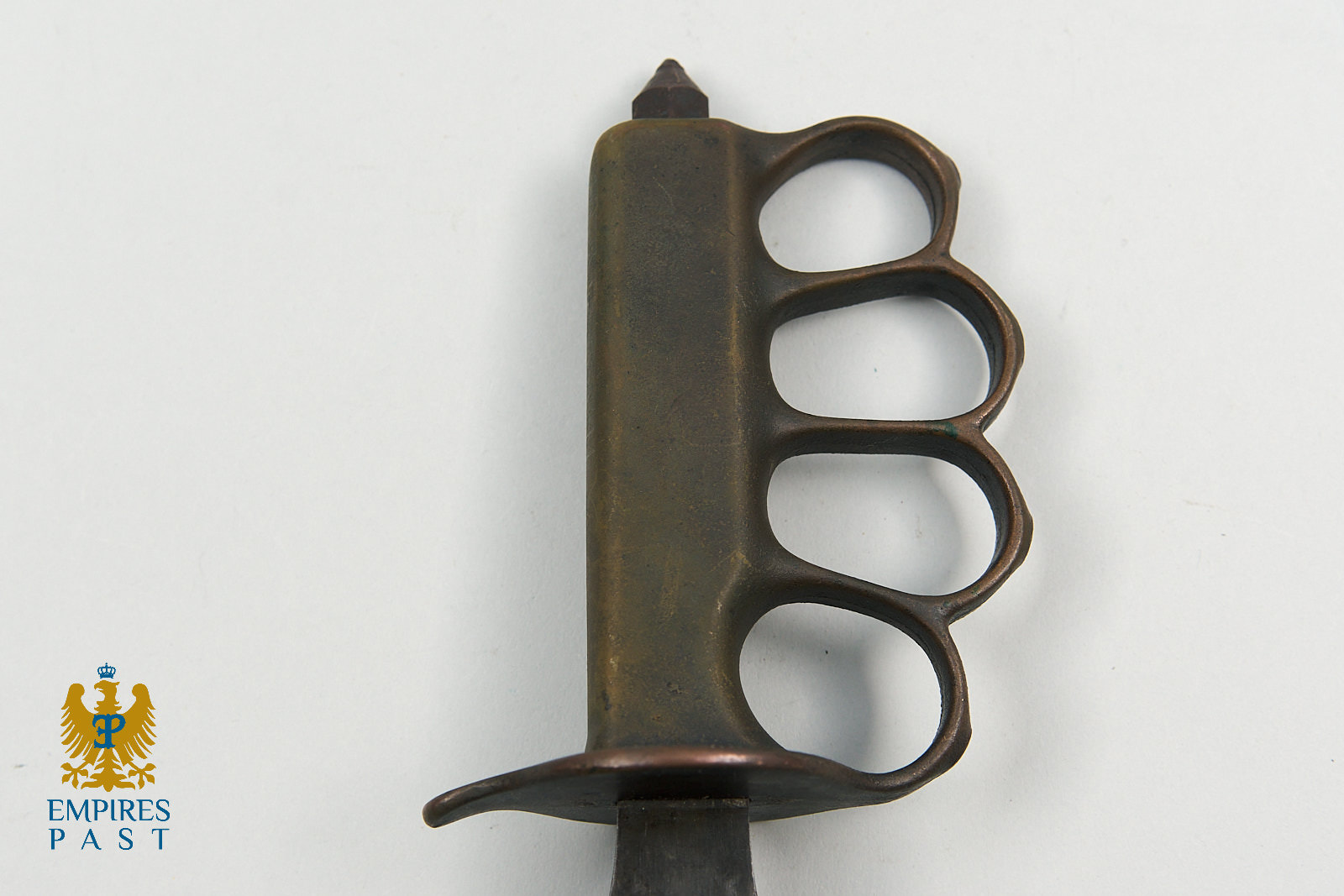
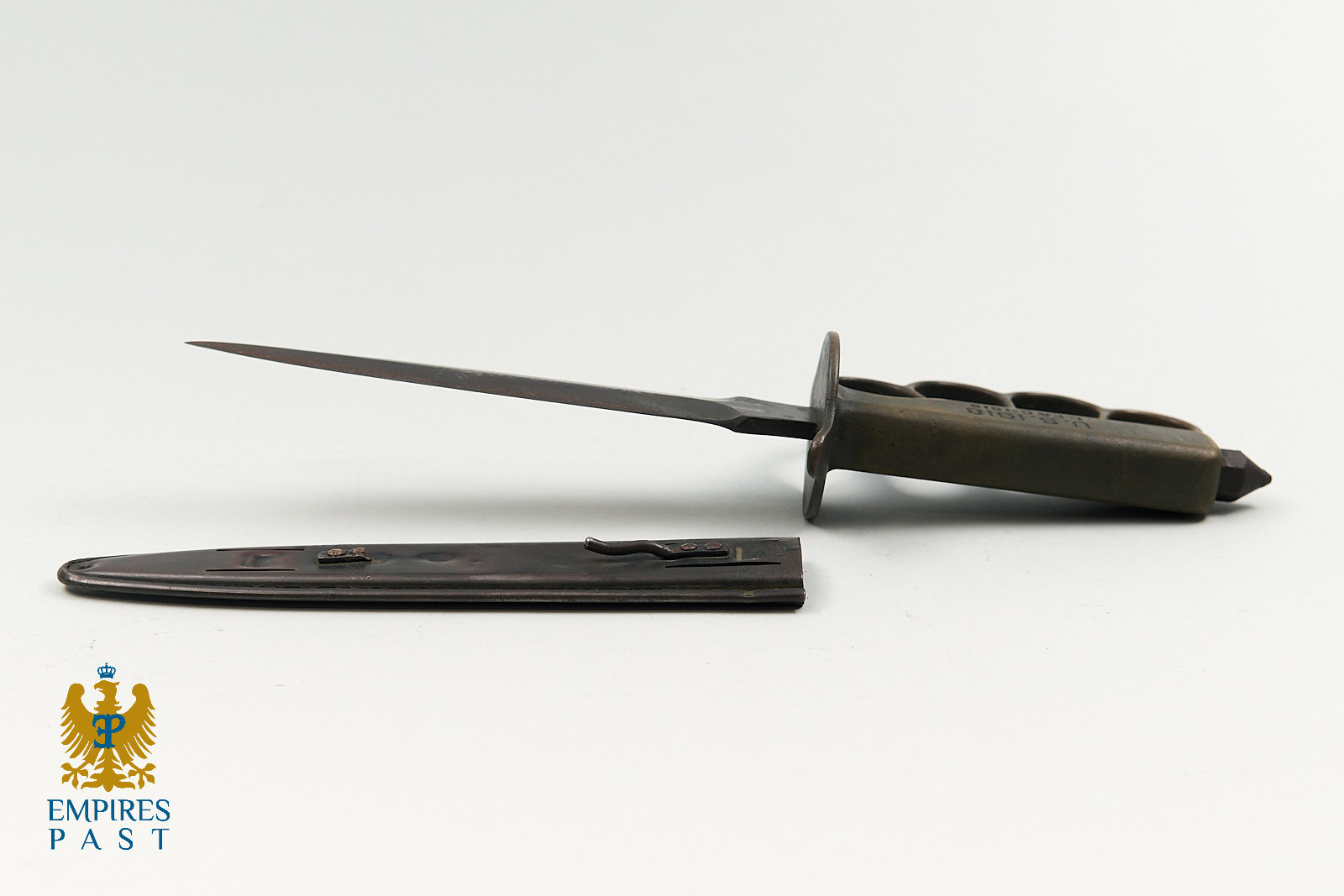
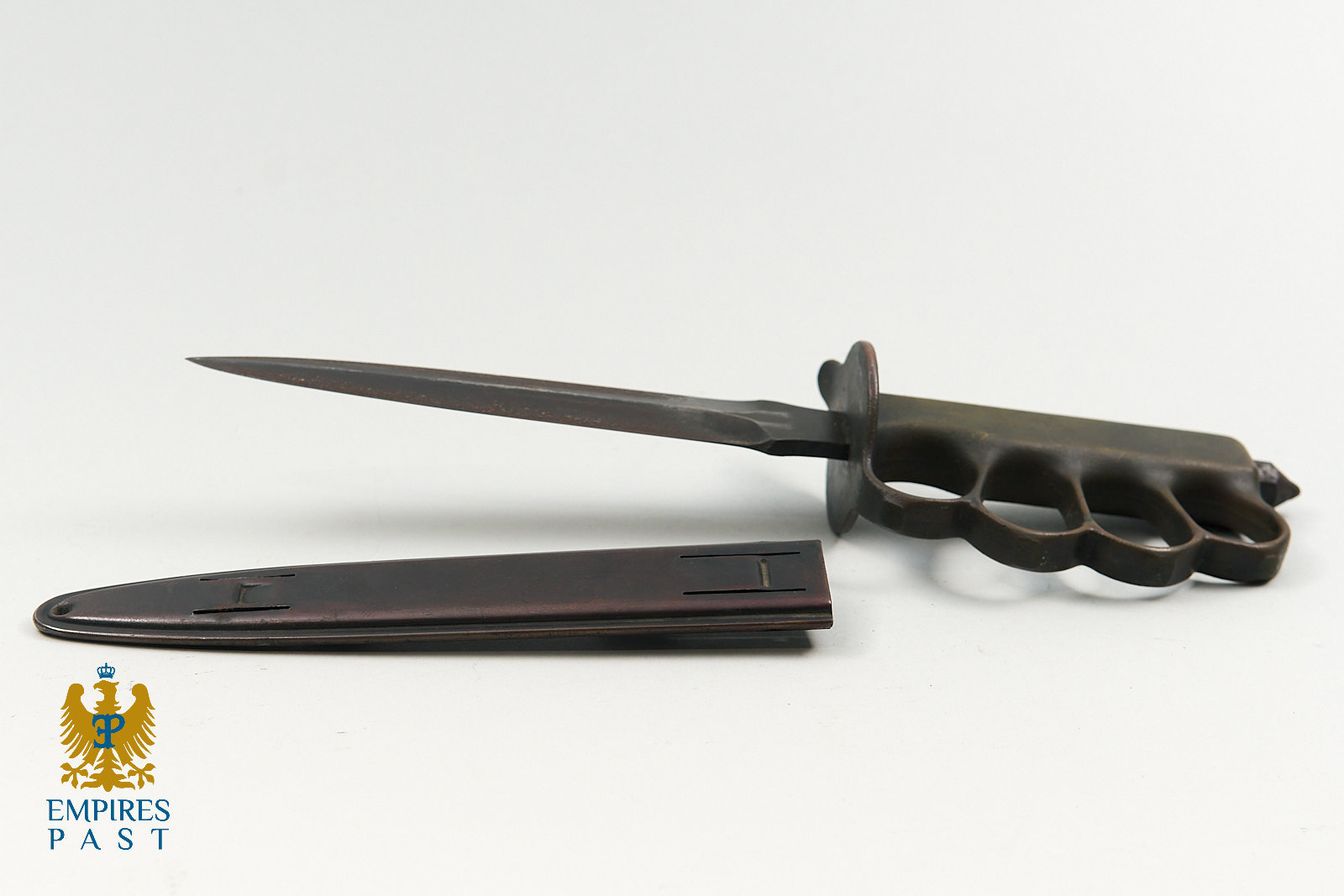
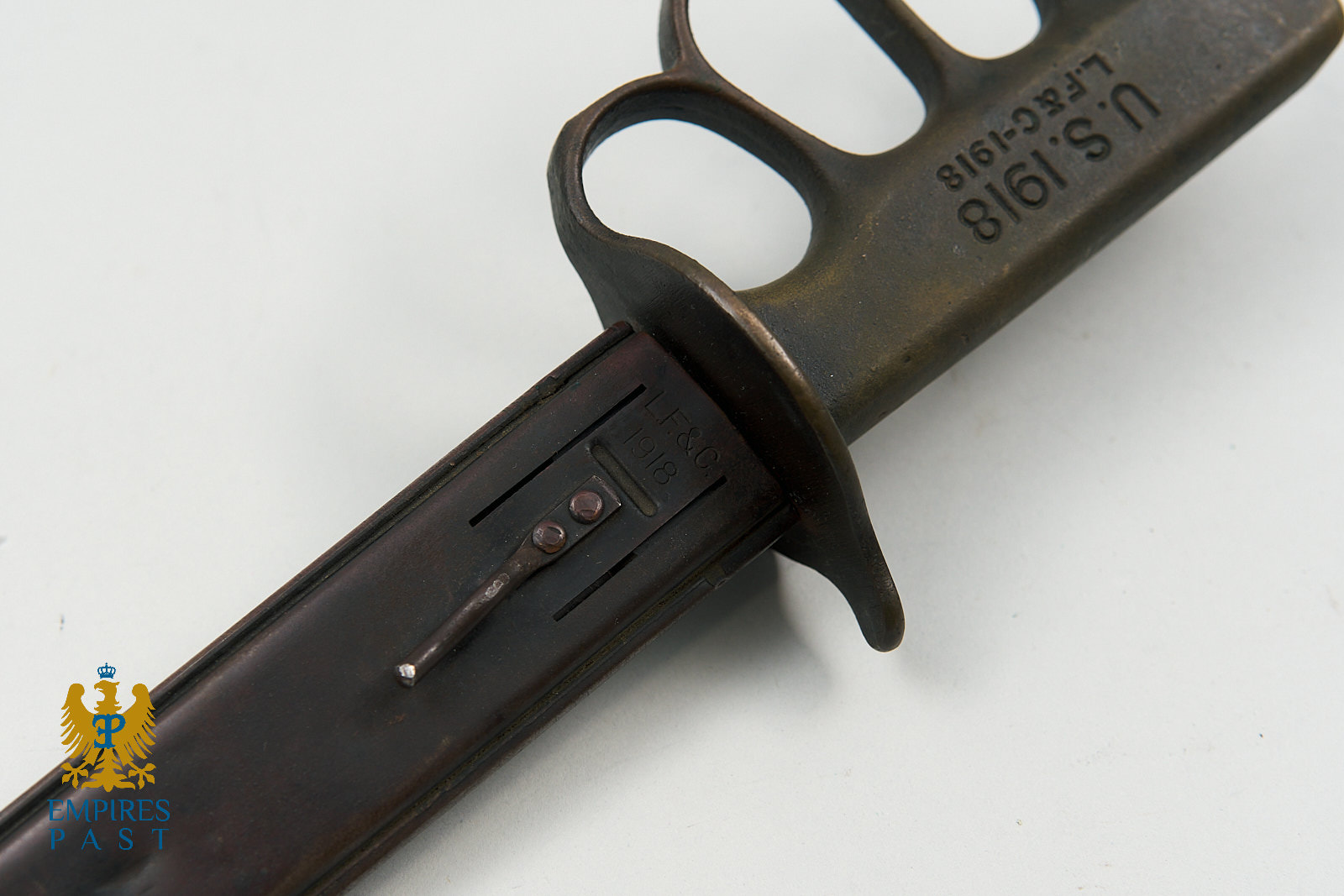
Product Description: Desirable LF&C 1918 US Fighting Knife. These Model 1918 trench knives were designed to replace the Model 1917 trench knife and still combined all of the favorable aspects of other countries fighting knife designs into one knife, but removed the controversial triangular blade that was standard on its predecessor. These knives were developed late in 1918 and favored by troops in both World Wars. This LF&C 1918 US Fighting Knife was produced by Landers, Frary, & Clark, a housewares company located in New Britain Connecticut. The 1918 US Fighting Knife offered here exhibits an extremely nice blued blade with light runner marks and an area of finish loss on the obverse ricasso. Scattered light oxidation throughout its length. In standard M1918 configuration with a solid cast brass knuckle grip marked “U.S. 1918 / L.F & C 1918”. Pleasing dark patina on the grip. The pommel nut remains tight. Complete with its original stamped steel scabbard with correct weep hole at tip. As displayed on the blade, there an excellent amount of finish remains on the blade. The scabbard on this 1918 US Fighting Knife is correctly marked “LF&C / 1918” on the throat. Both prongs remain intact and retain their original shape, a nice feature considering that most of these are found without any prongs as they were susceptible to being bent and broken with hard use or removal from a belt. This is a great example of a LF&C 1918 US Fighting Knife that would fit perfectly in a World War I or fighting knife collection.
Historical Description: The first official U.S. trench knife adopted for service issue was the U.S. M1917 trench knife. It was designed by Henry Disston & Sons and based off examples of trench knives that were in service with the French Army at that time. The M1917 featured a triangular stiletto blade, wooden grip, metal knuckle guard, and a rounded pommel. The M1917 proved unsatisfactory in service, and a slightly improved version, the M1918, was adopted within months. Despite this, the M1918 is almost identical to the M1917, differing primarily in the construction and appearance of the knuckle guard. Usable only as stabbing weapons, the M1917 and M1918 frequently suffered broken blades. Their limited utility and general unpopularity caused the AEF to empanel a testing board in 1918, to test various trench knives and select a replacement.
With nearly 30 years of expertise handling, collecting, and studying some of the finest and scarcest military collectibles, Empires Past offers the best prices for your collectibles.
We purchase German, American, and Japanese Military Artifacts.
FROM SINGLE ITEMS TO ENTIRE COLLECTIONS…
WE ARE ALWAYS BUYING!!!